AKC Pride feature highlights LGBTQ+ inclusion in dog sports
Pride in the ring is about more than visibility. AKC’s feature shows how LGBTQ+ handlers build trust, chosen family, and staying power across dog sports.
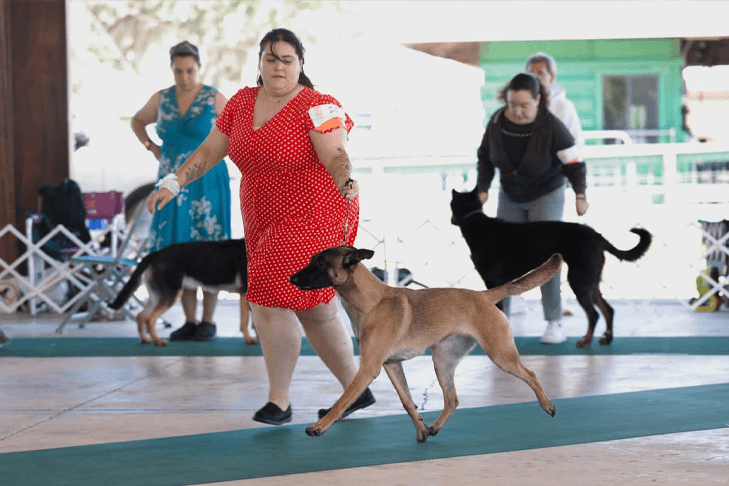
Rainbow branding in dog sports is not just decoration here. AKC’s Pride Month feature ties a personal memory of hostility in the 1990s to a much more open scene now, where handlers say belonging can determine whether they stay in the sport at all.
A sport built on trust, not just titles
Dog sports run on repetition, coaching, and the small social bonds that form ringside, at practice, and on long competition weekends. AKC’s broader framing makes that clear by noting that more than 22,000 dog events are held each year, spanning conformation, agility, obedience, rally, tracking, herding, lure coursing, coonhound events, hunt tests, and field tests. In a network that large, the atmosphere in a single club or training group can shape whether someone feels welcome enough to keep showing up.
That is why the Pride feature lands as a community story first and a visibility story second. The central idea is simple: the best dog sports spaces are the ones where handlers do not have to choose between being open about who they are and being taken seriously in competition.
From hard lessons to a different climate
The feature opens with the author looking back on coming out as queer in the 1990s, when the dog world could be openly hostile. The memory is not framed as a distant inconvenience, but as life-changing homophobia, the kind that leaves a mark on how someone enters every room, ring, and grooming area afterward.
That history makes the newer symbols matter more. Seeing the AKC logo turned rainbow for Pride is described as deeply meaningful, not because a logo solves exclusion, but because recognition from a major kennel club signals that LGBTQ+ people are part of the sport’s public face. The same piece also notes that explicit homophobia is now much less common than it was 20 years ago, which is a concrete shift with real consequences for newcomers deciding whether dog sports are worth the emotional risk.
What inclusion looks like in daily club life
AKC’s related inclusivity post turns the big idea into small, practical habits. It advises clubs to make their logos rainbow-colored on social media for Pride month and to make it clear that discriminatory language is not permitted in online forums or social media groups. That matters because a lot of dog world culture now lives online long before anyone steps into a ring.
The point is not just symbolism. Clubs set the tone in the places where members trade training notes, coordinate classes, and decide which handlers and breeders feel safe to approach. When a group is explicit about what language will not be tolerated, it lowers the social friction that can keep LGBTQ+ people on the outside.
The handlers making that visibility real
The feature’s examples show how wide the ecosystem actually is. Shelby Thatcher, identified as a lesbian from Helendale, California, competes in conformation, IGP, and livestock work with a Bouvier des Flandres. Her experience is described as mostly positive, and she values a no-nonsense approach to discrimination, with her day-to-day reality largely matching that of a straight woman.
Dylan Leo, a transgender man in Florida, is proof of just how many performance lanes one team can run through without leaving the same larger community. With a Miniature American Shepherd, he competes in conformation, herding, obedience, AKC Rally, agility, Fast CAT, diving dogs, and barn hunt. That range matters for hyperenergetic-dog readers because it shows how a high-drive dog can find multiple outlets without leaving the world of competition and community behind.
Why online spaces can still make or break belonging
Sami Morales, who competes in conformation and Fast CAT with a Standard Poodle, points to a different kind of pressure: online bias. Her experience highlights how much of modern dog sport culture now depends on digital spaces where people learn who is safe, who is supportive, and which breeders or handlers they can trust.
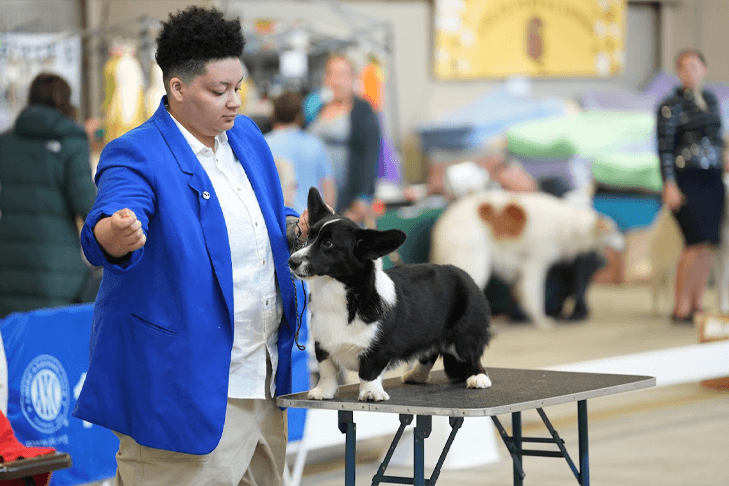
That kind of visibility is not abstract. In a sport built around referrals, training partners, and repeated face time, one hostile group thread or one unwelcoming club page can be enough to keep a newcomer from returning. The story’s underlying message is that inclusion has to be visible in the places where people first test the waters, not only in celebratory posts during Pride month.
A longer lineage than one month of branding
AKC’s Pride coverage also makes clear that LGBTQIA+ dog owners have always been part of AKC sports, even when they were less visible. It says many have found the dog show world to be welcoming, and it uses that history to frame Pride as recognition of a community that has long existed, not as a new arrival.
That broader arc is reinforced by AKC’s spotlight on Dresden Graff, an out transgender trainer in Texas who has competed and trained others in agility and obedience since he was a teenager. His profile shows trans participation as something lived over years of training, handling, and mentorship, not a one-off headline. It also underlines how dog sports often become a place where identity, expertise, and apprenticeship develop side by side.
What these ring-side stories add up to
Taken together, AKC’s Pride pieces turn inclusion into a practical question: who gets to stay, who gets to train openly, and who feels safe enough to keep entering the ring. In a sport with more than 22,000 events a year, those answers shape far more than one club or one breed aisle. They shape the culture that keeps ambitious, high-energy dogs and their handlers coming back.
That is the real force behind the rainbow logo, the no-discrimination policy, and the handlers who are visible in every corner of the sport. The future of dog sports depends on whether the next newcomer sees not just competition, but a place to belong.
This article was produced by Prism’s automated news system from verified source data, official records, and press releases, then run through automated quality and moderation checks before publishing. The system is built and supervised by the people who set the standards it runs under. Read our full AI policy.
Know something we missed? Have a correction or additional information?
Submit a Tip