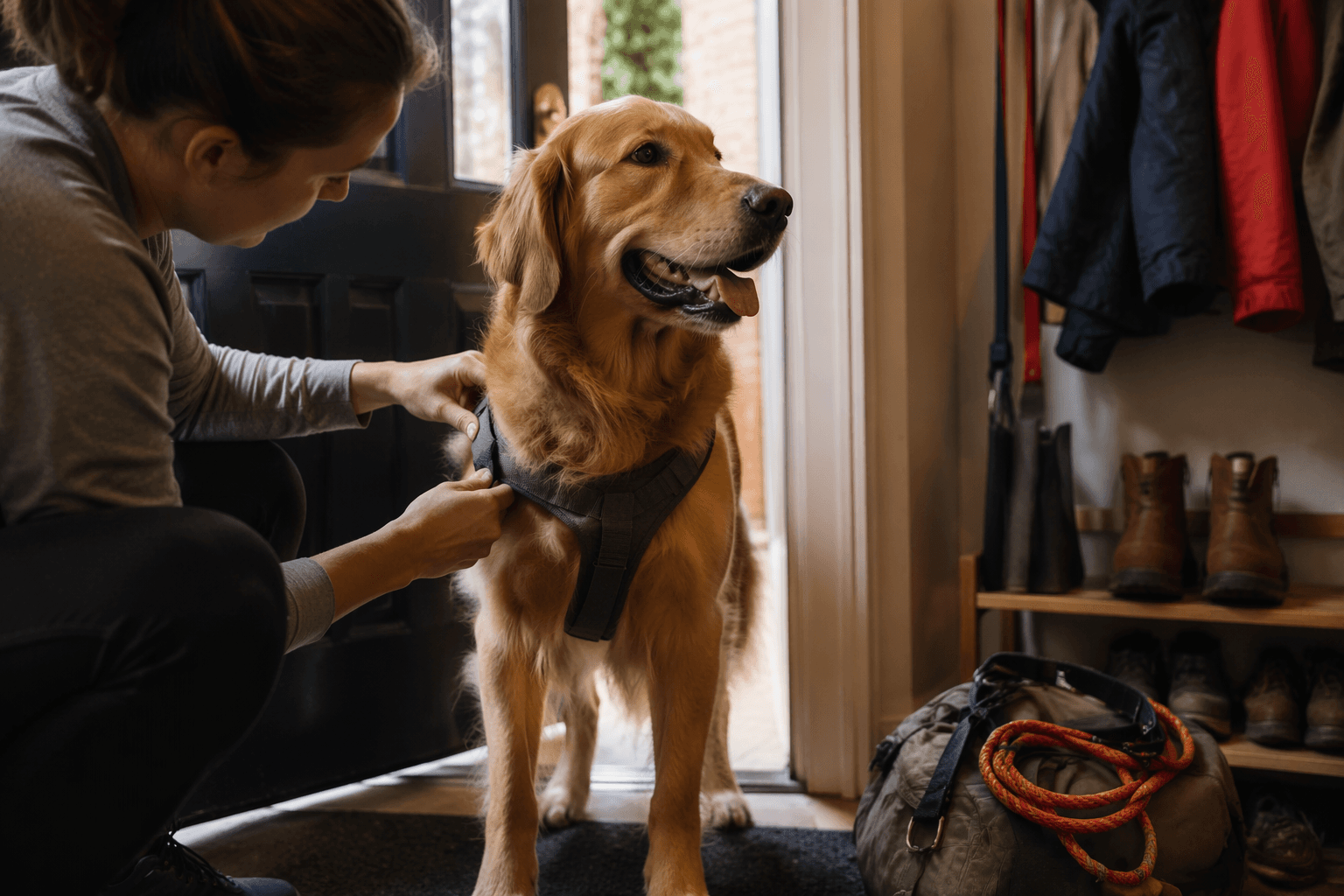
Best Friends playbook guides shelters on enrichment for high-energy dogs
Best Friends’ May 2022 playbook lays out scent work, food puzzles, DIY agility and staff-focused tactics to help shelters enrich high-energy dogs and speed positive outcomes.

Best Friends Animal Society’s canine enrichment playbook, updated May 2022, positions enrichment as an operational priority for shelters that house high-energy dogs. “That’s why it’s critical to provide proper care and enrichment for dogs when they are in shelters,” the playbook states, and argues that enrichment improves quality of life: “They become happier, healthier, safer to work with and are more adoptable overall.”
The playbook frames short- and long-term strategies including scent work, food puzzles and agility-style activities, and urges programs to “start small and slowly grow your program; each shelter is different. When you’re creating a dog enrichment program, we recommend that you do the following:” Best Friends also recommends focused staffing for challenging cases, suggesting it “might also be beneficial to have each staff person pick a ‘project dog’ to focus on in order to fast-track positive outcomes.” The playbook offers a practical lens for volunteers and shelter staff managing high-energy populations.
Sheltermedicine materials from the University of Florida and the 2010 Simple Shelter Enrichment for Dogs paper by DiGangi, Janeczko, Bollen and Griffin list concrete tactics shelters can deploy immediately. Feeding devices such as Kongs® and Tug-A-Jugs™ are recommended, with low-cost alternatives like plastic bottles, milk jugs and laundry jugs explicitly allowed as inexpensive options, subject to a safety caveat: “make sure to take the labels and plastic rings off the soda bottles prior to giving to the dogs; also check on dogs the first few times you give them plastic bottles as enrichment to make sure they are not ingesting pieces of plastic.” Sensory and novel-environment tactics appear alongside physical play: “Spray Lavender or food-scented air fresheners in the kennel areas 1-2 times per day,” play “find it” tracking games, hang wind chimes and mobiles “a couple times a day,” blow “bubbles” in the kennel, freeze toys and treats in ice blocks, rotate toys for novelty and plug D.A.P. diffusers in small rooms.
Best Friends highlights agility as both mental and physical enrichment and offers DIY cost-savings: “you could use benches, chairs, rocks and trees for obstacles that dogs can walk around, jump up on or over.” Kenneltocouch and Animal Farm Foundation resources add a scheduling benchmark for cognitive enrichment: “Providing the animals with regular access to novel indoor or safe outdoor areas at least 3 times per week for a minimum of 30 minutes per session provides valuable cognitive enrichment and social interaction.”
Program-level models are available for shelters on tight budgets. Maddie’s Fund features an e-booklet and spotlights Far Side Journey’s Boredom Buster Program, which was piloted at Los Angeles Animal Services’ Chesterfield Square Animal Care Center and “was such a success that they’re planning on continuing it and implementing it at another shelter!” Maddie’s notes that the e-booklet breaks activities into a Staff Resource Requirement level and a Volunteer Difficulty level so “Using their system, you can easily customize your program to match the available resources at your shelter! How nice is that?” For questions or materials, Maddie’s Fund can be reached at 6150 Stoneridge Mall Road, Suite 125, Pleasanton, CA 94588; phone (925) 310-5450; email info@maddiesfund.org. “Questions about the booklet? Ask away over on the Maddie’s Pet Forum post where this was first shared!”
Foundational definitions and caveats round out the practical playbook. DiGangi et al. define an enriched environment as one offering “variety, choice and control over its daily activities,” and Kenneltocouch warns that “The success of any enrichment program depends on its mindful implementation.” It also distinguishes enrichment from behavior work: behavior modification “is often resource intensive and requires staff with a specialized skill-set.” Together, these resources provide ready-to-use tactics, staffing suggestions and safety steps shelters can apply now while pursuing full playbook PDFs and pilot metrics from Best Friends, Maddie’s Fund and Far Side Journey.
This article was produced by Prism’s automated news system from verified source data, official records, and press releases, then run through automated quality and moderation checks before publishing. The system is built and supervised by the people who set the standards it runs under. Read our full AI policy.
Did this article answer your question?