Border Collie Sammer Invents Zigzag Treadmill Tricks to Beat Summer Heat
Sammer, a Border Collie, invented zigzag treadmill patterns and hind-leg-only strides to beat summer heat, racking up 219 likes after the clip went viral.
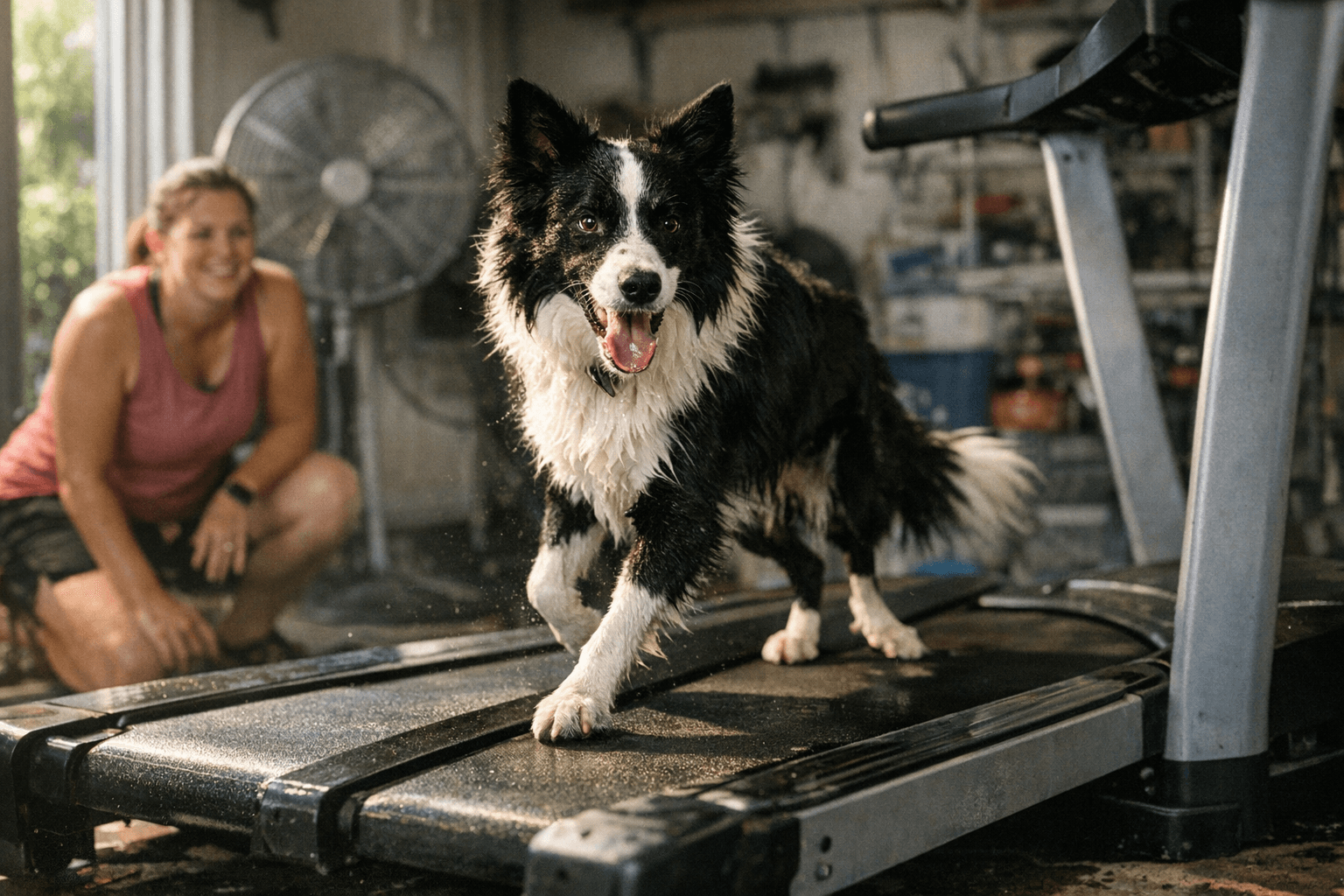
When Sammer's owner posted a clip of the Border Collie inventing his own treadmill choreography mid-session, the dog-owning internet took notice fast. The video collected 219 likes and 78 reposts, with viewers watching Sammer improvise zigzag patterns across the belt and then shift to walking exclusively on his hind legs, all without a cue from his owner.
The clip spread because it illustrated something any Border Collie owner recognizes immediately: these dogs don't wait for you to assign them a job. When summer temperatures made outdoor runs impractical, Sammer created his own challenge set on the belt, solving a heat problem with canine ingenuity that the video's caption tied directly to a familiar consequence. Leave a collie under-exercised and it stays restless all night.
Border Collies were bred to run roughly 50 miles per day herding sheep, and adult dogs still need between 90 minutes and two hours of daily activity. When that demand goes unmet because of heat, the breed's problem-solving drive doesn't switch off; it redirects. Sammer's self-invented treadmill variations are a visible example of that redirection, and they signal something worth paying attention to: the treadmill was providing brain stimulation as much as cardiovascular work.
Introducing treadmill sessions safely means starting short. Keeping initial sessions to 10 to 15 minutes lets dogs acclimate to the belt's rhythm and gives enough time to watch for early stress signals: persistent panting, yawning while stationary, or a reluctance to approach the machine between sessions. Dogs showing any of those signs need a slower introduction, not a longer run. Those using a human treadmill rather than a dog-specific machine should check the gap between the moving belt and the side frame carefully, as a dog's claws or paw pads can catch in that space and cause serious injuries. Dogs with existing hip, elbow, or spinal conditions need veterinary clearance before any treadmill work begins, since repetitive belt motion stresses compromised joints differently than variable-terrain walking.
Sammer's zigzag variations hint at the second half of the formula Border Collies actually need: the treadmill logged his miles, but the self-invented challenge structured his thinking. Three indoor games target that same mental load without any equipment beyond what most households already have. Scatter feeding turns a meal into a 10-minute nose-work session by spreading kibble across a snuffle mat or textured surface, forcing the dog to work methodically rather than inhale a bowl in seconds. Hide-and-seek with high-value treats escalates progressively, room by room, into a full recall game that taxes both scent tracking and impulse control. Structured tug rounds using "drop it" and "take it" commands before every exchange add a directional obedience layer to what would otherwise be pure arousal.
On a summer day when the thermometer shuts down any serious trail work, a short treadmill session combined with 20 minutes of structured brain games can produce the settled, post-shift quiet Sammer's owner captured on camera. That clip, featuring a dog who clearly didn't need to be told what to do, is the clearest argument that "more miles" alone rarely solves the Border Collie problem.
Know something we missed? Have a correction or additional information?
Submit a Tip