Canine Agility Speeds Have Risen Steadily Over the Past Decade, Study Finds
Agility qualifying speeds rose 0.033 yards per second each year from 2012 to 2024, with the whole competitive field shifting faster, not just the elite.
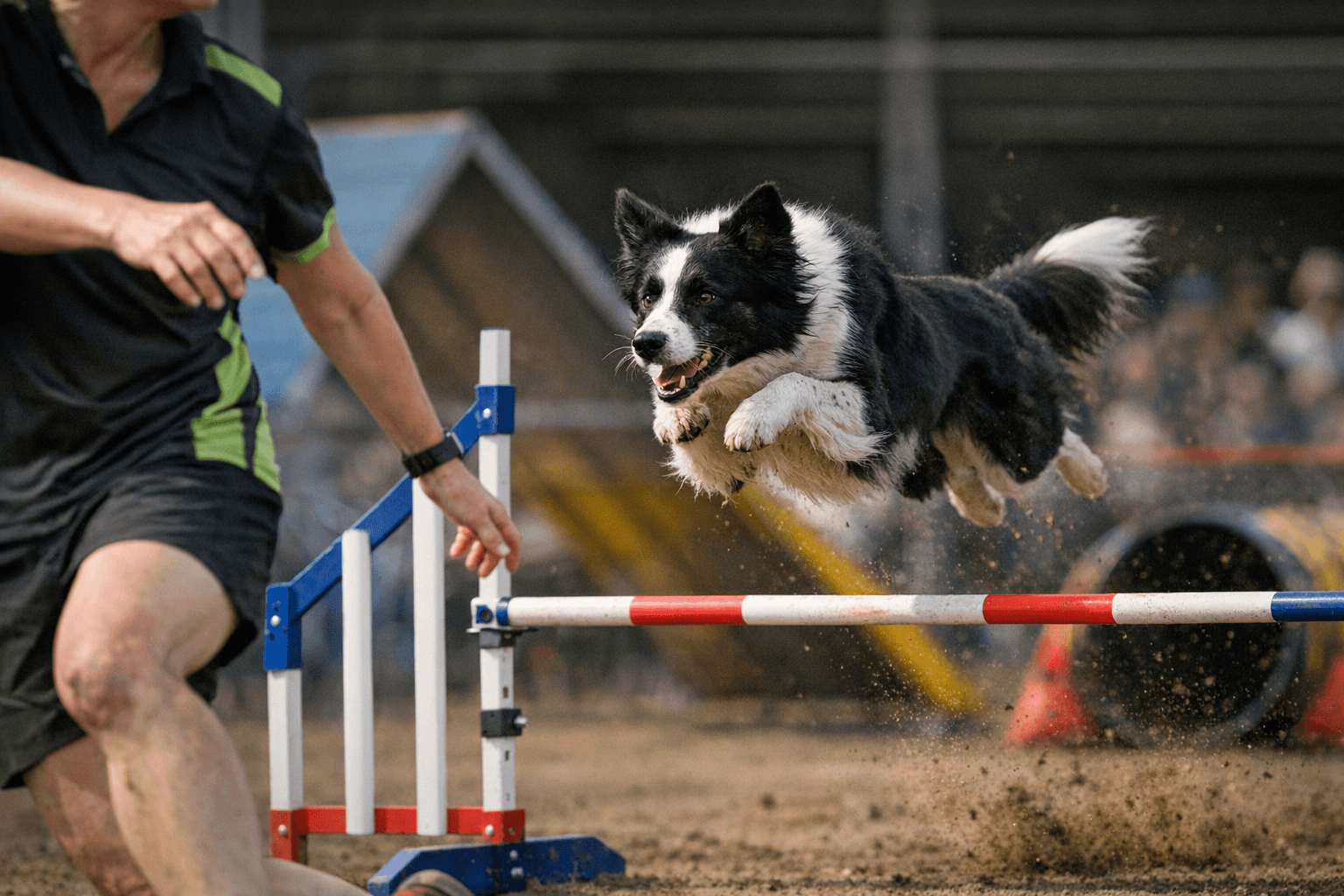
Every tier of the AKC agility competitive field got faster over the past twelve years, from borderline qualifiers to front-runners. A study accepted in Frontiers in Veterinary Science on March 26 quantifies that shift with precision and raises pointed questions about what accelerating competition speeds mean for canine athletes.
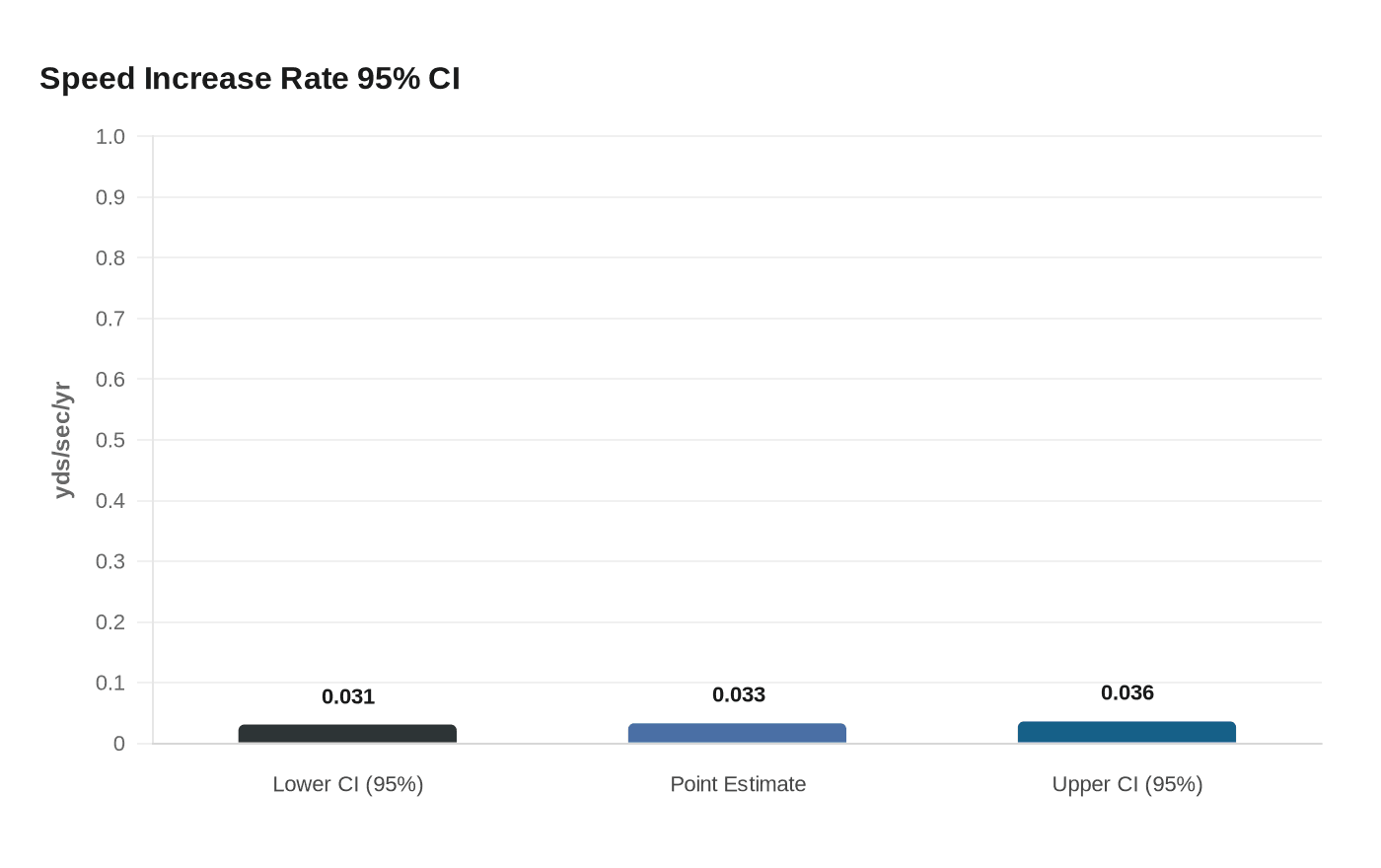
Led by Meredith McCormack-Mager, the research team analyzed more than a decade of American Kennel Club Masters Jumpers with Weaves qualifying-run data using generalized estimating equations, a method that accounts for repeated runs by the same dogs. The estimated average speed increase came to roughly 0.033 yards per second per year from 2012 through 2024, with a 95% confidence interval between 0.031 and 0.036. Across twelve competition seasons, that consistent annual increment represents a field operating at a fundamentally different pace than when the dataset begins.
The distribution finding is where the study becomes particularly telling. The speed increase held across the 5th through 95th percentiles of qualifying runs, meaning this is not a story about a handful of exceptional dogs pulling the average upward. The entire performance envelope shifted. The authors also found that newer cohorts of competitors arrive with higher baseline speeds and reach their career peak speeds earlier than prior generations, suggesting the acceleration is structural rather than incidental.
The study stops short of establishing a causal link, but the researchers explicitly flag the potential connection between rising speeds and injury rates documented in the veterinary literature, calling for prospective work that pairs run-speed metrics with veterinary outcomes. Course design, conditioning protocols, warm-up and cool-down practices, and regulatory approaches to course difficulty scaling are all identified as areas worth revisiting.
For the high-drive competitors at the center of agility sport, the authors point to progressive conditioning, cross-training, and attentive monitoring for early gait changes as priorities, particularly given that newer cohorts are now pushing into peak speeds at younger competitive ages than previous generations did. Those subtle lameness signs that precede soft-tissue injury become harder to catch when the competitive baseline keeps climbing.
The open question the research leaves is whether the sport's governing bodies will respond to the evidence. Faster dogs on more demanding courses represent both the spectacle and the risk in modern agility competition, and the pressure to address that tension now has a peer-reviewed foundation to point to.
This article was produced by Prism’s automated news system from verified source data, official records, and press releases, then run through automated quality and moderation checks before publishing. The system is built and supervised by the people who set the standards it runs under. Read our full AI policy.
Did this article answer your question?