German Shepherd vs. Doberman, Which Breed Suits Active Families Best
German Shepherds bond fast and run restless; Dobermans are equally smart but channel energy in focused bursts. Both demand active families who can match their intensity.
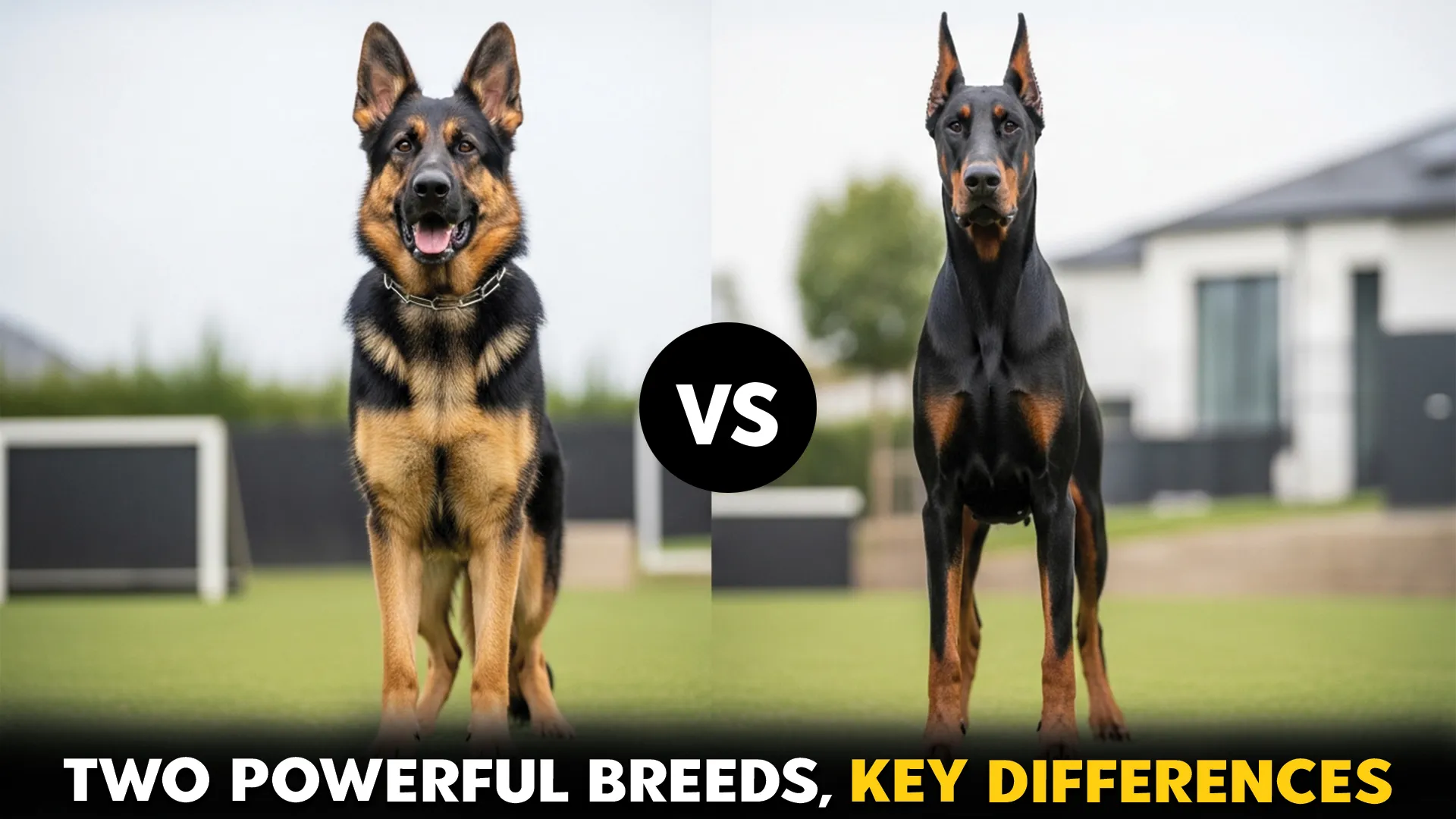
Two breeds, one question: which powerful, intelligent dog fits your household when your lifestyle never slows down? The German Shepherd and the Doberman Pinscher sit at the top of almost every conversation about high-drive dogs, and for good reason. As Mahvash Kazmi wrote in a World Animal Foundation comparison published March 15, 2026, "There are several similarities between the noble Doberman and German Shepherd, and while they are both excellent guard dogs, they make excellent pets too." The piece frames both as natural fits for households that thrive outdoors, describing them as "popular breeds for active families that enjoy an outdoor lifestyle and want an energetic dog to join their family." But similarities at the surface level can obscure real differences underneath, and those differences matter when you're choosing a dog you'll be living with for a decade or more.
Temperament: eager-to-please versus earn-my-trust
The most meaningful early distinction between these two breeds shows up before they've even finished puppyhood. German Shepherds come in bonding fast and hard: "German Shepherd puppies typically form deep bonds early on and are highly eager to please, making them exceptionally responsive to their owners." That responsiveness makes them relatively intuitive to read and work with from the start, particularly for families who haven't managed a large, high-energy dog before.
Dobermans operate on a different social timeline. "Dobermans, while equally smart, often display a more reserved and independent demeanor, appearing slightly aloof until strong trust is established." That aloofness isn't stubbornness or unfriendliness; it's the breed's way of sizing up its people before fully committing. Once that trust is built, the bond is deep. But families expecting immediate, effusive connection from a Dobie may need to recalibrate their expectations and invest patience up front.
Energy profiles: restlessness versus focused intensity
Both breeds carry high energy, but they express it differently, and that distinction shapes daily life in ways that go beyond how long your walks need to be. German Shepherds are characterized as "often more restless," needing "early mental stimulation, structured exercise, and early socialization to maintain a balanced temperament." Think of a German Shepherd as a dog whose engine is always running: it needs multiple outlets, mental and physical, running in parallel.
Dobermans present a contrasting profile. According to the World Animal Foundation comparison, "Doberman Pinschers are also active but tend to channel their energy with focused intensity rather than constant motion." A Doberman can be more economical with its energy, locking in on a task or activity and driving through it fully rather than ricocheting between stimuli. Neither style is better in absolute terms; they simply suit different household rhythms. A family that wants a dog deeply involved in every errand, trail, and backyard session may lean toward the German Shepherd. Families who prefer a dog that matches their effort in deliberate, concentrated activity may find the Doberman a better fit.
Training and exercise: what both breeds actually demand
Whatever their stylistic differences, German Shepherds and Dobermans converge on one non-negotiable: they both require serious, consistent engagement. The World Animal Foundation piece is direct about this: "both breeds demand a highly active lifestyle," and "these highly intelligent, high-energy dogs require regular daily exercise along with mental stimulation to stay balanced and well-mannered."
The consequences of falling short are not abstract. Without sufficient engagement to meet their energy needs, both breeds "can quickly become bored, frustrated, and prone to unwanted behaviors." Boredom in a 70-plus pound dog with a sharp mind is not a minor inconvenience. It tends to show up as destructive chewing, excessive barking, escape attempts, or anxiety-driven behaviors that are far harder to address after they've become habits.

For the German Shepherd, early socialization is particularly emphasized alongside structured exercise. The breed's restless energy benefits from being given a clear behavioral framework from an early age, pairing physical outlets with consistent mental engagement. For the Doberman, channeling that focused energy intensity into structured activities, training sessions, agility, or purposeful play, tends to produce a well-balanced dog. Both breeds are highly trainable; the German Shepherd's eagerness to please may make early obedience feel smoother, while the Doberman rewards trainers who establish trust and mutual respect as the foundation for every session.
Health and responsible ownership
Neither breed is fragile, but both carry inherited health considerations that responsible ownership requires taking seriously. The World Animal Foundation comparison notes that "responsible breeding practices help reduce inherited conditions, while routine checkups allow early detection of common issues." That framing points toward two practical priorities: sourcing from breeders who screen for genetic conditions and maintaining a consistent relationship with a veterinarian rather than treating vet visits as crisis-only events.
The article's conclusion on this front is optimistic without being dismissive: "With proper medical attention and preventive care, both breeds can enjoy a healthier and more fulfilling life." That's a realistic baseline. Neither breed's health profile is a dealbreaker, but neither should be approached casually. Before bringing home a German Shepherd or a Doberman, understanding which inherited conditions to screen for and establishing a preventive care routine with a vet are steps that pay dividends across the dog's full lifespan. Specific inherited conditions, typical lifespan ranges, and recommended screening protocols are details worth discussing directly with a board-certified veterinarian and a breeder who can document their health testing history.
Choosing between the two
If you're a hyperenergetic household looking for a dog that matches your pace, you genuinely cannot make a bad choice between these two breeds, provided you're honest about your lifestyle and what you can consistently offer. The German Shepherd asks for broad, layered engagement: early socialization, mental stimulation woven into daily routines, and a handler willing to meet that eager-to-please energy with structure. The Doberman asks for something slightly different: the patience to build trust before the full relationship opens up, and activities that give that focused intensity somewhere meaningful to go.
Both are intelligent enough to learn almost anything you're willing to teach. Both will notice if you're not following through on the engagement side of the bargain. And both, when matched with the right active family, become the kind of dog that earns the word "companion" in the fullest sense.
The real question isn't which breed is better. It's which breed's particular expression of intelligence and energy fits the life you already live.
Know something we missed? Have a correction or additional information?
Submit a Tip