Peppa the Mini Jack Russell's Zoomies Reveal Breed's Intense Exercise Needs
Peppa the London mini JRT racked up 3M TikTok likes doing post-walk zoomies — and her Labrador sibling Buddy's exhausted stare is the most honest verdict on terrier exercise myths ever filmed.
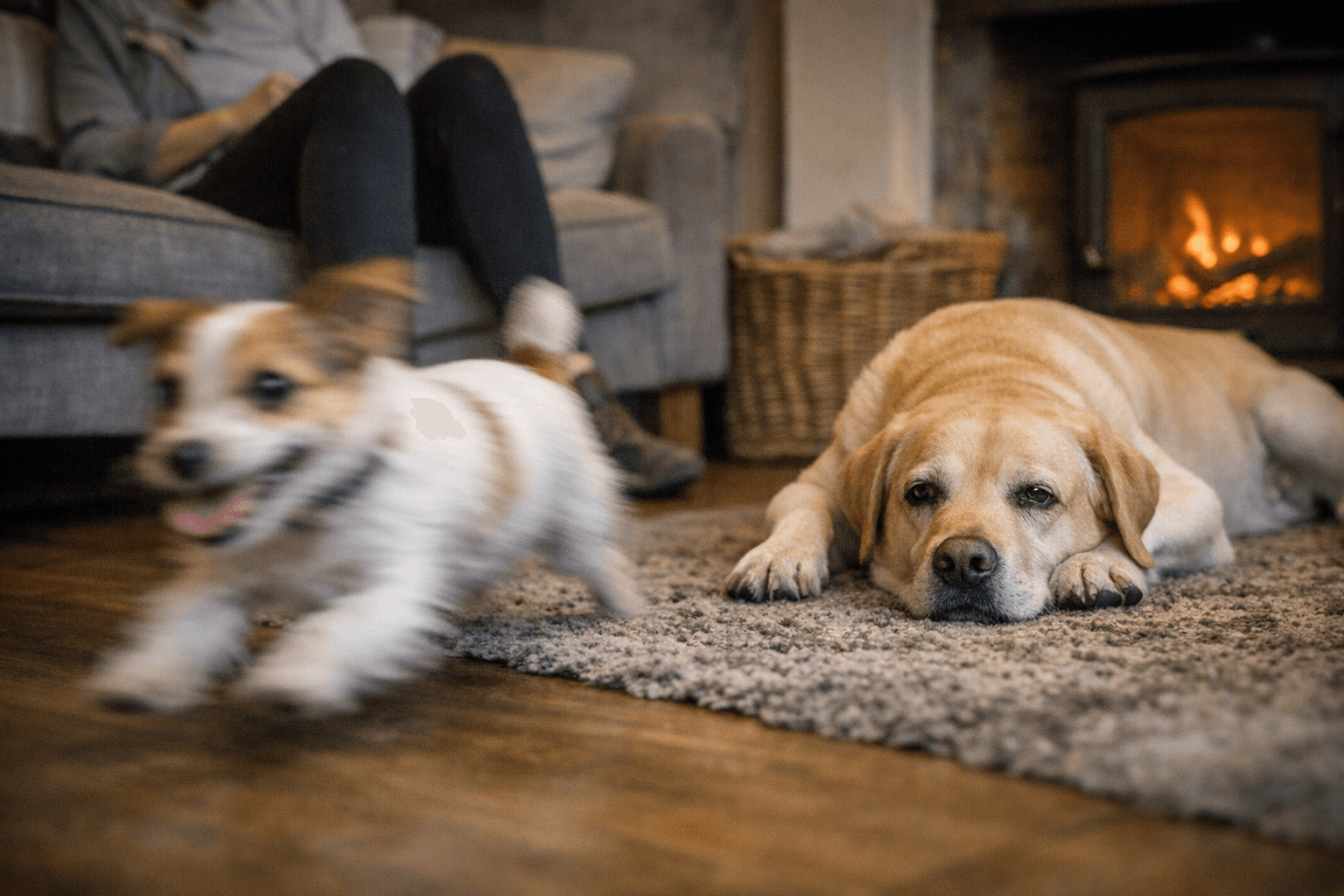
Peppa the Mini Jack Russell had already been on a walk. That detail is the whole point. The London-based terrier returned home from her neighborhood outing, hit the hallway, and immediately began sprinting back and forth from room to room in a blistering loop that her Labrador sibling, Buddy, could only observe from the floor with the hollow stare of a dog who has long since given up trying to understand her. The video, posted to TikTok under @peppa_minijrt, has pulled in 3 million likes and nearly 75,000 comments. One viewer summed it up perfectly: "Makes me laugh, every time." Another noted how drained Buddy looked just from watching. That energy mismatch between the two dogs, captured in a single corridor, tells you everything you need to know about what happens when breed instinct goes unmatched by exercise intensity.
Why a Walk Fails a Terrier
The zoomies Peppa displayed have a clinical name: frenetic random activity periods, or FRAPs, bursts of high-speed movement that dogs use to discharge pent-up energy. According to the Cornell College of Veterinary Medicine, FRAPs are especially common in young dogs, though they can appear at any age. But for Jack Russell Terriers, what looks like a FRAP is often something more structural: the breed was developed to hunt and work all day, and a 20-minute neighborhood loop barely registers as a warm-up.
Here is the core problem with casual walks for high-drive terriers:
- A slow or meandering pace gives the dog time to scan, sniff, and bank anxiety rather than burn energy
- Low-intensity movement does not engage the cardiovascular system at the level a terrier's genetics demand
- Without a clear task or prey-drive outlet, a terrier's brain stays activated long after the leash comes off
- The result is Peppa's hallway: the walk ends, the energy does not
Jack Russells typically need 90 minutes to two hours of vigorous daily activity, and "vigorous" is doing serious work in that sentence. A casual stroll around the block, in the words of one assessment of the breed, "won't even scratch the surface." Without adequate output, that energy converts directly into digging, barking, hypervigilant pacing, or, if you are Buddy, the slow psychic torture of watching someone else run laps in your living room.
The Same-Day Enrichment Plan
The fix is not simply more walking; it is smarter sequencing. A well-structured session for a terrier like Peppa targets three systems in order: the nose, the body, and the brain. Run them in sequence within a 90-minute block and you have a real shot at a settled dog by the end of it.
Phase 1: Sniff Work (15 to 20 minutes)
Start with the nose before you touch the leash. Scatter feeding across a garden or into a snuffle mat forces the dog to slow down and engage their olfactory system, which is cognitively expensive in the best possible way. Nose work games, where the dog searches for a hidden treat or scented object in multiple rooms, tap directly into the Jack Russell's natural problem-solving wiring and begin to draw down the arousal bank before a single step is taken outside. This phase does not look dramatic but it earns you a calmer dog for everything that follows.
Phase 2: Sprint Intervals (30 to 40 minutes)
This is where you match the dog's output demands honestly. For Peppa types, that means activities built around speed and chase: fetch with a fast return, tug sessions with an abrupt release, or a structured recall sprint between two people in a yard. Agility equipment, even a backyard set of jumps and tunnels, gives the terrier's body a genuine job. If you have access to a field, use it. Flyball and earthdog trials are purpose-built for this exact profile: they convert the breed's hunting drive into a sport format that channels the instinct rather than suppresses it. The goal of this phase is a dog that is physically worked, not just walked.
Phase 3: Brain Games (15 to 20 minutes)
Finish with mental load, not more physical output. A puzzle feeder at the end of a sprint session is not just enrichment; it is a deliberate wind-down signal. The dog is tired, foraging for a reward, and learning that high intensity ends with a satisfying cognitive task. Training sequences, even short ones, belong here too: asking a worked terrier to hold a stay, work through a shaping exercise, or respond to a novel cue reinforces impulse control at exactly the moment the dog is most receptive to it.
What Calm Actually Looks Like
Here is the success metric: thirty minutes after the brain-game phase ends, a well-exercised terrier should be able to settle voluntarily on a bed or in a crate without circling, whining, or relocating repeatedly. Soft eyes, a relaxed mouth, and a willingness to stay down when you walk past are the signals to look for. A dog that is still pacing, mouthing furniture, or performing unprompted laps of the hallway has not been given enough. Peppa's post-walk zoomies are not bad behavior; they are accurate feedback.
Matching Sport to Drive
For owners of dogs like Peppa who want a longer-term structure beyond daily sessions, breed-specific sports are the most efficient path. Agility competitions reward the Jack Russell's speed and bidability simultaneously. Flyball suits the dogs that fixate on chase above everything else. Earthdog trials, designed specifically for terriers with strong prey drive, allow the dog to follow scent through underground tunnels toward a caged quarry, the closest modern approximation of the original working role. All three pathways share the same logic: redirect the drive into a constructive format and you stop fighting the dog's instincts and start using them.
Buddy the Labrador, panting quietly on the floor while Peppa blurs past for the fourth time, is not the problem in that video. He is the benchmark. Get a terrier to Buddy's level of voluntary stillness after a structured session and you have done the job right.
Know something we missed? Have a correction or additional information?
Submit a Tip