Research-Backed Handbook Outlines Assessments, Daily Routines for Hyperactive High-Drive Dogs
Practical handbook lays out assessment steps and daily routines to help owners manage hyperactive, high-drive dogs.

Assessing triggers and measuring baseline arousal provide the foundation for managing hyperactive, high-drive dogs. The handbook presents a clear, science-forward system owners can apply at home: identify what sparks high-energy episodes, quantify an individual dog’s baseline arousal, design a predictable daily structure that pairs aerobic work with mental enrichment, and use specific arousal-lowering and decompression routines to reduce reactive behavior.
Begin with assessment. Record the situations that reliably precede high-arousal responses - people at the door, leash anticipation, other dogs, confined spaces, or particular times of day. Track frequency and intensity so patterns emerge. Establish baseline arousal by observing the dog in neutral conditions and noting signs such as pacing, panting, fixations, and recovery time after activity. Use those observations to set thresholds for safe training and exposure. The handbook emphasizes measuring change over time rather than relying on one-off impressions.
Daily structure is central. The recommended template pairs scheduled aerobic sessions with targeted cognitive work. Aerobic work can be structured runs, sustained fetch, or motorized-sport activities tailored to the dog’s breed and fitness. Cognitive work includes scent games, sequential training tasks, and problem-solving feeders that require focus and decision-making. Scheduling predictable blocks of exercise and enrichment helps lower baseline reactivity by giving dogs reliable outlets for high drive.
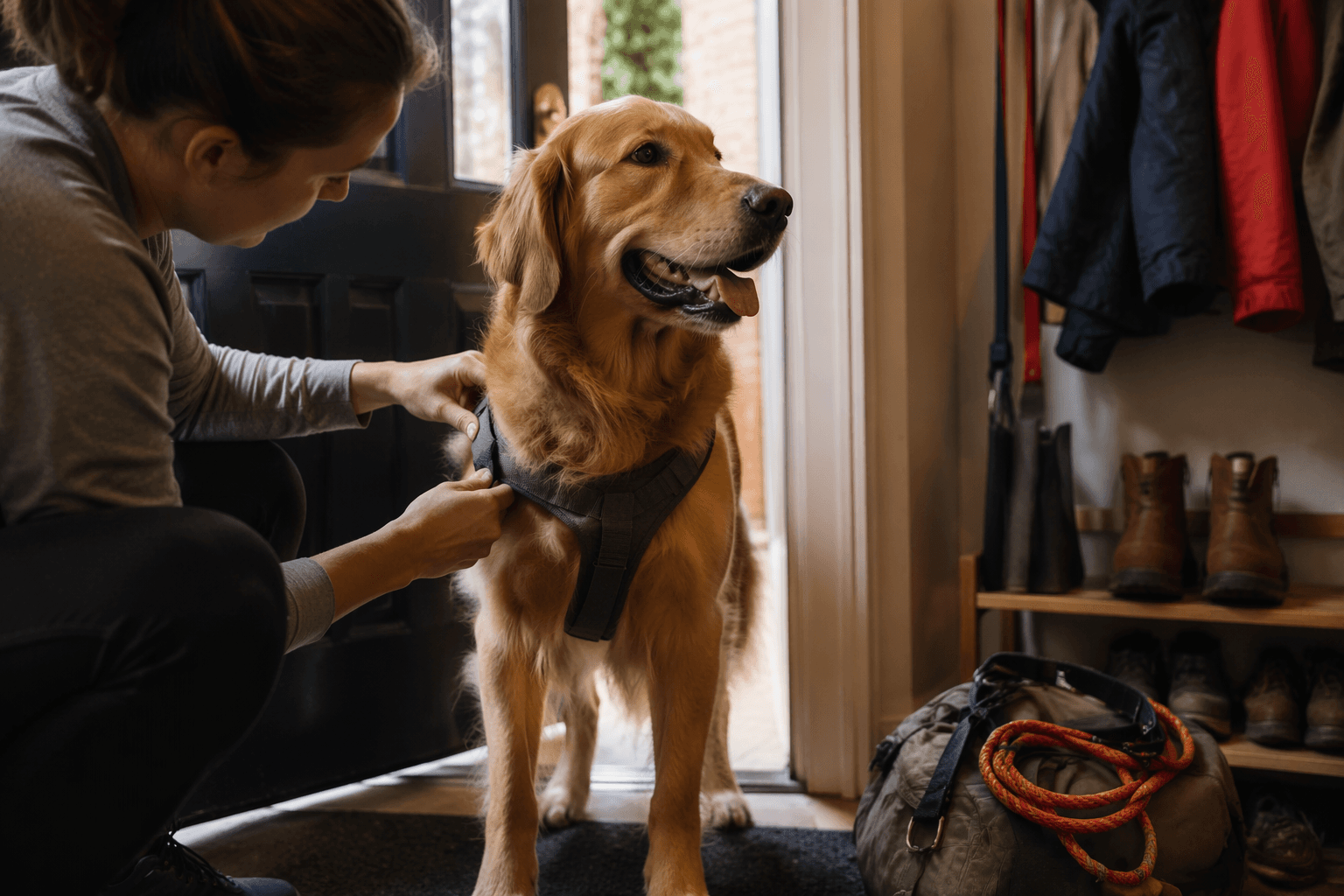
Arousal-lowering routines reduce spillover into unwanted behaviors. Quiet handling, low-arousal cues, and controlled approach practices help keep threshold levels manageable during transitions like leash-up or greeting. The handbook includes stepwise protocols to bring a dog from high arousal back toward baseline using predictable cues and graduated exposure that stays below the dog's threshold for reactive escalation.

Decompression strategies close the day. After intense activity, cooldown routines such as calm walking, scent-based wind-downs, and quiet time in a low-stimulation area help dogs consolidate calm. The handbook also covers building long-term resilience through progressive conditioning of thresholds, rotating enrichment types to prevent habituation, and documenting progress to adjust plans.
For owners and trainers this material translates into immediate, practical value: a reproducible assessment method, an actionable daily framework, and tools to lower arousal during high-risk moments. Shelters and foster networks can adapt the assessment steps to triage dogs with high drive and make more informed placement or training decisions.
What this means for readers is a shift from reactive fixes to an organized routine that channels high energy into productive work and calm recovery. Start by logging triggers and a baseline arousal observation this week, then build one predictable aerobic-and-enrichment block into the daily plan and note the difference. With consistent application, owners can turn volatile energy into reliable performance and calmer home life.
This article was produced by Prism’s automated news system from verified source data, official records, and press releases, then run through automated quality and moderation checks before publishing. The system is built and supervised by the people who set the standards it runs under. Read our full AI policy.
Did this article answer your question?