San Joaquin County Sheriff K-9 Axel retires after hundreds of deployments
After more than 300 deployments and five years on the job, German shepherd Axel is retiring from the San Joaquin County Sheriff’s Office, where he worked narcotics and rescue.

San Joaquin County Sheriff K-9 Axel is ending a five-year run that logged more than 300 deployments, a service record that put the German shepherd in the middle of narcotics calls, search-and-rescue work and public demonstrations across San Joaquin County.
Deputy J. Claude, Axel’s handler, said the dog was especially good with people and would roll over for children during school visits, a detail that captures how often the K-9’s job moved beyond enforcement and into public-facing outreach. Axel also appeared at community events such as a San Joaquin County Sheriff’s Foundation dinner and Halloween patrols with other K-9s, giving the dog a familiar place in the county’s public safety circuit.
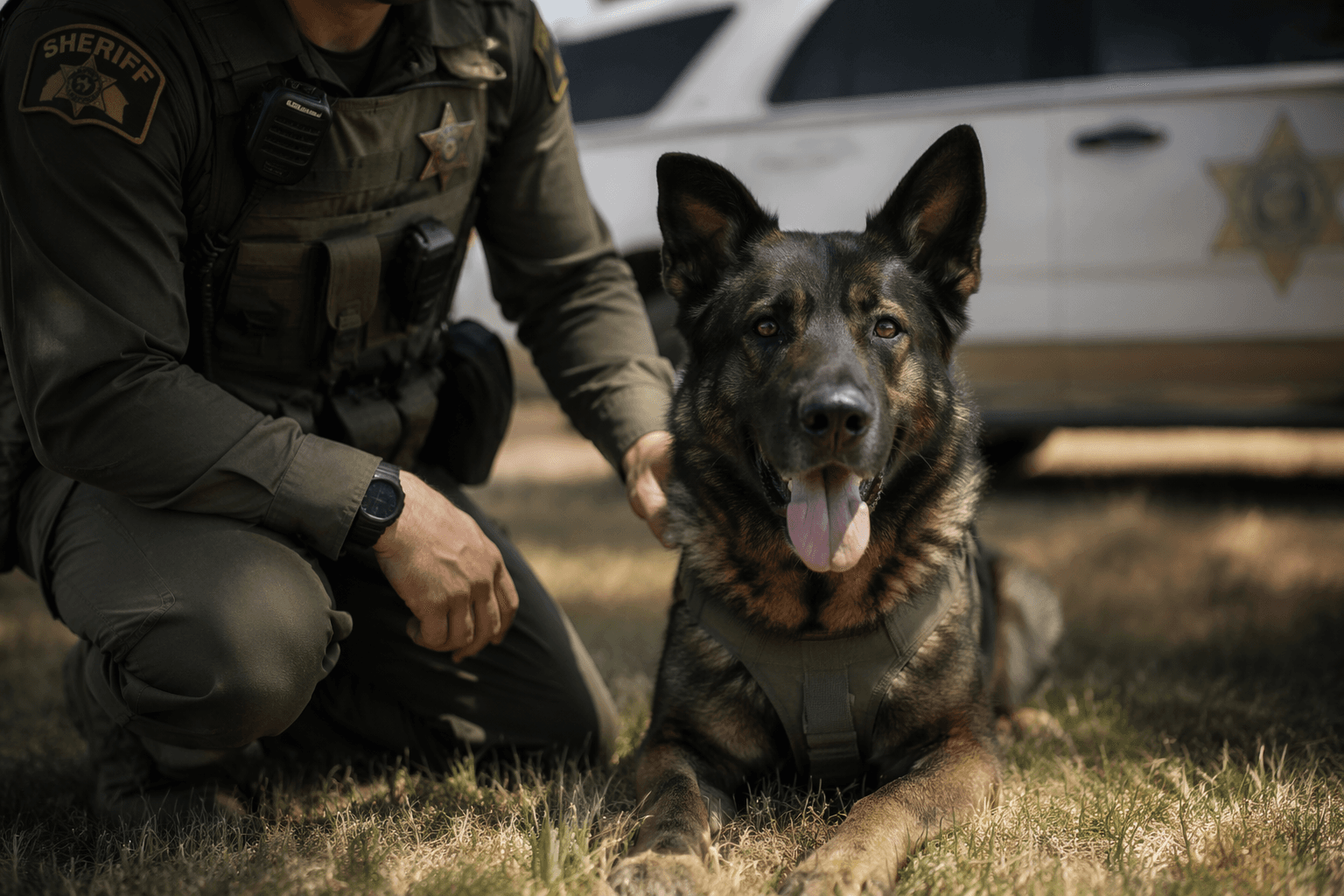
Axel’s retirement comes with the kind of ledger that working-dog teams build over time: years on duty, hundreds of deployments, and a mix of specialized tasks that demanded both focus and drive. Stocktonia reported that Axel spent roughly five years with the sheriff’s office and was deployed more than 300 times. His work included narcotics detection and search-and-rescue missions, the sort of field assignments that turn a high-energy dog into a dependable part of a law-enforcement unit.
For the San Joaquin County Sheriff’s Office, Axel’s retirement also lands in a unit that has already had to mark loss as well as service. K-9 Duke, another German shepherd in the agency’s ranks, was killed in the line of duty on February 19, 2023, and the department publicly memorialized him. That history is part of why Axel’s final chapter is being treated as more than a routine end-of-service note. In San Joaquin County, these dogs are remembered by name, by role and by the specific jobs they did.
The broader network around the sheriff’s dogs includes the San Joaquin Canine Pack, a nonprofit that supports working and retired police dogs in Central Valley California. That kind of support matters because a K-9 career usually ends the same way Axel’s has: with retirement after years of physically demanding work, when the dog’s job shifts from patrol and detection to a slower pace away from the field. For Axel, the record is clear, and so is the handoff from active service to retirement.
This article was produced by Prism’s automated news system from verified source data, official records, and press releases, then run through automated quality and moderation checks before publishing. The system is built and supervised by the people who set the standards it runs under. Read our full AI policy.
Did this article answer your question?