Science, AI, and Reward-Based Methods Reshape Dog Training in 2026
Reward-based science and AI tools are rewriting how we train our dogs, and the shift is bigger than any single trend.
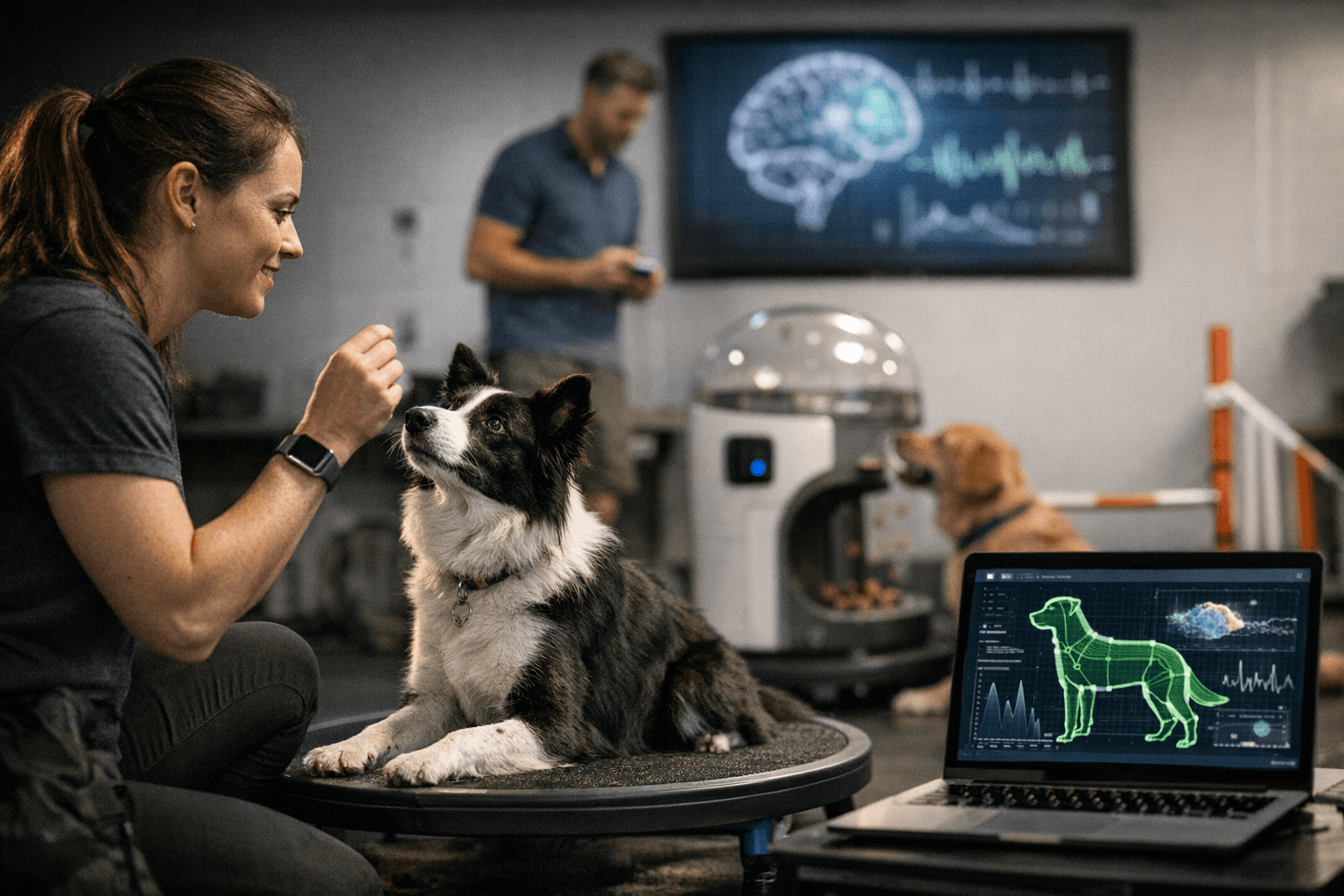
The way we train our dogs is changing faster than most of us realize. What once felt like fringe ideology — skip the prong collar, ditch the dominance theory, let the treat pouch do the talking — has become the mainstream position of an entire industry. A Petworks feature published this week maps out exactly how far that shift has traveled, and where it's heading next.
The science-backed turn in dog training
The clearest throughline in dog training right now is the move toward methods grounded in behavioral science. Reward-based training, long championed by positive reinforcement advocates, has crossed from niche preference to industry standard. This isn't just a philosophical position anymore; it's being backed by research, adopted by professional organizations, and increasingly expected by dog owners who've done their homework.
For anyone living with a hyperenergetic dog, this shift matters enormously. High-drive, high-energy dogs have historically been among the most likely to end up on the receiving end of aversive tools, the logic being that only "harder" methods can get through to a dog who doesn't seem to care about much besides movement and stimulation. The science says otherwise. Reward-based training doesn't mean low-stakes or low-intensity. It means you're working with your dog's brain rather than trying to override it. For the border collie who can't stop moving, the Belgian Malinois who lives at a seven on the arousal scale, or the rescue mutt who came in hot and never cooled down, that distinction is everything.
AI enters the training room
Artificial intelligence has arrived in dog training, and it's not a gimmick. The Petworks piece highlights AI as one of the defining trends reshaping how owners and professionals approach behavior work in 2026. The applications range from AI-assisted analysis of training sessions to platforms that help owners identify patterns in their dog's behavior over time, spotting triggers and progress markers that might be invisible in the moment.
For high-energy dogs specifically, the promise of AI-assisted training is significant. These are dogs whose behavior can feel chaotic and hard to read, especially when arousal is running high. Having a system that can parse video of a training session, flag the moments where your dog's focus started to fracture, or note that your recall is strongest on Tuesday mornings in the backyard and weakest on Saturday afternoons at the park — that kind of data changes how you train. It moves you from intuition-based guesswork to something much more precise.
The technology isn't replacing trainers or the relationship between dog and handler. It's adding a layer of feedback that didn't exist before, and for owners who are genuinely trying to understand what's working, that feedback loop can accelerate progress considerably.
Smart wearables and the data-driven dog
Alongside AI platforms, smart wearables for dogs have become a serious part of the training conversation in 2026. These devices, worn on the collar or harness, track everything from activity levels and sleep quality to heart rate variability and stress indicators. The Petworks feature identifies wearables as a key part of the technology wave currently moving through dog training.
For hyperenergetic dogs, wearable data can be revelatory. Owners often know their dog is "wound up" but struggle to connect that state to specific causes. A wearable that shows a spike in resting heart rate on days when the dog didn't get adequate physical exercise, or a pattern of poor sleep following high-stress social encounters, gives you something concrete to act on. It shifts the conversation from "my dog is being impossible today" to "my dog's stress indicators have been elevated since Wednesday."
This kind of information also helps owners make smarter decisions about when to train. Trying to work on loose-leash walking or impulse control with a dog who's been sleep-deprived and under-stimulated is an uphill battle. Wearable data can help you pick your moments more strategically.
Short, focused sessions: the new training standard
One of the more counterintuitive findings that behavioral science has consistently reinforced is that shorter training sessions tend to produce better outcomes than long ones. The Petworks piece flags this as a trend gaining serious traction in 2026: structured, focused sessions rather than marathon training blocks.
This is especially relevant for anyone working with a high-drive dog. The instinct, when you have a dog with seemingly bottomless energy, is to train longer to tire them out mentally. But cognitive fatigue sets in faster than most owners expect, and a dog who's mentally overloaded stops learning effectively. Worse, a frustrated or fatigued dog in a training session can start rehearsing undesirable behaviors, which is the last thing you want.
Short sessions, roughly five to fifteen minutes depending on the dog and the task, keep motivation high, maintain focus, and end before the quality degrades. For hyperenergetic dogs, the structure also provides something valuable in itself: a defined beginning, middle, and end to an interaction that can otherwise feel endless and overwhelming for both dog and handler.
The practical approach looks something like this:
1. Choose one specific behavior or skill to work on per session.
2. Set a timer so you don't drift past the productive window.
3. End on a strong repetition, not a failed one.
4. Build in physical exercise before or after, not as a replacement for the cognitive work.
What this means for the high-energy dog community
The convergence of these trends — rigorous behavioral science, AI-assisted analysis, smart wearable data, and intentional session structure — represents something more than a collection of new tools. It's a fundamental recalibration of what good dog training looks like in 2026.
For the hyperenergetic dog community, this moment feels particularly significant. These are dogs who have always demanded more: more creativity, more patience, more willingness to understand what's driving the behavior before trying to change it. The industry is finally catching up with what many owners in this space have known for years. Science-backed, reward-based training isn't the soft option; it's the smart one, and now there are more tools than ever to help you do it well.
This article was produced by Prism’s automated news system from verified source data, official records, and press releases, then run through automated quality and moderation checks before publishing. The system is built and supervised by the people who set the standards it runs under. Read our full AI policy.
Did this article answer your question?