Therapy Labrador Quentin Earns National Recognition for Supporting Veterans in Tampa
Quentin, a 3-year-old therapy dog at Tampa's VA hospital, earned a spot in American Humane's 15th Annual Hero Dog Awards for calming veterans in the spinal cord injury unit.
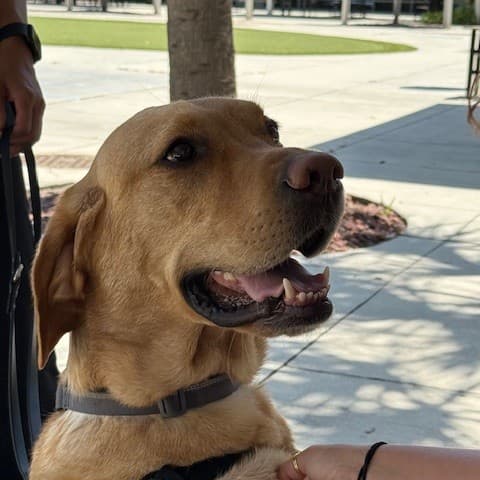
Quentin carries his own hospital ID badge, works the spinal cord injury unit at James A. Haley Veterans' Hospital in Tampa, and has now earned national recognition through American Humane's 15th Annual Hero Dog Awards, where he is featured as a Therapy Dog finalist from his hometown of Tampa, Florida.
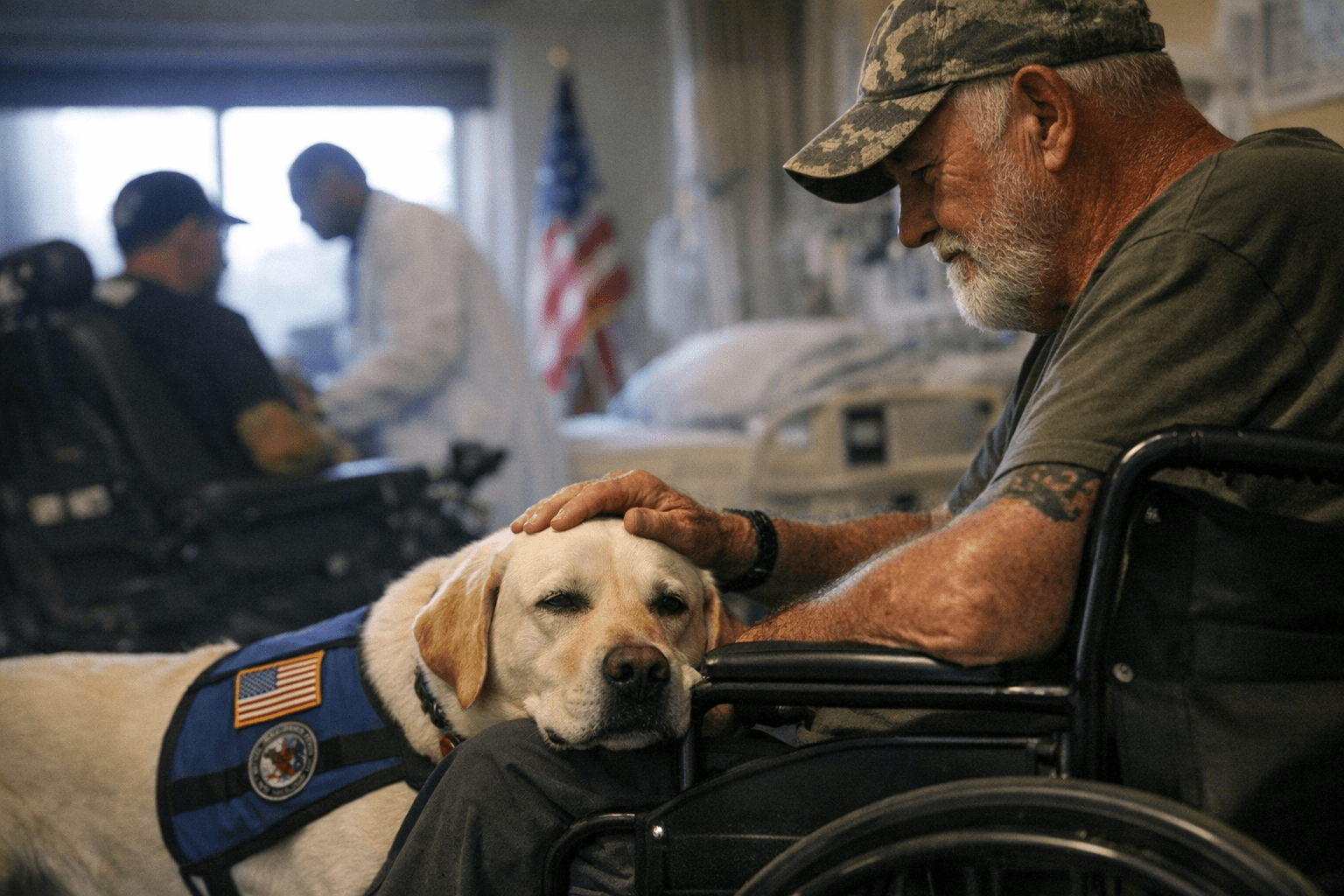
The 3-year-old Labrador's profile in the Hero Dog Awards materials describes his work with characteristic precision: "His gentle presence eases loneliness, motivates rehabilitation and offers solace to families during difficult times." That covers the patients. For hospital staff, American Humane notes they "rely on Quentin's playful spirit and calming energy to recharge amid their demanding work" — a detail that speaks to how deep his role runs inside the facility.
What sets Quentin apart from a typical therapy animal program is the scope of his integration into daily hospital life. He is not a scheduled visitor. He is, per American Humane's profile, "known hospital-wide," a distinction the organization underscores by pointing to that ID badge as evidence of his official standing. The awards listing credits his superpower simply as "His calming presence," which is either an understatement or exactly right for a dog working among veterans navigating spinal cord injuries.
American Humane, the Washington, D.C.-based nonprofit behind the annual awards, organized the 15th Hero Dog Awards to spotlight working and service animals across multiple categories. Quentin's Therapy Dog category places him alongside animals doing similar emotionally demanding work in hospitals, hospices, and rehabilitation settings nationwide.
The Hero Dog Awards listing describes the core of what Quentin does at the spinal cord injury unit in a single phrase worth holding: he "intuitively senses when someone needs love or distraction, embodying compassion in every wag and hug." For a unit where patients face some of the most disorienting recoveries in modern medicine, that kind of attentiveness is not decorative. It is functional.
Know something we missed? Have a correction or additional information?
Submit a Tip