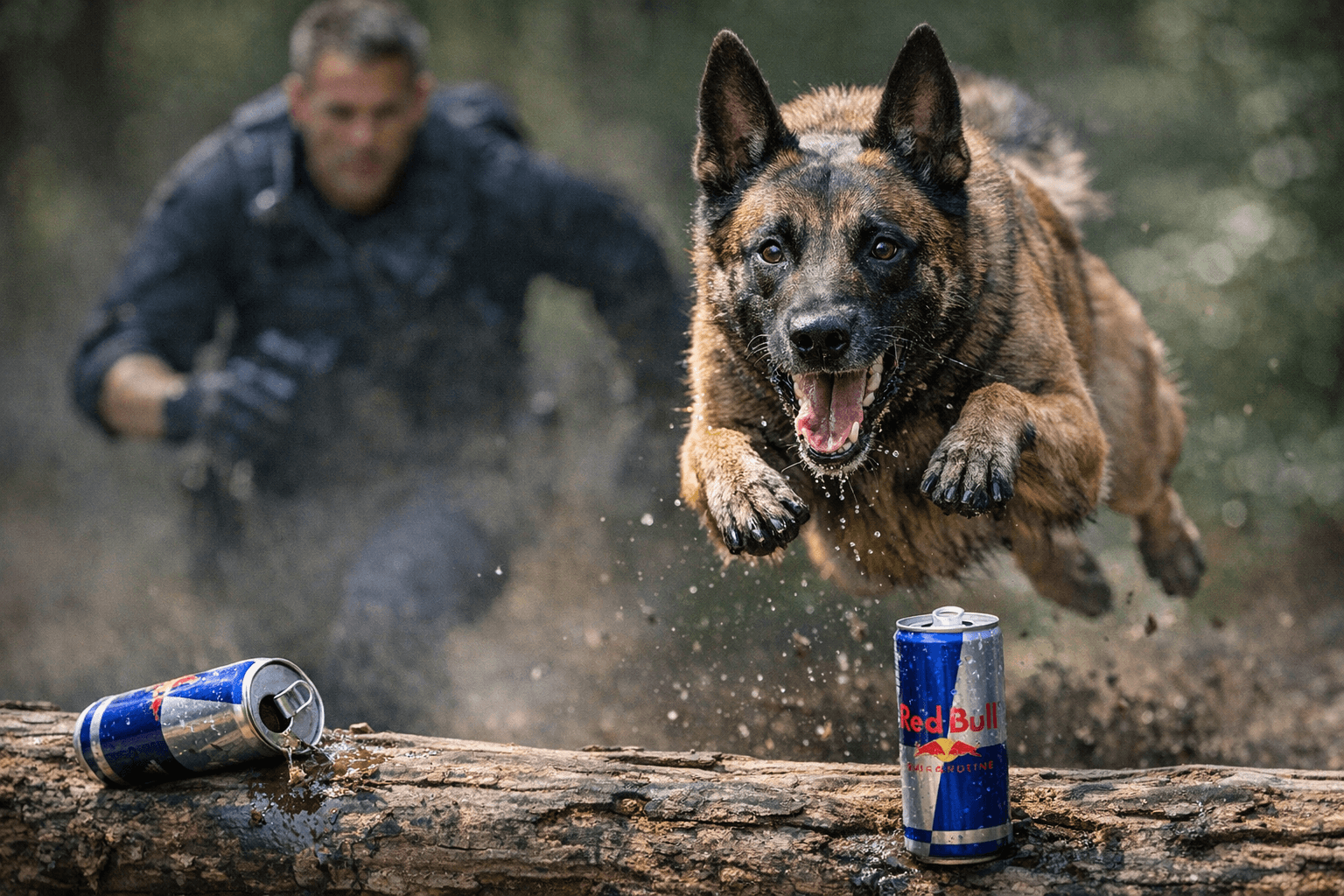
Viral Post Calls Belgian Malinois Energy Black-Belt ADHD on Red Bull
A viral X post tagging Belgian Malinois energy 'black-belt ADHD on Red Bull' hit 10,000 likes; the breed can sustain 8-10 hours of work daily.
When Cairo, a Belgian Malinois, rappelled into Abbottabad, Pakistan, alongside Navy SEAL Team 6 in May 2011 and helped kill Osama bin Laden, the breed's reputation was sealed. What no one warned the civilian owners who followed was that the same engine that made Cairo a special-ops asset can run at full throttle for 8 to 10 consecutive hours.
That number is the reality buried inside a viral X post that has collected more than 10,000 likes and hundreds of reposts after describing the Belgian Malinois as possessing "black-belt ADHD on Red Bull." The post detonated a wave of replies from owners cataloguing chewed walls, destroyed fences, furniture in splinters, heels nipped raw, and dogs pacing in tight loops through the small hours of the night. The phrase landed because it captured something trainers have long insisted: this is not high energy. This is a qualitatively different phenomenon.
Handlers call it "Malinois brain," an almost obsessive need for task, stimulation, and a clear handler hierarchy. A Border Collie, widely regarded as the most energetic and intelligent companion breed on the planet, needs 60 to 90 minutes of vigorous daily exercise. A Belgian Malinois operating in a professional K9 context sustains productive work for 8 to 10 hours. The AKC's own breed profile lists 60 to 80 minutes of vigorous daily exercise as the minimum requirement, classifies the Malinois as needing an experienced owner with a job to provide, and adds structured mental stimulation on top of the physical floor. If the 60-to-80-minute floor sounds ambitious, the breed is already signaling it is not the right fit.
The civilian surge that produced all those replies has been accelerating for years. The Malinois ranked outside the AKC's top 60 a decade ago, climbed to number 37 in 2021, and reached number 32 in 2022. That trajectory maps directly against intake data from the American Belgian Malinois Rescue (ABMR), which has reported rising owner-surrender rates driven overwhelmingly by one cause: inability to manage the dog's drive, prey instinct, and intensity. Breed advocates have a phrase for what happens when a Malinois lands in the wrong home: "too much dog."
The military cachet is inseparable from the civilian surge. Belgian Malinois now comprise an estimated 50 percent of all U.S. military working dogs, having largely displaced the German Shepherd in special-operations roles. Weighing between 40 and 80 pounds, lighter than most German Shepherds, they can be harnessed and rappelled with operators in the field. They have been clocked at 35 mph. The U.S. Secret Service's Uniformed Division deploys them around the White House perimeter. The imagery is undeniably compelling; the daily maintenance is something else entirely.
Named after Malines, the Belgian city known internationally as Mechelen, the breed was developed in the late 19th century as a herding and protection tool and received AKC recognition in 1959. It was never designed as a companion animal. What the viral post did, with a single shareable phrase, was make that distinction impossible to scroll past: a Border Collie is high energy; a Belgian Malinois is Cairo, and Cairo was engineered for Abbottabad.
Know something we missed? Have a correction or additional information?
Submit a Tip