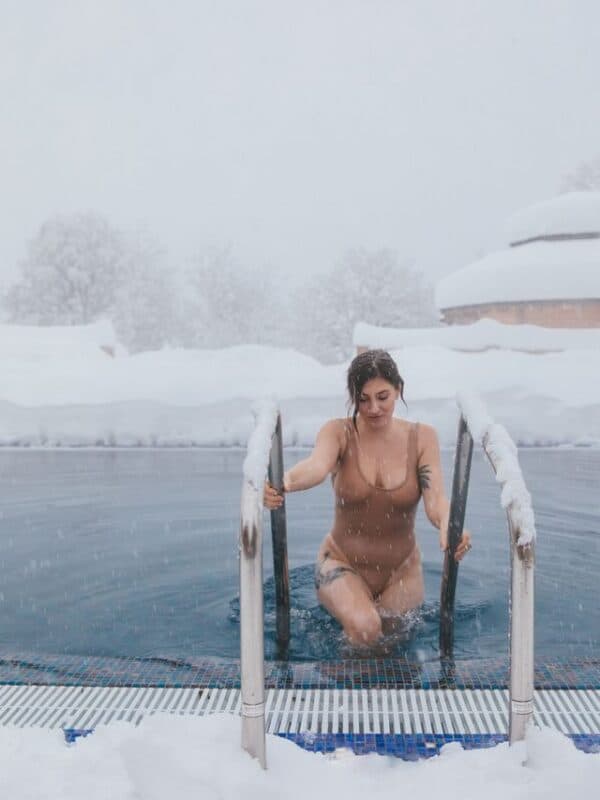
Antarctic plunge shows why cold exposure drives wellness tourism
An Antarctic slip became the cleanest sales pitch for cold travel: operators now package shock, ritual, and recovery as premium wellness.
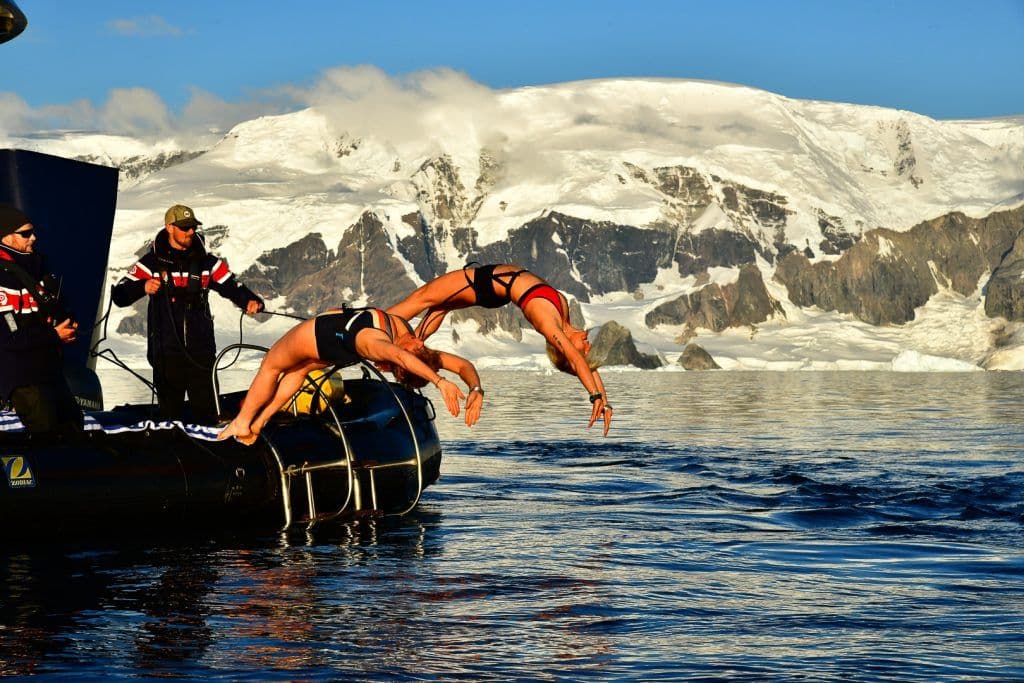
The cold can start in Antarctica as a wipeout from a paddleboard into freezing water and end as the official plunge, chosen on purpose. That shift from surprise to ritual is what makes cold exposure so valuable to wellness travel right now, because the product is not just the temperature, it is the story of surviving it.
From shock to itinerary
Cold exposure has moved from fringe bragging rights to a booked, branded experience. The Global Wellness Institute projects wellness tourism will reach $1.35 trillion by 2028. Wellness tourism sits at the intersection of tourism and wellness, where people increasingly expect to keep their healthy routines while away from home. Global Wellness Institute data also shows wellness tourism and related wellness sectors grew about 30% in 2023, which helps explain why polar plunges, cryotherapy, and contrast therapy are being sold less as stunts and more as part of a travel menu.
Wild cold and engineered cold are now competing products
Antarctica: the original version
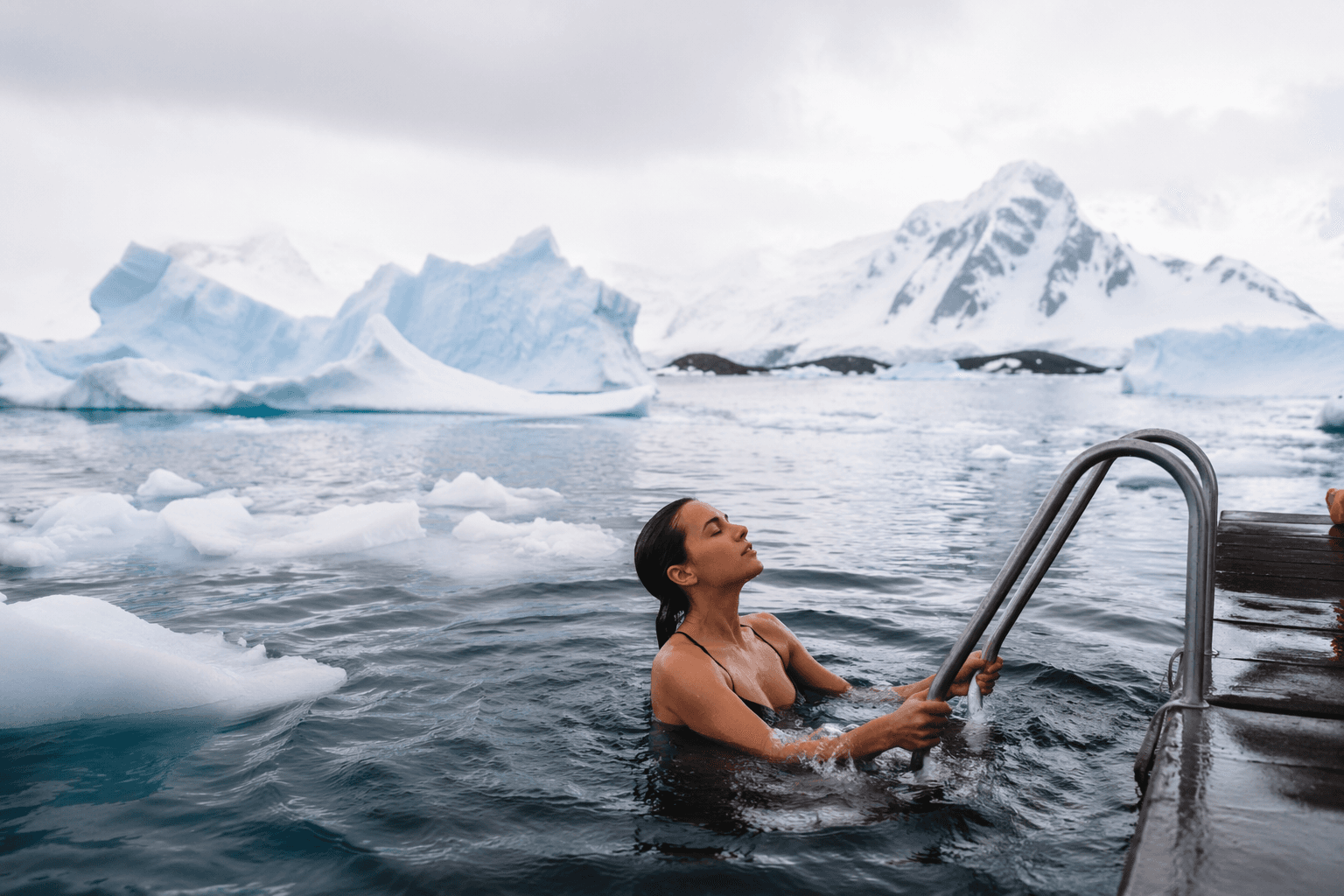
In Antarctica, the appeal is still the blunt one. The cold is not staged, softened, or slowly ramped up. There are no dials, no rehearsed transition, and no machine-made recovery cycle, just the body meeting the environment. Polar expedition operators treat the polar plunge as a longstanding Antarctic and Arctic tradition, and in some cases a rite of passage.
Some operators offer it only when local weather and wildlife conditions allow. The plunge is not an always-on amenity like a spa treatment. If the sea and the wildlife do not cooperate, the ritual does not happen.
Switzerland: the controlled version
The other end of the market is engineered cold, and it looks very different. At L3 Longevity Circle at Appenzell Haus in Appenzell, Switzerland, the cryotherapy chamber reaches -120 C, with sessions lasting up to three minutes. The user is suited up in protective gear, which is the entire point of this side of the trade: the experience is intense, but bounded.
One version offers the rawness of place. The other offers precision, predictability, and a short enough exposure window that it can fit neatly into a luxury itinerary.
What the evidence can and cannot carry
The research around cold-water immersion is active, but it is not cleanly settled in the way the marketing sometimes sounds. A 2024 systematic review and meta-analysis in PLOS One found that cold-water immersion is widely studied in healthy adults for psychological, cognitive, and physiological effects. A Frontiers review from 2023/2024 found the evidence is still mixed and the mechanisms are not yet clear.
That gap between interest and certainty is where a lot of the wellness-travel branding lives. The activity has enough scientific attention to sound serious, but not enough certainty to become simple. For travelers, that means the cold is doing two jobs at once: it is an experience, and it is a claim about how the body should feel afterward.
The U.S. Food and Drug Administration has taken a harder line on whole-body cryotherapy, warning that the practice lacks evidence for many marketed claims and may pose risks. In whole-body cryotherapy, the entire body, including the head, is exposed to freezing temperatures generated by liquid nitrogen.
What to look for before you buy the experience
For anyone weighing a cold-exposure trip, the real questions are practical. The best operators are the ones that make the experience legible, not mystical. A plunge or chamber should come with clear boundaries, clear supervision, and clear rules about when it is offered and when it is not.
- Ask whether the plunge is weather-dependent, wildlife-dependent, or fixed on the schedule.
- Check the length of the exposure, especially if the offer is a cryotherapy chamber with a set time like the three-minute sessions at Appenzell Haus.
- Look for protective gear, supervision, and a defined recovery setup rather than a vague promise of “push through it.”
- Treat claims of transformation with caution if the operator leans harder on branding than on basic safety structure.
The old appeal was mainly the anecdote: the person who jumped, shivered, and came back with a story. The new appeal comes with weather rules, session lengths, protective gear, supervision, and a defined recovery setup before you book.
This article was produced by Prism’s automated news system from verified source data, official records, and press releases, then run through automated quality and moderation checks before publishing. The system is built and supervised by the people who set the standards it runs under. Read our full AI policy.
Did this article answer your question?