Cold bath temperature and time may shape muscle soreness relief
The best-supported plunge is not the coldest one: one review found the sweet spot around 11 to 15 °C for 11 to 15 minutes.
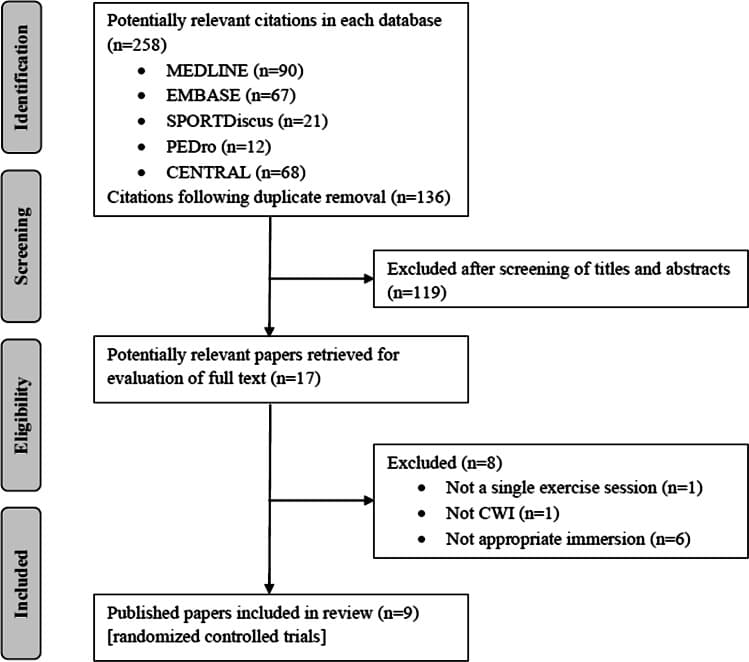
A 2015 *Sports Medicine* review tied the best muscle-soreness results after hard exercise to water at 11 to 15 °C for 11 to 15 minutes. It tested whether water temperature and immersion time actually shape muscle soreness relief after hard exercise.
What the 2015 review was really testing
The paper, titled *Can Water Temperature and Immersion Time Influence the Effect of Cold Water Immersion on Muscle Soreness? A Systematic Review and Meta-Analysis*, did not treat every plunge as the same intervention. That matters, because the cold tub in a garage, the stock tank in a gym, and the hotel tub full of ice all vary on the two knobs that decide the dose: temperature and time.
The Springer Nature article page lists 43k accesses, 204 citations, an Altmetric attention score of 458, and 67 mentions. The review concluded that cold water immersion can be slightly better than passive recovery for managing muscle soreness.
The dose is the point
This is where a lot of plunge culture gets sloppy. People talk about ice baths like there is one correct ritual, but the review points to a dose-response relationship, which means the setup changes the outcome. More cold is not automatically better, and more time is not automatically smarter.
The review tied the best results to that temperature-and-time range. That is the practical number pair that keeps showing up in the literature, and it is very different from the casual “as cold as possible, stay in as long as you can handle” approach that dominates social media. If you want a reproducible protocol, that range is the cleanest place to start.
Why committed plungers get tripped up
Ice bath veterans know the trap: the first few minutes feel like the whole story, so people assume colder must equal better. In reality, a longer soak in much colder water can turn into shivering, numbness, and a session you dread enough to skip, which is how a recovery habit dies in the real world. The review framed the issue as dose-response, not maximal cold or maximal time.
That is also why the comparison target matters. The review was about muscle soreness after exercise, not a vague sense of wellness, and it measured cold water immersion against passive recovery. If you are trying to come back from a hard run, a team session, or a brutal gym block, the question is not whether the tub feels extreme. The question is whether a controlled dose improves soreness more than just sitting still and letting time do its thing.
The field has been asking the same question for years
This was not the first time researchers had tried to nail down the recipe. A 2014 randomized controlled trial in *Physical Therapy in Sport* asked whether dose is important in cold water immersion for delayed-onset muscle soreness, which shows the field was already moving past the yes-or-no version of the question. The literature has been circling the same issue ever since: how cold, how long, and for which recovery goal.
That older question set up later work instead of ending it. A 2022 *Sports Medicine* systematic review and meta-analysis examined cold-water immersion versus passive recovery after strenuous exercise in physically active participants. A 2025 Frontiers network meta-analysis went a step further by comparing different doses, including duration and temperature variations, for recovery from acute exercise-induced muscle damage.
Where sports medicine lands now
The American College of Sports Medicine calls cold water immersion the most studied cryotherapy application. This review gives you a usable range, not just a thumbs-up or thumbs-down verdict.
If you are the kind of person who already owns a plunge tub, the practical reading is simple. The evidence does not reward theatrical suffering. The evidence favors a controlled session in that neighborhood, not a colder, longer one.
What you can copy, and what stays unproven
What you can copy is the dose that keeps appearing in the literature: that temperature-and-time range and a recovery goal focused on soreness after training. That is the closest thing to a community-friendly protocol the evidence gives you right now.
What remains unproven is the idea that colder and longer is better in a simple, linear way. The review points the other direction, toward a dose-response relationship, and the later meta-analyses keep the question open rather than settling it with a single magic number.
This article was produced by Prism’s automated news system from verified source data, official records, and press releases, then run through automated quality and moderation checks before publishing. The system is built and supervised by the people who set the standards it runs under. Read our full AI policy.
Did this article answer your question?