Cold Plunge Boom Triggers New Regulatory Battles for Sauna Operators
The plunge boom has hit a code wall, and the first design choice can decide whether your tub is treated like a spa, a pool, or a standalone recovery fixture.
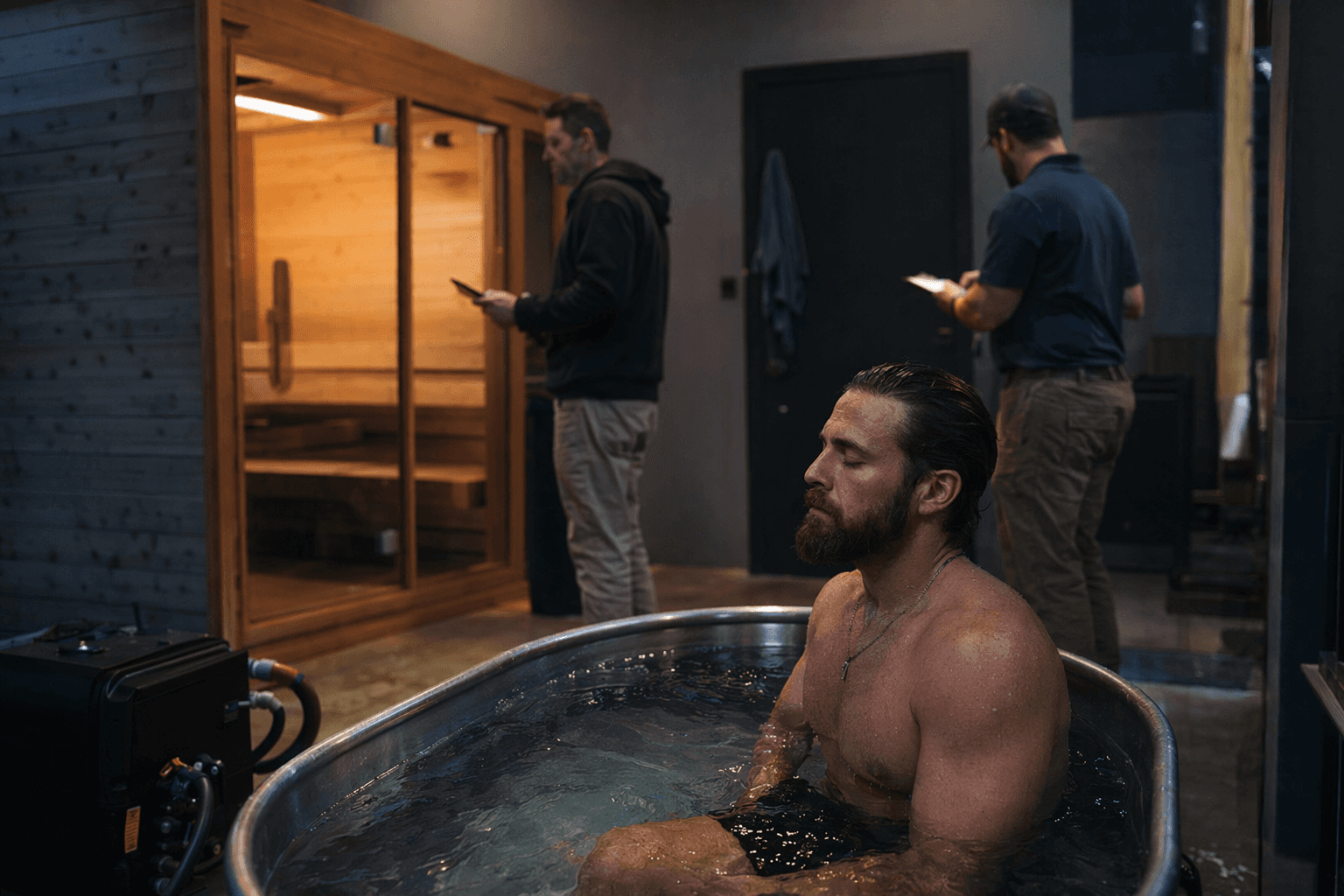
A 50-degree plunge can look like a bathtub to the guest, a recovery feature to the operator, and a public aquatic risk to the health department. That mismatch is turning the cold-plunge boom into a real regulatory fight, because the same user experience is now being sorted into different legal buckets across the United States, with some places folding it into spa-pool rules, some creating a new single-user category, and others treating it as a public pool the moment the door opens to the public.
Why the sauna-era playbook no longer fits
What used to work for sauna lounges and contrast suites was a loose, hot-water-era framework that assumed spas, hot tubs, and pool standards could cover almost anything with water in it. Cold plunges break that logic in two ways: the water is far colder than the systems regulators were built around, and the use pattern is often one person at a time, or a fast rotation of users, rather than a traditional shared spa. Public-health guidance also points to a basic technical problem: cold temperatures can lower disinfectant effectiveness, so cleaning and maintenance become harder just when operators are trying to run lean, premium recovery experiences.
That is why the stakes are bigger than semantics. Once a cold plunge is classified one way instead of another, the operator’s path can change immediately. Plan review may be required before construction. Filtration and sanitation systems may need to be redesigned. Warning signage, water testing, staffing, and even whether a project is feasible can all hinge on whether the unit is treated as a tub, a spa, or a public pool.
California is drawing the sharpest line
California’s AB 2330, analyzed in the Assembly Committee on Health on April 14, 2026, after an April 6 amendment and with Mia Bonta chairing the committee, is the clearest example of the new split. The bill creates two categories: “cold plunge tubs” and “cold spas.” In the committee analysis, a cold plunge tub is an aboveground, individual-use therapeutic tub kept between 35 and 60 degrees Fahrenheit with a mechanical chiller, mechanical recirculation, automatic disinfection, and daily drain-and-fill. It is not treated as a public swimming pool.
The bill is also unusually explicit about operations and consumer warning. Cold plunge tubs would need a visible sign in at least one-inch letters and contrasting colors stating, “This Cold Plunge Tub is not under health regulation as a public swimming pool, use at your own risk.” That is the kind of language that turns a wellness amenity into a compliance object, because the operator is no longer just selling a vibe, they are documenting that the unit sits outside pool regulation.
The colder, in-ground version goes the other direction. California’s “cold spa” category covers an in-ground public swimming pool designed for brief therapeutic immersion at 35 to 60 degrees Fahrenheit and able to support multiple users at one time. Those facilities stay under the construction and operation requirements for spas or spa pools, with the bill specifically requiring a mechanical recirculation system that continuously or intermittently circulates, filters, and disinfects water, and allowing a lifeguard onsite when the spa runs under an approved operational safety plan. For operators, that means the moment you go from an aboveground single-user unit to an in-ground shared basin, you are likely crossing into a much heavier regulatory lane.
Utah already built a similar dividing line
Utah moved first. SB 106, Public Cold Bath Requirements, was signed in March 2024, and its definition of a public cold bath was narrow on purpose: a tub or tank used by the general public, one bather at a time, with chilled water below 60 degrees Fahrenheit and no more than 180 gallons in volume. The law also required the water to be continuously filtered and sanitized, which matters because Utah’s answer was not “no rules,” it was “the old pool rules do not cleanly fit this format.”
That split has only sharpened. A March 2026 Utah State Bulletin filing described a public cold plunge pool as more than 180 gallons with multiple concurrent users, and kept those facilities in a spa-pool-style regulatory framework with cold-specific signage and controls. In plain English, Utah is signaling that the single-user, under-180-gallon plunge is one thing, while a larger multi-user plunge is another. If you are designing a contrast suite, that threshold can decide your construction plan before the first permit packet goes in.
The practical fallout for operators and investors
Washington State is taking the spa-pool route more broadly. Its Department of Health says cold plunges must comply with all rules for the design, construction, equipment, and operation of spa pools, and it warns that self-contained cold plunge tubs built primarily for the residential market, even when labeled commercial, are not built to meet Washington’s design and construction requirements for regulated uses. Minnesota is even more direct: if a cold plunge is open to the public, whether for a fee or free of charge, it is a public pool and must follow the state pool code, including plan review, inspection, and licensing before operation begins.
For investors, that can mean retrofits as much as new builds. An aboveground unit may look like the easier path, but if the system is not drained and refilled between each user, Indiana guidance says it should meet both pool and spa rules, and federal suction-outlet safety law may also apply. Indiana’s guidance also frames the issue as a code question for low-volume, prefabricated single-user units that plug into a 110V wall outlet, which is a very different operational world from a custom in-ground shared basin. Once suction, recirculation, and sanitation enter the picture, the budget can change fast.
The safety argument is now part of the business model
Public Health Ontario treats cold plunges as a developing regulatory issue and notes that the service now appears in dedicated cold-plunging facilities, outdoor thermal spas with saunas and heated pools, and athletic recovery settings. The National Collaborating Centre for Environmental Health adds the core reason regulators keep circling back to this niche: cold plunge tanks can be hard-plumbed with recirculation and automatic disinfection, or they can be stand-alone units without either, and cold temperatures can reduce disinfectant effectiveness while raising infection, suction, and entrapment risks. Washington’s guidance adds the user-facing danger too: cold shock, drowning risk, and cardiovascular stress can happen quickly.
That is the turning point the industry has reached. Cold plunges are no longer just a sexy add-on beside the sauna. They are becoming a category regulators must name, and once they are named, operators have to build to that name, from the first drawing to the last inspection.
This article was produced by Prism’s automated news system from verified source data, official records, and press releases, then run through automated quality and moderation checks before publishing. The system is built and supervised by the people who set the standards it runs under. Read our full AI policy.
Did this article answer your question?