Pitt’s new sports complex makes cold plunges part of daily athlete recovery
Pitt’s $240 million Victory Heights folds cold plunges into everyday team life, making recovery as central as practice for 16 programs.
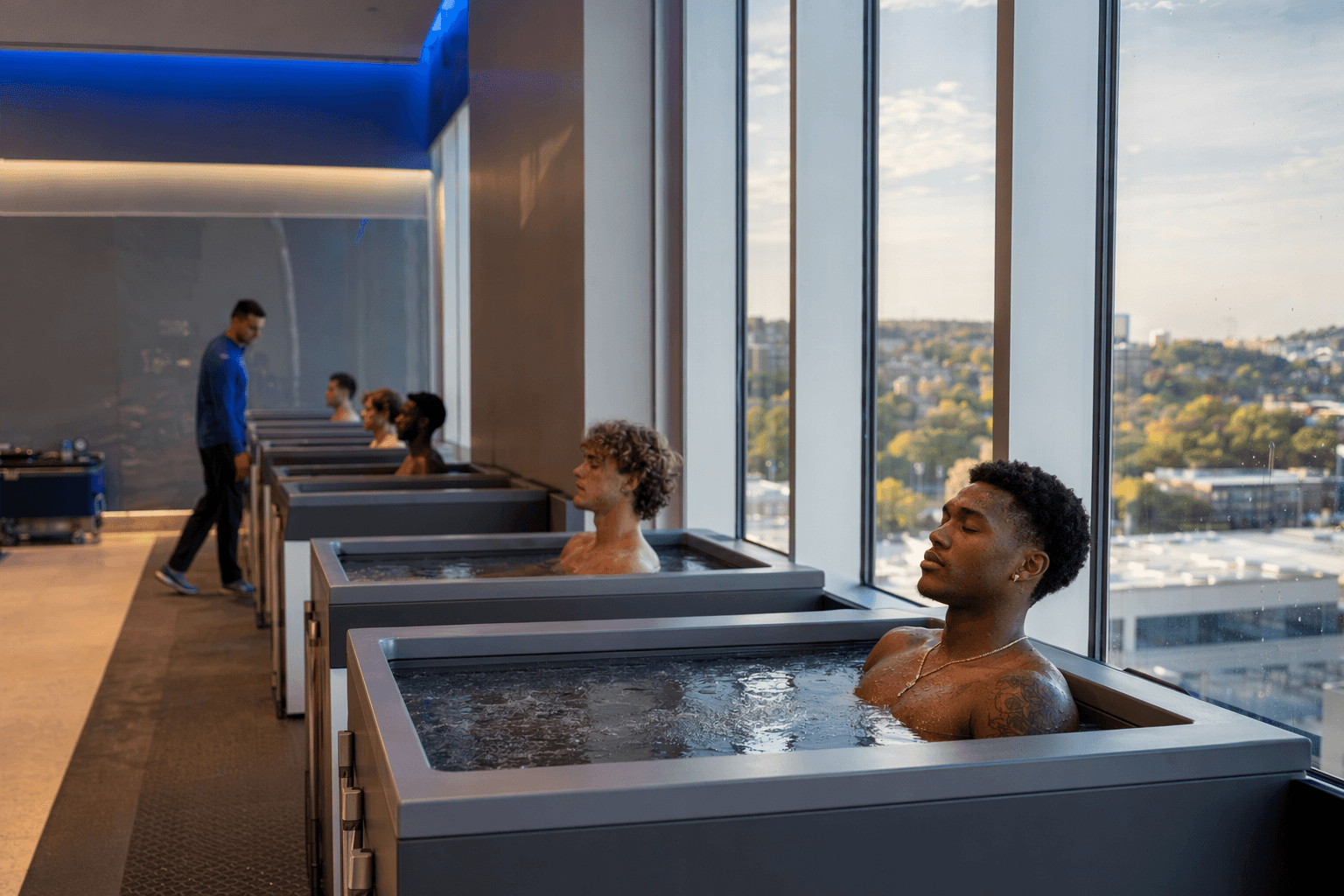
Pitt has turned cold plunges from a recovery-room extra into campus infrastructure. Inside Victory Heights, the University of Pittsburgh’s new $240 million sports complex, hydrotherapy pools, hot and cold plunge systems, and rehab spaces are built into the daily routine for 16 of Pitt’s 19 intercollegiate teams.
Recovery is now part of the blueprint
The biggest shift at Victory Heights is not just size, it is philosophy. Pitt’s six-floor Sports Performance Center stacks programs on top of one another and layers practice facilities, recovery spaces, and team areas into one connected system, which makes the cold-therapy setup feel like standard equipment rather than a perk. Pitt athletics says the project affects more than 85% of Pitt student-athletes on a daily basis, which is a striking reminder that this is not a boutique amenity tucked away for a few select teams.
That matters in college sports because the recovery arms race has become part of how programs are judged. Schools are no longer selling only weight rooms, courts, and fields. They are selling what happens after the work, including how quickly athletes can reset, rehab, and get back on the floor or the field. At Pitt, cold plunges now sit inside that larger promise.
What Victory Heights is built to do
Victory Heights is designed to support strength and conditioning, sports medicine, nutrition, and mental well-being, and that scope tells you what Pitt believes modern athlete support looks like. The building is meant to serve 16 of the university’s 19 teams, while also replacing the 70-year-old Fitzgerald Field House for gymnastics, volleyball, and wrestling with a 3,000-seat arena. The project is centered in Oakland, on Pitt’s upper campus near the Petersen Events Center, where the new facilities are meant to work as a single hub rather than separate silos.
The timeline shows how long this bet has been in motion. Pitt first announced Victory Heights in January 2020. The university’s Property and Facilities Committee approved it in November 2022, and the Pittsburgh Planning Commission gave final approval in April 2023. University reporting later said the arena and sports performance center was slated for completion in 2026, and the larger project has been framed as a campus-wide investment in the student-athlete experience.
Why cold plunges fit the Pitt model
For readers who live in the ice-bath world, the important detail is that Pitt did not bolt cold immersion onto the edge of the complex. It embedded it inside the core recovery workflow. That is a meaningful cultural marker. For years, cold plunges were often associated with niche wellness studios, individual biohackers, or professional locker rooms. Pitt’s approach says the opposite: cold immersion belongs alongside lifting, treatment, nutrition, and team meetings as a normal part of the training day.
This is also where the recruiting angle gets real. Athletes and families touring a major program are not just looking for tradition or branding. They are looking for evidence that the school understands recovery in the same way professional systems do. When a university builds hydrotherapy, hot and cold plunge systems, and rehab rooms into a major performance center, it sends a message that player care is not an afterthought. It is part of the product.
The human side of the design
Pitt deputy athletic director Dustin Gray said coaches and student-athletes helped shape the facility from the beginning, and that input shows up in the way Victory Heights is organized. The first athletes to move in included volleyball, wrestling, gymnastics, and the Pitt spirit team, which gives the building an immediate day-to-day identity rather than a ceremonial one.
That detail is important because the most effective performance centers are usually the ones that feel lived in, not staged. A cold plunge room that sits next to treatment tables, team areas, and training spaces becomes part of the rhythm of recovery. It is not a destination for a special protocol. It is where athletes go after hard sessions, after rehab work, after the grind of daily training.
What the research says cold water can do
Pitt’s investment also lines up with a recovery method that has a real evidence base. Peer-reviewed research describes cold-water immersion as a popular recovery tool that may reduce muscle stiffness, fatigue, and exercise-induced muscle damage. An evidence summary in American Family Physician says it can improve perceived recovery and delay muscle soreness in the 24 hours after high-intensity or resistance exercise.
That does not mean cold plunges are magic. It does mean the practice is grounded in more than social-media aesthetics. In a university setting, that distinction matters. If recovery is going to be part of the official sports-performance toolkit, it helps that the method has enough support to sit comfortably inside sports medicine instead of lifestyle branding.
The NCAA’s Sports Medicine Handbook also frames school athletic training resources as part of protecting and supporting student-athletes’ physical and mental health. That broader framing helps explain why a place like Victory Heights can be understood as a welfare investment as much as a competitive one. Recovery is not just about chasing better times or stronger lifts. It is about making the training load sustainable.
Why this could normalize cold plunges beyond Pitt
Pitt’s new complex is a sign that cold plunges are moving from the edges of wellness culture into mainstream athletic infrastructure. That shift is larger than one campus. When a power-conference program builds cold immersion into a $240 million facility serving more than 85% of its student-athletes every day, it changes expectations for what a serious training environment should include.
For the broader ice-bath community, the takeaway is simple: the conversation is no longer whether cold plunges belong in elite sport. Pitt has already answered that by putting them inside the daily machine of college athletics. The more universities follow that model, the more cold immersion becomes the default language of recovery, not a specialty add-on.
This article was produced by Prism’s automated news system from verified source data, official records, and press releases, then run through automated quality and moderation checks before publishing. The system is built and supervised by the people who set the standards it runs under. Read our full AI policy.
Did this article answer your question?