Cold plunge buyers warned: chiller matters more than the tub
The tub is the easy part. In cold plunges, climate, power and chiller sizing decide whether your setup works or turns into an ice-run ritual.
The first mistake is buying the pretty tub
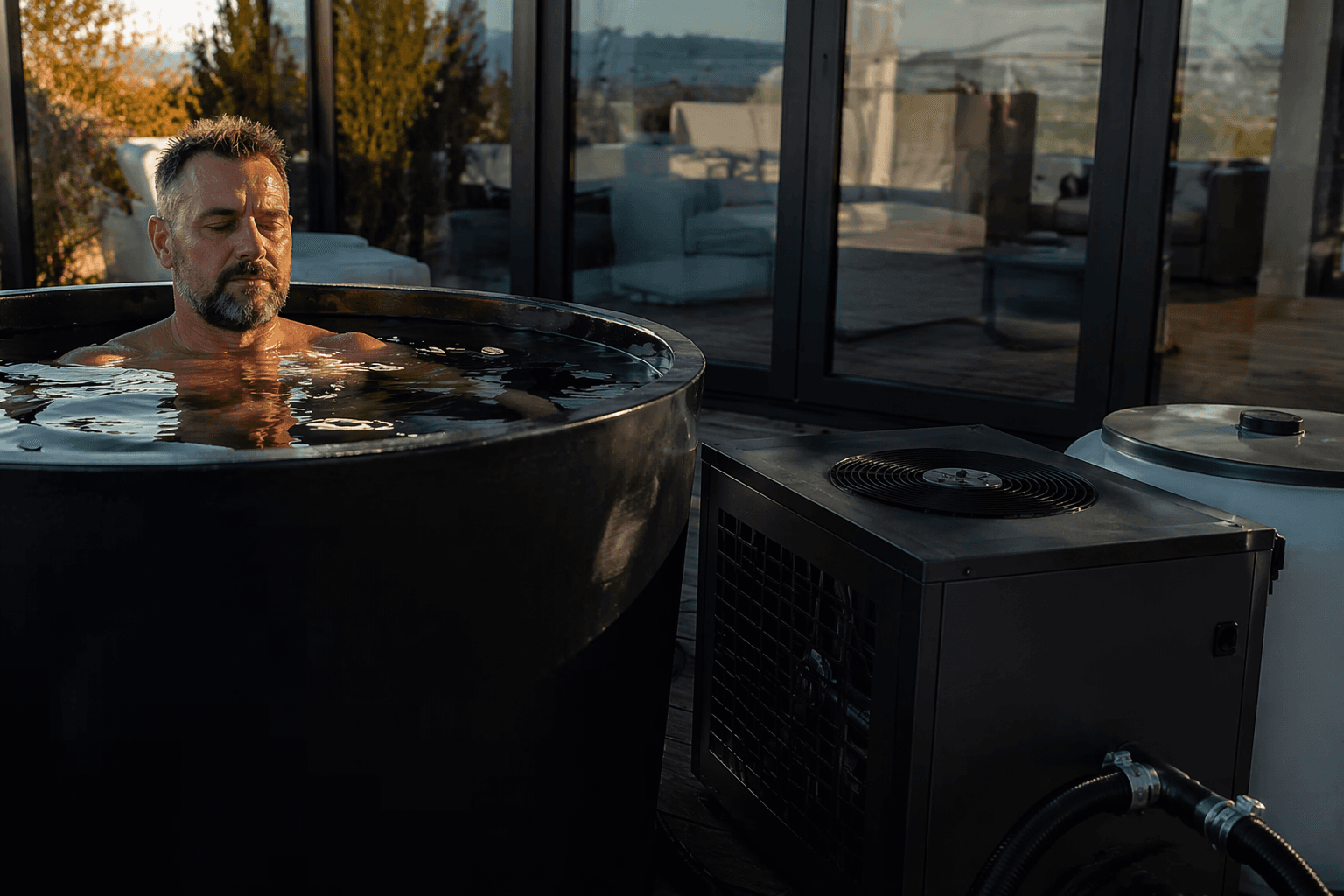
The cold plunge that looks best on the patio can still be the wrong buy. In Scottsdale, one customer paired a beautiful acrylic-shell tub with a quarter-horsepower chiller that simply could not hold the line in desert heat. By May, the water was struggling to stay below 62 degrees Fahrenheit, and the owner had fallen back on bags of ice every other session.
That is the lesson buyers keep learning the hard way: the chiller, filtration and climate context matter more than the shell. A cold plunge pool is not just a smaller hot tub in a darker finish. It can mean a larger water volume, a different construction class and install demands that feel closer to equipment planning than decor shopping.
Know what category you are actually buying
The market is no longer a novelty aisle. Grand View Research estimates the global cold plunge tub market at USD 354.6 million in 2025 and projects it to reach USD 659.9 million by 2033. North America held 38.8% of the market in 2025, the U.S. market is expected to grow at a 7.7% CAGR from 2026 to 2033, and commercial use accounted for 81.4% of the category in 2025.
That mix explains the shift in buyer behavior. More people are asking how a system will behave in real weather, how often it will need service and whether it can actually be installed where they want it. The right question is not, “Which plunge looks best?” It is, “What kind of system does my climate and usage pattern demand?”
Chiller size is the decision that makes or breaks the experience
If you are shopping in a hot climate, the chiller is the center of gravity. Desert heat, sun exposure and ambient temperature can overwhelm undersized equipment, which is why the Scottsdale example matters so much. A quarter-horsepower chiller might sound sufficient on paper, but in real use it was not enough to keep the water where the owner wanted it.
That means buyers should think in terms of load, not just looks. Ask how much water the unit holds, how hard the chiller has to work in your season and whether insulation and cover design help or hurt the system. A cold plunge that cannot recover between sessions turns into a maintenance routine instead of a daily tool.
Placement is not cosmetic
Where the plunge lives changes how well it performs. Direct sun, hot pavement, wind and limited shade can all push a chiller harder than expected, especially in places like Arizona. If the unit is going outdoors, the install plan should account for runoff, drainage, service access and whether the equipment can breathe without baking.
This is where many shoppers over-focus on the vessel and under-focus on the site. A handsome tub on the wrong slab can behave worse than a plainer unit in a protected, shaded corner. Think about placement the way you would think about a freezer: the room around it matters as much as the box itself.
Power and code compliance are part of the purchase
The electrical side is more technical than many buyers expect. Sun Home Saunas says home cold plunge systems commonly need a dedicated 120V or 240V circuit, often 10 to 30 amps, plus GFCI protection and proper wire sizing. That is why a licensed electrician is often the first smart line item, not the last.
Indiana guidance adds another wrinkle for buyers comparing plug-and-play models with larger systems. Public or semi-public cold plunge units may be regulated as public spas, and both the Indiana Swimming Pool Code and the Public and Semi-Public Swimming Pools Rule apply to prefabricated and built-in-place units that are not drained and refilled between each user. Smaller single-user prefabricated units under 200 gallons that plug into a standard 110V outlet may be treated differently, which helps explain why some setups feel simple and others start to resemble small infrastructure projects.
Maintenance is not optional if you want the water to stay usable
A cold plunge is a water system, not a novelty appliance. Filtration, sanitation and regular upkeep determine whether the water stays clear, the equipment lasts and the user experience feels reliable. The more people use it, the more important it becomes to plan for cleaning routines, water treatment and service intervals before the tub arrives.
That matters even more in commercial or shared settings, where the volume of use is higher and the regulatory pressure is stronger. Grand View Research’s numbers show that commercial demand has already shaped the category, which helps explain why maintenance questions now come up so early in the shopping process.
Safety starts with the first breath, not the first minute
Water at 50 to 55 degrees Fahrenheit is a serious physiological stimulus, not a casual dip. The American Heart Association says cold water immersion triggers a sudden rise in breathing, heart rate and blood pressure, and that a person can drown within seconds if they gasp with their head submerged.
The caution list is not abstract. Anyone with cardiovascular disease, uncontrolled hypertension, pregnancy, Raynaud’s or medications that affect thermoregulation should get physician guidance before starting. Harvard Health also notes that the evidence for many claimed benefits remains thin, especially for people with cardiovascular risk, so the safest way to think about cold plunging is as a deliberate practice, not a dare.
Protocol should feel repeatable, not extreme
Useful cold plunge ranges generally sit between 45 and 55 degrees Fahrenheit, with one to three minute rounds and one to three rounds per session. The point is consistency and moderate exposure, not endurance theater. If the tub is making you reach for ice bags every other session, the problem is probably system design, not willpower.
The science behind the caution is real. A 2012 paper in the Journal of Physiology describes “autonomic conflict” as a possible mechanism for arrhythmias during cold water immersion, when the cold shock response and diving response collide. A 2025 PLOS One review pulled in 11 studies and 3,177 participants, with immersion protocols ranging from 7°C to 15°C, which shows how varied the field still is. Other research cited in the literature says the cold-shock response can peak in the first 30 seconds and adapt over the first three minutes, which is why the opening moments deserve the most respect.
Treat climate as part of the product, not a side note
The broader lesson is simple: environment changes the purchase. CDC guidance says immersion hypothermia develops more quickly than standard hypothermia and can occur in water below 70 degrees Fahrenheit, while the CDC Yellow Book warns that cold-water immersion can rapidly cool the body and, after the initial gasp response, leave someone unable to swim within as little as 10 minutes. Alcohol should not be part of the plan.
For buyers in hot, high-variance climates, that means the right setup starts with the climate you live in, not the temperature you want to brag about. The Scottsdale story is not a one-off cautionary tale. It is the cold-plunge market in miniature: the tub may be what catches the eye, but the chiller is what decides whether the whole system earns its place.
This article was produced by Prism’s automated news system from verified source data, official records, and press releases, then run through automated quality and moderation checks before publishing. The system is built and supervised by the people who set the standards it runs under. Read our full AI policy.
Know something we missed? Have a correction or additional information?
Submit a Tip