Cold Plunge vs Ice Bath, Key Differences in Cost and Control
The real split is control: a cold plunge buys consistency, while an ice bath keeps costs down for anyone testing recovery at home.
The cold plunge market is already large enough to make the choice matter: Grand View Research put the category at $354.6 million in 2025, with projections to reach $659.9 million by 2033. That growth is being driven by one simple buying question, not water temperature itself, but how much control you want over it.
Cold plunge and ice bath are related, but not interchangeable
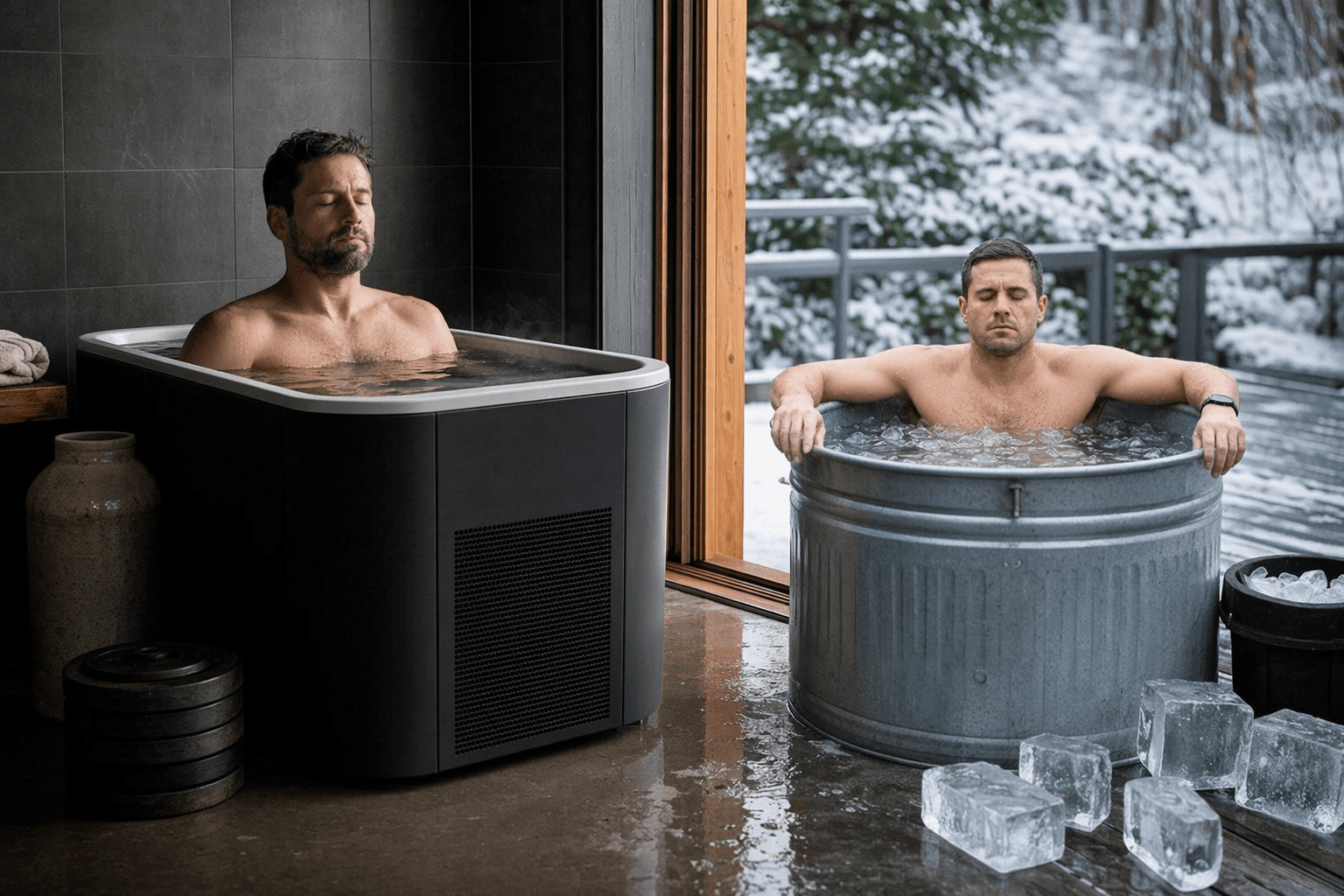
Both setups are forms of cold water immersion, and both aim at the same recovery effect. The difference is how you get there. A purpose-built cold plunge is the more polished, consistent option, while an ice bath is the cheaper, more improvised path that can still work well if you want the benefits without a large upfront investment.
That distinction matters the moment you move from theory to daily use. A dedicated unit makes the ritual repeatable, while a standard tub plus ice asks you to manage the session by hand each time. If you care about staying within a narrow temperature window and repeating the same experience after hard training, the equipment choice becomes as important as the water itself.
Temperature control is the real dividing line
The commonly cited cold therapy range sits around 50 to 59 degrees Fahrenheit, and most sessions run about 2 to 10 minutes. Mayo Clinic defines cold-water immersion as water that is 60 degrees Fahrenheit or colder, and says people typically begin with 30 seconds to a minute before working up to five to 10 minutes. Those numbers line up with the practical difference between a plunge that holds steady and an ice bath that depends on how much ice you dump in that day.
That is where the cold plunge earns its premium. A dedicated unit is built to make temperature more predictable, which means less guessing, less adjusting, and fewer sessions that drift warmer than intended. An ice bath can absolutely get cold enough, but it is more vulnerable to the realities of weather, tub size, melt rate, and how quickly you can get in before the ice does its work.
Cost is not just the purchase price
The colder option is not always the more expensive one to use, but it usually is the more expensive one to buy. A cold plunge is the high-comfort, high-control purchase, often chosen by people who want a repeatable setup and are willing to pay for that convenience. An ice bath keeps the entry point lower because it can start with equipment you already own, plus ice and cold water.
The hidden tradeoff is labor. An ice bath is cheaper up front, but it can demand more from you every time you use it: filling the tub, buying or hauling ice, checking the temperature, draining the water, and cleaning up afterward. A dedicated cold plunge reduces that friction, which is why it often makes more sense for people who plan to use it regularly and do not want the routine to feel like a project.
Hygiene and upkeep shape the day-to-day experience
This is where the buyer decision gets practical fast. A purpose-built cold plunge is usually easier to keep on a schedule, because it is designed for repeated use and more controlled upkeep. An improvised ice bath can be perfectly workable, but it tends to be more hands-on and less self-contained, especially if you are using a regular bathtub and changing the water often.
That difference affects whether the setup feels like part of your recovery system or a once-in-a-while ordeal. The more a routine asks for manual setup, the easier it is to skip. The more seamless it feels, the more likely it is to become something you actually use after workouts instead of something you only talk about buying.

The evidence favors protocol, not hype
The American College of Sports Medicine says cold water immersion is the most studied cryotherapy modality used for athlete recovery. At the same time, sports-medicine literature still leaves room for debate. A British Journal of Sports Medicine review said the scientific rationale is not clear and that there are no clear guidelines for use, which is a reminder that the setup and the protocol matter as much as the label.
That uncertainty is one reason the details keep getting sharper in the research. An AAFP summary of a 2023 systematic review cited 44 randomized controlled trials with 880 participants studying cold water immersion for muscle soreness. A 2025 network meta-analysis also concluded that protocol details such as duration and temperature still matter for recovery research. In plain terms, the wrong choice is not usually a scientifically “bad” one, it is the one you cannot stick to consistently.
The modern trend has old roots
Cold immersion may be a booming wellness category now, but it is not a brand-new idea. The practice has deep roots in ancient Rome, Scandinavia, and Japan, and Roman bathing culture offers one of the clearest historical parallels. Britannica notes that the Roman Baths in Bath, England date to about 70 CE, and that thermae were sophisticated public complexes built for bathing, relaxation, and social life.
That history helps explain why the modern cold plunge feels bigger than a gadget. It sits in a long line of communal and personal recovery rituals, only now the conversation is centered on temperature control, cost, and how much convenience people are willing to pay for.
Who should buy what
If you want the most repeatable, low-friction setup and plan to use it often, a cold plunge is the better match. It is the stronger fit when consistency, control, and ease of use matter more than initial savings. If you are testing cold therapy, watching your budget, or do not want the complexity of a chiller, an ice bath gives you a simpler way in.
- Choose a cold plunge if you want precise control, regular use, and a cleaner daily routine.
- Choose an ice bath if you want a lower-cost entry point and are fine with a more manual process.
- Start conservatively either way, because Mayo Clinic’s step-up approach and the wider sports-medicine literature both point to the same truth: adherence matters.
Safety still has to stay in the picture. The CDC warns that hypothermia can happen with exposure to extremely cold temperatures, and the National Weather Service says cold shock and rapid breathing from cold-water immersion can be life-threatening. That is why the best buy is not the coldest possible setup, but the one that keeps the session controlled enough to use again tomorrow.
This article was produced by Prism’s automated news system from verified source data, official records, and press releases, then run through automated quality and moderation checks before publishing. The system is built and supervised by the people who set the standards it runs under. Read our full AI policy.
Did this article answer your question?