Cold Plunges Help Runners Recover Faster During Peak Training Blocks
Cold plunges pay off most after the hardest sessions and race blocks. Used too often, they can become a recovery crutch that dulls the gains you are training for.
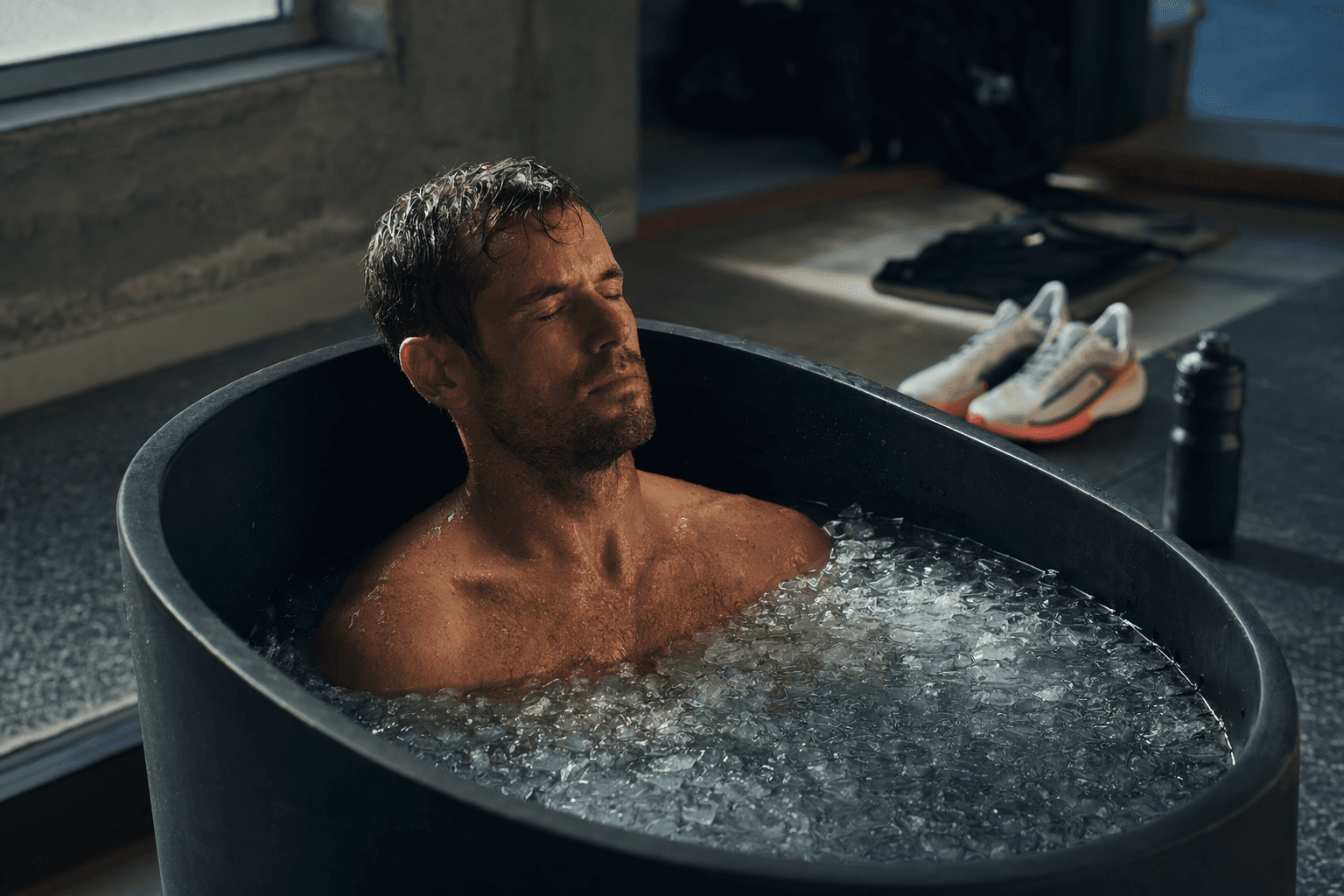
When the block gets heavy, cold water stops being a wellness flex and starts looking like a timing tool. Thirty male recreational street runners finished a 10-kilometer street race, then spent 10 minutes in 10°C water, and still did not recover faster than the control groups. That result is the right warning for peak season: cold plunges can help, but only when you place them with purpose.
Why runners reach for the plunge
The physiological case is straightforward. After a hard run, muscles are inflamed, tight, and loaded with metabolic byproducts, and cold exposure can constrict blood vessels, limit swelling, and slow the inflammatory response that feeds next-day soreness. Once you rewarm, circulation picks back up, which helps move waste out and bring oxygen back into working tissue.
That is only part of the story. Cold exposure also forces breathing control and nervous-system regulation under stress, and that calmer rebound can matter when hard sessions start stacking up. Better sleep and a steadier return to training are part of the appeal, especially when a marathon block or a summer race build leaves little room for lingering fatigue.
Where cold plunges earn their place in a runner’s week
The best use cases are the ones runners already recognize from real training life. After a key workout day, a long run, or a race simulation, the plunge can shorten the feeling of recovery debt so the next session starts from a better place. In a back-to-back training stretch, that matters because the body does not get to wait around for soreness to fade on its own.
Hard workout days are where cold water can be most defensible. If you just ran intervals, tempo work, or a long run that left your legs heavy, a brief plunge may reduce the post-session damage enough to keep the week on track. The same logic applies when your training plan asks for another quality effort within 24 hours.
Injury flare-ups are different, but the appeal is obvious. When a runner is managing a cranky Achilles, a swollen calf, or a sore knee, cold water can help calm the immediate heat and discomfort without turning recovery into total inactivity. It is not a fix, but it can be a practical bridge when you still need to move.
Taper week is where the calculation changes. You are no longer trying to absorb the biggest training stress of the cycle, so the reason to reach for cold water becomes narrower. Use it after the last truly demanding workout if it helps your legs turn over sooner, but do not keep plunging out of habit when freshness, not faster recovery, is the goal.
What the evidence says, and what it does not
The science base is bigger than the current boom. A 2023 systematic review and meta-analysis included 68 studies and looked at recovery from less than an hour out to 96 hours and beyond, which helps explain why the results feel so uneven in the real world. Cold-water immersion has been studied for years, but the overall picture is still mixed, and older reviews in the British Journal of Sports Medicine noted that the scientific rationale and clear guidelines were still unsettled.
The American College of Sports Medicine calls cold-water immersion the most studied cryotherapy application and gives two common recovery protocols: two 5-minute immersions at 10°C, with 2 minutes out of the bath, or one 11- to 15-minute immersion at 11°C to 15°C. ACSM also says the benefits for neuromuscular performance are strongest up to 24 hours, not beyond that window.
That timing matters because the runner data are not uniformly flattering. In the 30-man street-race trial, 10 minutes at 10°C after a 10-kilometer run did not accelerate recovery performance. A 2007 randomized trial on eccentric quadriceps work found no benefit for pain, swelling, isometric strength, or function in untrained people either, which is a reminder that cold water is not magic just because it feels serious.
How to use it without blunting adaptation
This is the part endurance athletes need to treat carefully. A 2021 Sports Medicine meta-analysis found that regular cold-water immersion during training can affect adaptation differently depending on the training mode, with concern around resistance training gains and some possible benefits for endurance performance. In plain runner language, that means the plunge may help you feel ready for the next run, but repeated use during a block can raise questions about whether you are muting the very stress that drives adaptation.
That is why cold water works best as a targeted tool, not a reflex. Save it for the workouts that actually threaten the week, the sessions where sore legs would compromise the next run, the back-to-back days where recovery has to move fast, and the stretches where cumulative fatigue starts to outrun sleep and food. Used that way, it fits cleanly into peak marathon prep and heavy mileage without turning every easy day into a recovery event.
Sleep, rewarming, and the runner-specific edge
Runner-specific research has also started to look beyond soreness alone. A 2021 study in well-trained male endurance runners examined whole-body versus partial-body cold-water immersion after high-intensity intermittent running and tracked sleep architecture and recovery kinetics, including sessions close to bedtime. That matters because the upside of a plunge is not just what happens in the bath; it is whether your system settles enough afterward to let training and sleep do their jobs.
For that reason, the best cold-plunge routine is the one that matches the day’s real need. If the session was a true stressor, the plunge can help you get back to baseline faster. If the session was easy, or if you are in the middle of a block where adaptation is the main objective, the smarter move is often to let the training effect do its work.
Cold plunging is most valuable when the calendar is tight, the legs are tired, and the next workout matters. Used with that kind of precision, it becomes less a trendy recovery ritual and more a practical way to stay durable through the busiest weeks of race season.
This article was produced by Prism’s automated news system from verified source data, official records, and press releases, then run through automated quality and moderation checks before publishing. The system is built and supervised by the people who set the standards it runs under. Read our full AI policy.
Did this article answer your question?