Cold plunges go outdoors, chasing recovery, mood and morning light
Cold plunges are moving outside, and the real upgrade is no longer the tub. The lasting setups are the ones built on concrete, steel, privacy and winter-proof access.
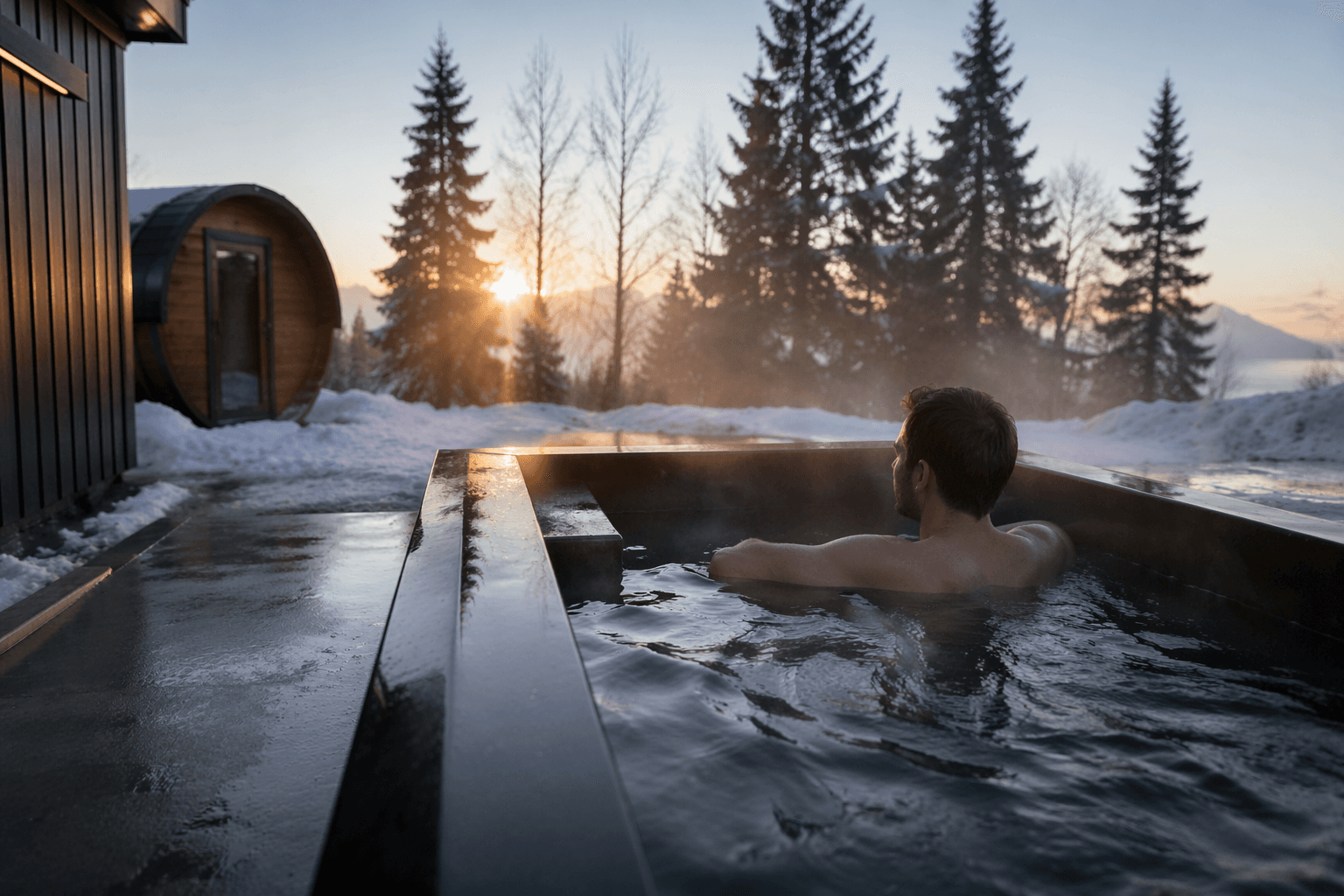
A residential cold plunge can weigh well over 1,000 pounds once filled and occupied. The upgrade many buyers are chasing is not a colder tub or a fancier app, but a setting that turns the ritual into something you can actually live with through rain, heat, and winter dark.
The health case for going outside is straightforward enough to explain without the usual wellness fog. Cold-water immersion may reduce exercise-induced muscle damage, which can ease soreness and help restore performance the next day. Mayo Clinic also cautions that doing cold plunges every day after training may compromise long-term performance gains, so the smartest setup is not always the most frequent one. The ritual itself has been around much longer than the current boom, but Wim Hof helped push icy plunges from a once-a-year New Year’s habit into a mainstream fitness practice.
Why the outdoor setting changes the experience
The outdoor version is about more than fresh air. Research tied to light exposure shows that natural light affects the circadian clock, the system that helps regulate daily physiological rhythms and shapes mood and behavior. Broader studies also link outdoor light exposure with mood, sleep, and circadian-rhythm outcomes, which is why a plunge placed where morning sun hits it can feel very different from one tucked in a basement corner.
The best setups are starting to look less like portable gear and more like a small outdoor wellness zone, where the plunge, the path to it, and the light around it all matter.
Start with structure, not aesthetics
The mistake many owners make is treating the plunge as a finished object when it is really a load-bearing project. Outdoor infrared saunas can weigh from 600 to more than 1,000 pounds on their own. That means the first decision is not tile, cedar, or landscaping, but whether the ground underneath can actually support the system.
Plunge recommends placing a Plunge Sauna on a concrete pad at least 4 inches thick or on a treated-lumber wood platform reinforced to hold at least 1,400 pounds.
The deck conversation matters too. In the United States, the International Residential Code sets a minimum deck live load of 40 pounds per square foot, and the American Society of Civil Engineers’ ASCE 7 standard is the national benchmark for design loads on buildings and other structures. Those numbers help explain why cold plunge installers keep talking about structural review, reinforced framing, and load paths. A wet outdoor recovery space can push ordinary residential assumptions in a hurry.
The build decisions that separate durable from decorative
Once the structure is right, the next layer is making the space usable day after day. That means thinking about drainage so meltwater and splash do not sit under the unit, access so you are not climbing over slick surfaces in bare feet, and weatherproofing so the setup survives freeze-thaw cycles instead of being shut down by them. Steel-framed platforms, reinforced decks, and concrete pads all belong in the conversation before the first accessory does.
Privacy is another piece people underestimate. A plunge placed in the open may look great in a render and feel awkward in real life, especially if morning plunges become part of a regular routine. Screens, fencing, planting, and orientation should be treated as functional parts of the build, not decoration after the fact.
Year-round usability is the real test
A good outdoor plunge should work in more than one season. That means planning for winter access, snow, ice, hose routing, and power protection if the setup includes filtration or cooling equipment. It also means making sure the path from door to water is safe enough to use before dawn, when the whole point may be to get a hit of cold water and morning light in the same session.
A systematic review in PLOS One included healthy-adult cold-water immersion research on cold showers, ice baths, and plunges at 15 degrees Celsius or colder for at least 30 seconds. That is a broad enough category to include everything from quick recovery dips to more deliberate routines.
Safety still belongs in the picture, even in a backyard built for relaxation. The CDC warns that hypothermia can happen after exposure to very cold temperatures or cold water. The National Weather Service warns that unplanned immersion in cold water can be life-threatening because cold shock and hypothermia impair thinking and movement, and the sudden gasp and rapid breathing can raise drowning risk.
This article was produced by Prism’s automated news system from verified source data, official records, and press releases, then run through automated quality and moderation checks before publishing. The system is built and supervised by the people who set the standards it runs under. Read our full AI policy.
Did this article answer your question?