Cold plunges in pregnancy may help, but safety depends on adaptation
Pregnancy changes the ice-bath equation fast. A small evidence base suggests adapted users may tolerate cold better, but novices face risks that mainstream plunge advice usually ignores.
Adaptation, not hype, is the real variable
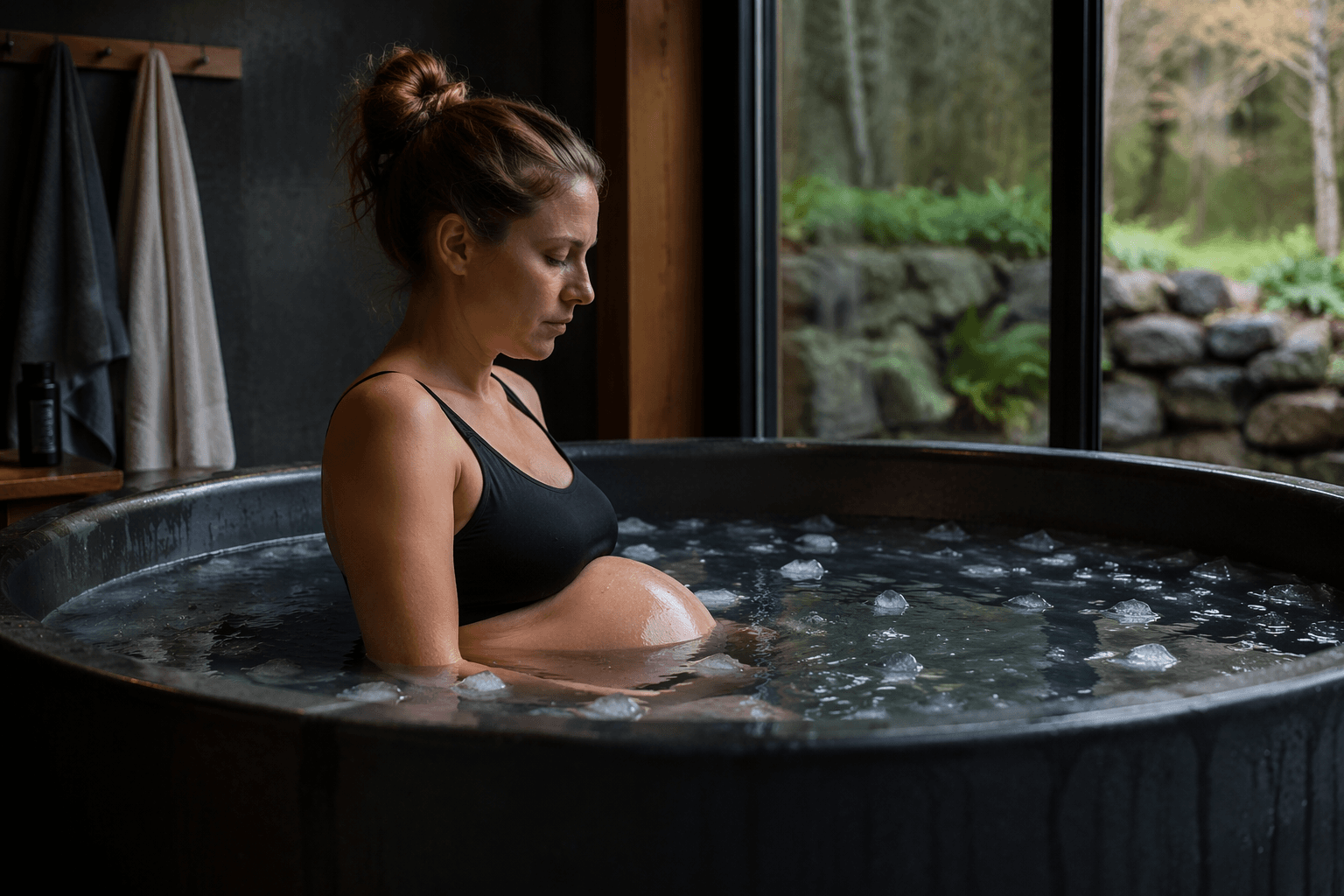
The biggest mistake in ice-bath culture is treating pregnancy like a simple yes-or-no switch. A review published online on May 17, 2026 looks at cold water immersion through a much stricter lens: not recovery, not grit, but vascular, metabolic, and neuroendocrine strain during pregnancy. That shift matters because the same plunge that feels manageable in one body can become a very different physiological event once circulation, hormones, and fetal blood flow enter the picture.
The review’s core point is blunt enough for anyone who has spent time around cold tubs: safety depends heavily on whether the woman was already cold-adapted before conception. That is the opposite of one-size-fits-all wellness advice, and it is the only way to make sense of the mixed signals in the literature. Some adapted women may see favorable hematological changes and improved insulin sensitivity, but the paper also flags real concerns in late pregnancy, especially when cold exposure is treated like a casual habit instead of a medical variable.
What is actually known
The pregnancy-specific evidence base is tiny. A related summary says the authors found only six studies, which is not much to build a universal plunge protocol on. That scarcity is the whole story here: the review is not telling you ice baths are dangerous across the board, but it is saying the direct evidence is far too thin to support the kind of blanket advice that circulates online.
The review does pull together a few concrete threads. It highlights brown adipose tissue activation, gestational insulin resistance, stress-hormone responses, and circulatory shifts as the main mechanisms worth watching when cold exposure enters pregnancy. Those are not abstract lab concepts. They are the pathways that determine whether a cold plunge feels like a mild stressor or something that pushes the maternal system toward a harder, less predictable response.
There is also some reason to think the story is not purely negative for women who are already conditioned to cold. The review notes possible favorable hematological changes and better insulin sensitivity in adapted users. That is one reason cold exposure still appeals to some athletes and health-conscious people: the draw is not just the shock, but the possibility of a metabolic payoff. A broader 2024/2025 review of cold water therapy also supports the idea that deliberate cold exposure triggers distinct physiological responses and that any benefits are tied to underlying biology, not vibe alone.
What the best evidence does and does not cover
It helps to separate cold plunges from other kinds of water immersion, because people mix those up constantly. The American College of Obstetricians and Gynecologists says immersion in water during the first stage of labor may shorten labor and reduce spinal and epidural use, but it still recommends that birth occur on land because evidence for second-stage water birth remains insufficient. That is a labor-and-delivery conversation, not a cold-plunge endorsement, and the distinction matters. Warm-water labor support and cold immersion are not physiologically interchangeable.
A randomized cross-over study of 20 healthy pregnant women gives a sense of how sensitive the system can be. The women were studied at 26 to 29 weeks and again at 34 to 37 weeks of gestation, and immersion produced measurable maternal and fetal hemodynamic changes. That does not automatically translate to danger, but it does show that pregnancy is not a state where immersion is neutral just because it is common.
Older obstetric literature points in the same direction. A paper on the cold pressor test in pregnancy, published in 1980, involved pregnancy complicated by severe hypertension. The fact that cold stress was being used as a physiological probe in that setting tells you how clinicians have long thought about it: as a meaningful stressor, not a harmless wellness add-on.
What raises the risk
The review’s risk section gets specific, which is exactly what mainstream plunge content usually avoids. Third-trimester aortocaval compression syndrome is one concern, and so is autonomic conflict, which can raise concern for arrhythmias in some situations. Those are not the kinds of risks that show up in a generic “ice baths are amazing” post, but they are the details that matter when pregnancy changes the baseline.

The review also points toward the reason many experts would not want a novice starting cold water immersion during pregnancy. The current consensus described in the linked summary advises against initiating CWI during pregnancy for beginners because of catecholamine release and the possibility of fetal hypoxia. That is a very different message from the usual cold-plunge gospel, which tends to treat discomfort as proof of benefit. In pregnancy, that logic can backfire.
There is also a timing issue. Late gestation appears to be the period where the risk-benefit equation narrows the most, especially because of circulation and compression concerns. In plain language, the deeper into pregnancy you get, the less useful it is to copy a standard plunge routine from an athlete who is not pregnant and has years of cold exposure behind them.
What the review supports, and what it does not
The review does not say cold immersion is categorically off-limits for every pregnant person. What it does say is that the answer depends on adaptation, supervision, and the individual’s physiology. If someone was already cold-adapted before conception, the paper suggests tolerance may be better, and there may be some upside in hematology and insulin sensitivity. If someone is new to cold plunging, the current evidence does not support making pregnancy the moment to start chasing adaptation.
That is the practical takeaway: pregnancy is not the time to treat cold immersion like a one-size-fits-all wellness ritual. The smarter approach is individualized screening, careful supervision, and a hard stop on the idea that “colder is always better.” The science here is still sparse, but the signal is clear enough to reject the hype. If cold exposure has a place in pregnancy, it is as a carefully adapted medical question, not a social-media challenge.
This article was produced by Prism’s automated news system from verified source data, official records, and press releases, then run through automated quality and moderation checks before publishing. The system is built and supervised by the people who set the standards it runs under. Read our full AI policy.
Did this article answer your question?