Cold water immersion beats cryotherapy for soreness, review finds
Cold water immersion is the stronger soreness tool, while cryotherapy’s brief jump boost looks too small to pay extra for.
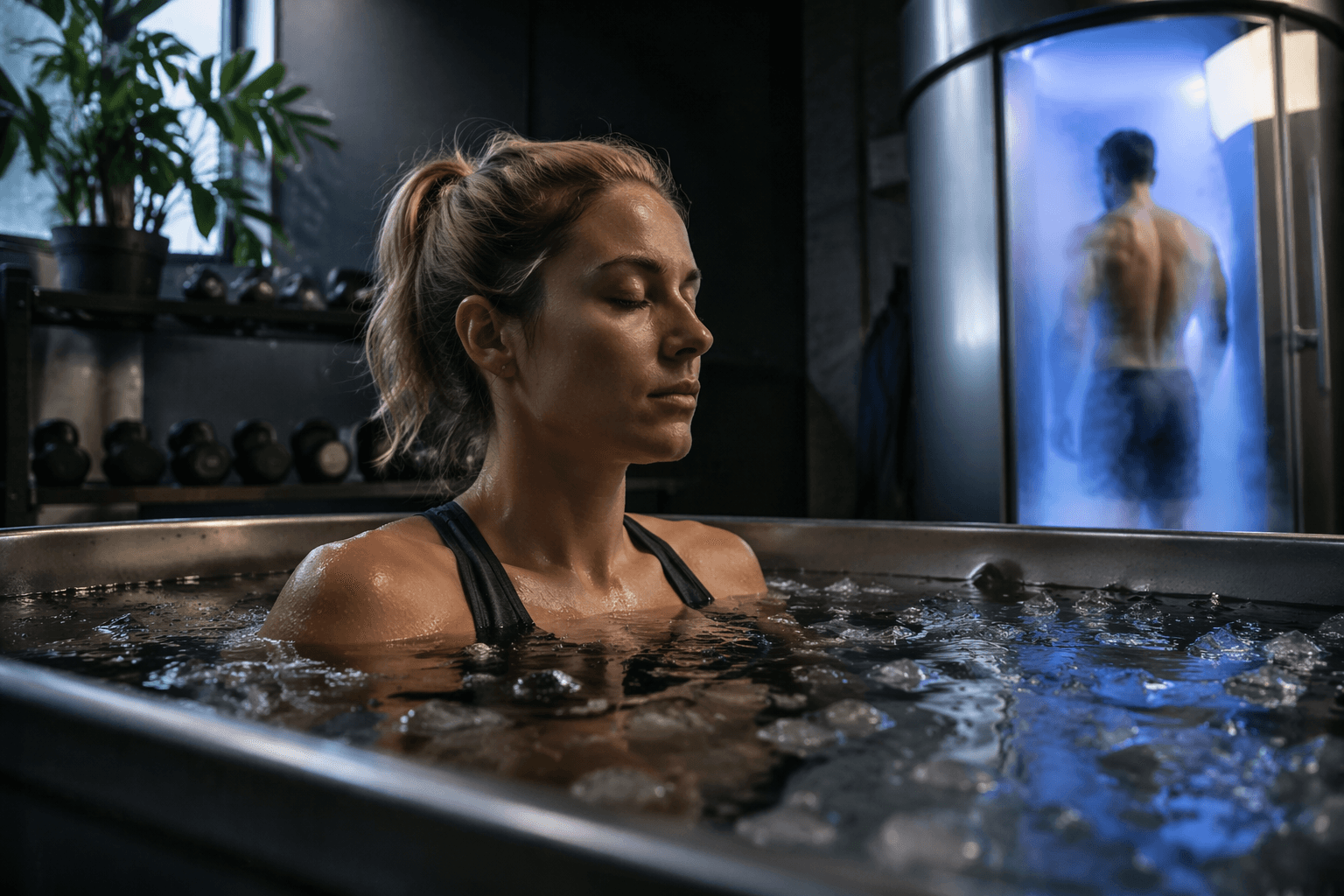
If your only question is what gets you less sore tomorrow, the tub is beating the chamber. In a 13-trial comparison of 214 participants aged 20 to 47.2 years, cold water immersion came out ahead for delayed onset muscle soreness at 24 hours, while whole-body cryotherapy’s tiny jump-performance bump faded fast.
What this comparison actually measured
The newest head-to-head analysis focused on the outcomes recovery-minded people actually argue about in the locker room: soreness and explosive output. Shuang Liu and Yifei Ma pooled randomized controlled trials that tracked delayed onset muscle soreness, or DOMS, and jump performance at 24 and 48 hours after treatment. That matters because these are not abstract lab markers, they are the things you feel when you try to squat, sprint, or hop into a session the next day.
The finding was clean where it needed to be clean. Cold water immersion delivered a significantly greater reduction in DOMS at 24 hours, then the edge disappeared by 48 hours. Whole-body cryotherapy, by contrast, showed a small short-term advantage for jump performance at 24 hours, but that effect was modest, statistically fragile, and gone by 48 hours.
Why the tub wins on soreness
The physiology behind that result is easy to picture once you stop treating all cold as the same. Water pulls heat away from tissue much more efficiently than air, so even a very cold cryotherapy chamber does not cool muscle tissue as deeply as immersion does. In practical terms, whole-body cryotherapy may stay mostly skin-deep, while cold water immersion reaches deeper and may do more to modulate the inflammatory cascade that follows hard exercise.
That is why the soreness result looks believable, not surprising. If the target is the muscle itself, a water bath has the advantage of direct contact and better heat transfer. If you are chasing the fastest possible drop in that heavy, bruised feeling after training, the evidence points toward the immersion tub, not the chamber.
Where cryotherapy still has a lane
Whole-body cryotherapy is not useless, it is just narrower than the hype sometimes suggests. The short-lived jump-performance edge at 24 hours hints that very cold exposure can transiently alter neuromuscular function, which may matter if you need to be explosive again before the soreness window has fully closed. That is a different use case from pain relief, and it explains why the chamber can still show up in competitive settings.
But the key word is narrow. The advantage did not hold at 48 hours, and the review’s own conclusion was that cryotherapy may be useful when rapid recovery is needed between exercise bouts, not because it reliably beats immersion across the board. For ordinary gym-goers, runners, or field-sport players, that makes it a specialty tool, not the default recovery move.
- Choose cold water immersion when soreness is the main problem.
- Consider whole-body cryotherapy only when a brief performance edge, especially in jump output, is the actual target.
- Expect the benefit window to be short either way.
- Treat the protocol as part of the result: timing, temperature, and the performance goal all matter.
How the older evidence fits around the new one
This is not the first time cold-water immersion has been treated as a recovery staple. A 2012 Cochrane review pulled in 17 small trials with 366 participants and found the evidence quality was low. It also defined cold-water immersion as water colder than 15 C, which is a useful reminder that a “cold bath” only means something if the temperature is measured.
A 2021 review added another important distinction: in humans, the main benefit of cryotherapy is pain reduction, and evidence for broader physiological effects remains limited. That same review pointed to the kind of scenario where the chamber makes sense, when quick turnaround between exercise bouts matters more than long-run adaptation or a deep soreness drop. In other words, cryotherapy is more of a tactical tool than a universal recovery upgrade.
The broader 2026 picture is still time-sensitive
A larger 2026 network meta-analysis of 51 randomized controlled trials and 1,243 participants showed the same split starting to emerge from a wider evidence base. Cold water immersion reduced DOMS at 1 hour and 24 hours, while whole-body cryotherapy improved countermovement jump performance at 1 hour, 24 hours, and 48 hours. That review also looked at inflammatory biomarkers, including creatine kinase, interleukin-6, and C-reactive protein, which shows how far the field has moved beyond simple soreness scores alone.
Even the longer-run work is pointing to the same lesson: modality matters. A separate pilot study of whole-body cryotherapy at minus 90 C ran 18 sessions over 9 weeks with 19 participants, and it reported changes in waist circumference, body-water measures, immune markers, and perceived stress. Interesting? Absolutely. A direct answer to what helps you feel less wrecked after leg day? Not really.
A Global Wellness Institute report reinforces the practical split by treating whole-body cryotherapy and cold-water immersion as distinct modalities, with different safety considerations, outcomes, and use cases. That is the right frame for anyone shopping recovery tools: not “which cold is best,” but “which cold matches the job.”
The real buyer’s guide for recovery-minded readers
If soreness relief is your north star, cold water immersion is the better buy. It is the modality with the stronger short-term DOMS signal, it is easier to control at home or in a training facility, and it gives you a more repeatable protocol because you can set the water temperature and time yourself every time. If you are paying for a chamber visit, the evidence does not show enough extra benefit to justify that cost for ordinary enthusiasts whose main goal is feeling less sore the next day.
If you need a very short-lived edge in explosive output, whole-body cryotherapy has a plausible niche, but the effect is not robust enough to sell it as a magic performance reset. The tub is the plain answer, the chamber is the specialized one, and the newest comparison makes that difference hard to ignore.
This article was produced by Prism’s automated news system from verified source data, official records, and press releases, then run through automated quality and moderation checks before publishing. The system is built and supervised by the people who set the standards it runs under. Read our full AI policy.
Did this article answer your question?