Finnish cold-water swimmers say icy dips slow time and ease stress
Finnish swimmers say the first shock of icy water can stretch time. The trick is learning control, then carrying that calm into high-stress moments.
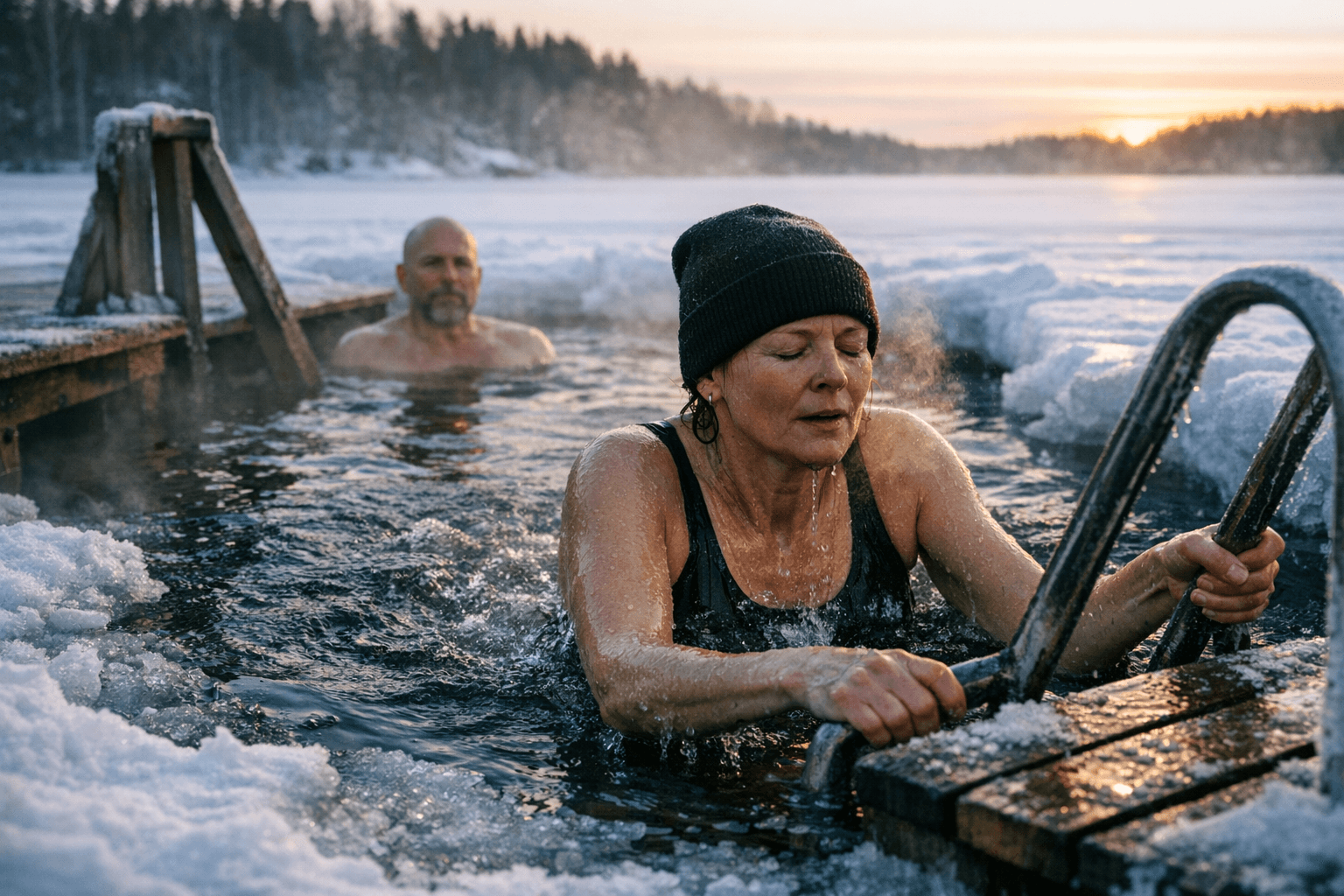
The first lesson is that the clock seems to change
The strange promise of cold-water swimming is not that it feels good right away. It is that the shock can make time feel different, almost slower, long enough for the nervous system to stop spiraling and start settling. In a Finnish study built from 20 interviews with regular swimmers, that moment of icy discomfort became a repeatable way to find mental stillness, and then to carry it back into ordinary stress.
What makes that useful for ice-bath people is the shift in emphasis. This is not just about braving cold water. It is about learning control inside a deliberate stressor, then using that control when work, family life, or daily pressure starts to speed everything up.
Why Finland is such a revealing cold-water culture
The setting matters. Cold-water swimming in Finland is not a fringe ritual hidden on the edge of culture. Aalto University says the country has more than 720,000 regular cold-water swimmers, roughly one in eight people, and they typically plunge into water below 15°C about 2 to 3 times a week. The paper also notes that the practice is culturally and socially accepted there, and that government and media help promote it.
That context helps explain why the Finnish interviews are so valuable. The swimmers are not describing a novelty habit. They are describing a lived routine that has already been normalized, practiced, and shared. The result is a rare look at how people move from raw physiological shock to a technique they can trust.
What the study actually captured
The research, published in the European Journal of Marketing and described by Aalto University as an inquiry into how extreme experiences can create temporal slowdown and longer-lasting stress-management benefits, used 20 semi-structured interviews. The sample included 11 women and 9 men, all regular swimmers. In the paper’s framing, cold-water swimming means swimming in water below 15°C.
That definition matters because it keeps the story grounded in a specific threshold, not a vague feeling of chill. It also gives the findings a sharper edge: the swimmers are not talking about tepid recovery pools or lukewarm contrast therapy. They are describing water cold enough to produce a genuine shock response, and then learning to work with it instead of against it.
The key takeaway is phenomenological rather than numerical. The swimmers described how the first blast of cold can narrow attention, slow the sense of time, and create a pocket of mental clarity. Over repeated exposure, that pocket becomes a skill. You do not just endure the water; you learn how to enter it, breathe through it, and come out with a calmer nervous system than the one you brought in.
How experienced swimmers turn shock into control
The most interesting part of the story is the transition from reaction to ritual. Experienced swimmers do not treat the cold as something to conquer once. They treat it as a sequence they know how to manage: approaching the water, controlling the breath, accepting the first jolt, and then letting the body settle into the exposure.
That is why the study matters beyond the sauna-and-lake crowd. The point is not heroic suffering. It is repeatability. The same mechanisms that help a swimmer stay present in icy water can help someone stay anchored in a tense meeting, a difficult commute, or a high-pressure moment that would normally trigger rushed thinking.
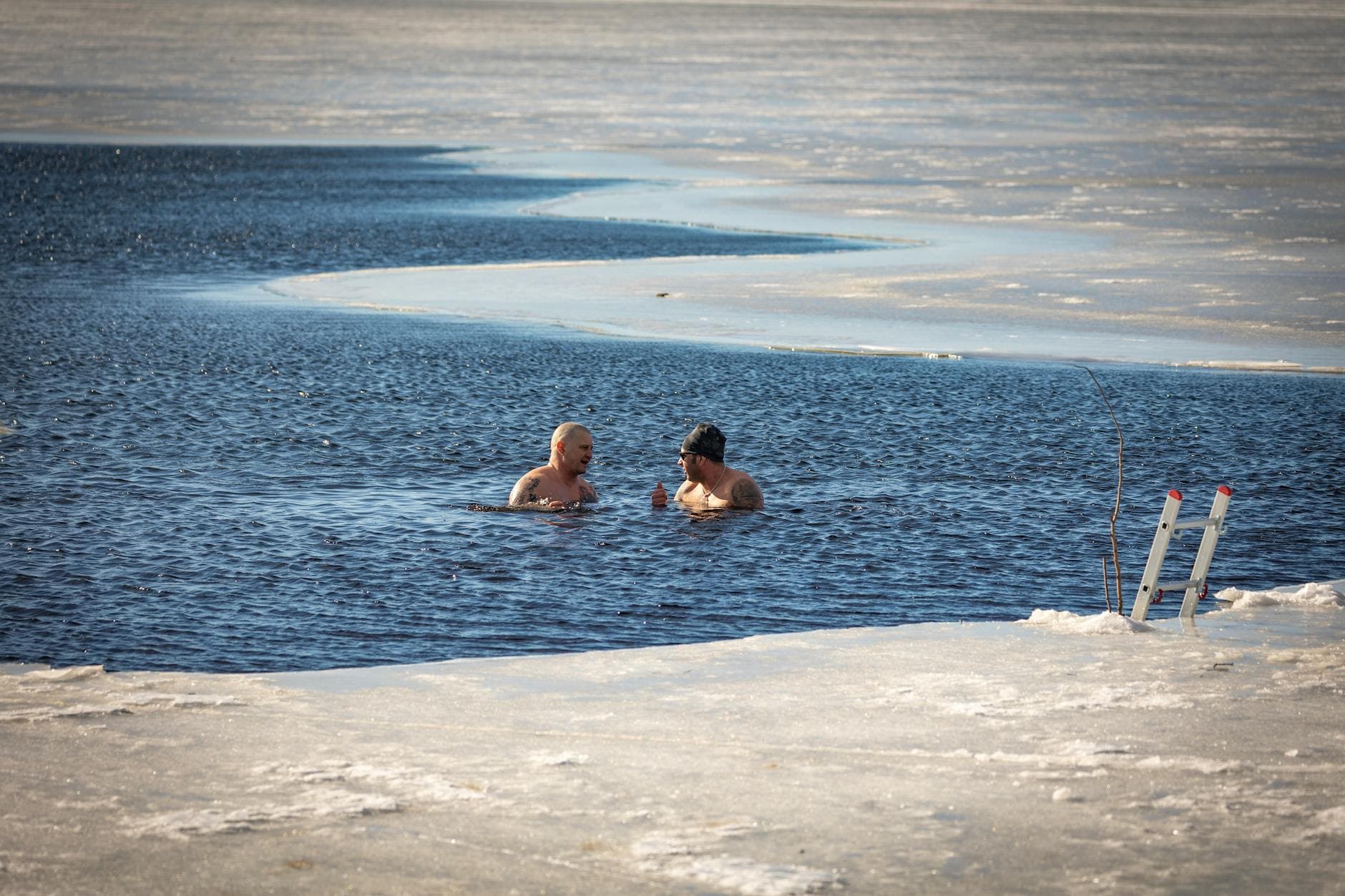
A practical version of that pattern looks like this:
1. Pause before entry. Stand at the edge of the tub or shoreline long enough to stop fidgeting and decide on one simple goal: calm, not toughness.
2. Control the first breath. Make the exhale longer than the inhale. The cold will try to hijack breathing, so the first win is not panic, it is rhythm.
3. Enter with intention. Go in slowly enough to stay aware, but decisively enough that hesitation does not become dread.
4. Use one mental cue. Count breaths, name the water, or repeat a short phrase that reminds you you are safe and temporary discomfort is the assignment.
5. Leave with the lesson. After you get out, notice how the body feels when the pressure is gone. That contrast is the training effect.
That approach fits the spirit of the Finnish findings: the goal is not to win a fight with the cold, but to stay organized inside it.
What readers can borrow for everyday stress
The most compelling claim in the research is that the benefits can linger after the plunge. Aalto University says the experience can promote stress management and mental clarity that lasts beyond the water. For readers, that means the tub is only half the story. The other half is the carryover.
Use the same cues outside the plunge. Before a stressful call, a hard conversation, or a crowded transit ride, pause for one slow exhale and one deliberate shoulder drop. If your mind starts racing, treat that moment the way a swimmer treats the first shock: not as danger, but as the point where control begins. The swimmers in the Finnish interviews seem to be training a specific reflex, the ability to stay in the body long enough for the mind to stop sprinting.
That is the real stress-training angle here. The water becomes a rehearsal space for composure.
How the broader evidence fits around the Finnish story
The Finnish study does not stand alone. A 2023 study of 33 healthy adults found that 5 minutes in a 20°C whole-body bath was associated with more positive affect and less negative emotional state after immersion. A 2025 systematic review found some benefits, including reduced stress and improved sleep, but the overall evidence across studies remained mixed.
That mix is important. It suggests cold exposure is not a magic cure, and it should not be treated as one. But the Finnish interviews add something the broader literature often lacks: a clear account of how real people learn to use cold water as a tool. The value is not only in the physiology. It is in the practiced relationship between shock, breath, timing, and attention.
For anyone already in the ice-bath world, that is the part worth keeping. The cold can feel like a hard reset, but the deeper lesson is more durable: when you can stay calm in water below 15°C, you start to trust your own ability to slow the moment down anywhere.
This article was produced by Prism’s automated news system from verified source data, official records, and press releases, then run through automated quality and moderation checks before publishing. The system is built and supervised by the people who set the standards it runs under. Read our full AI policy.
Did this article answer your question?