Former Cocaine Addict Credits 600 Days of Ice Baths for Sobriety
Waterlooville dad Harry Beattie spent £3,000 a month on cocaine before one freezing plunge on 21 July 2024 broke a 15-year addiction cycle: 600 consecutive days later, he hasn't used since.
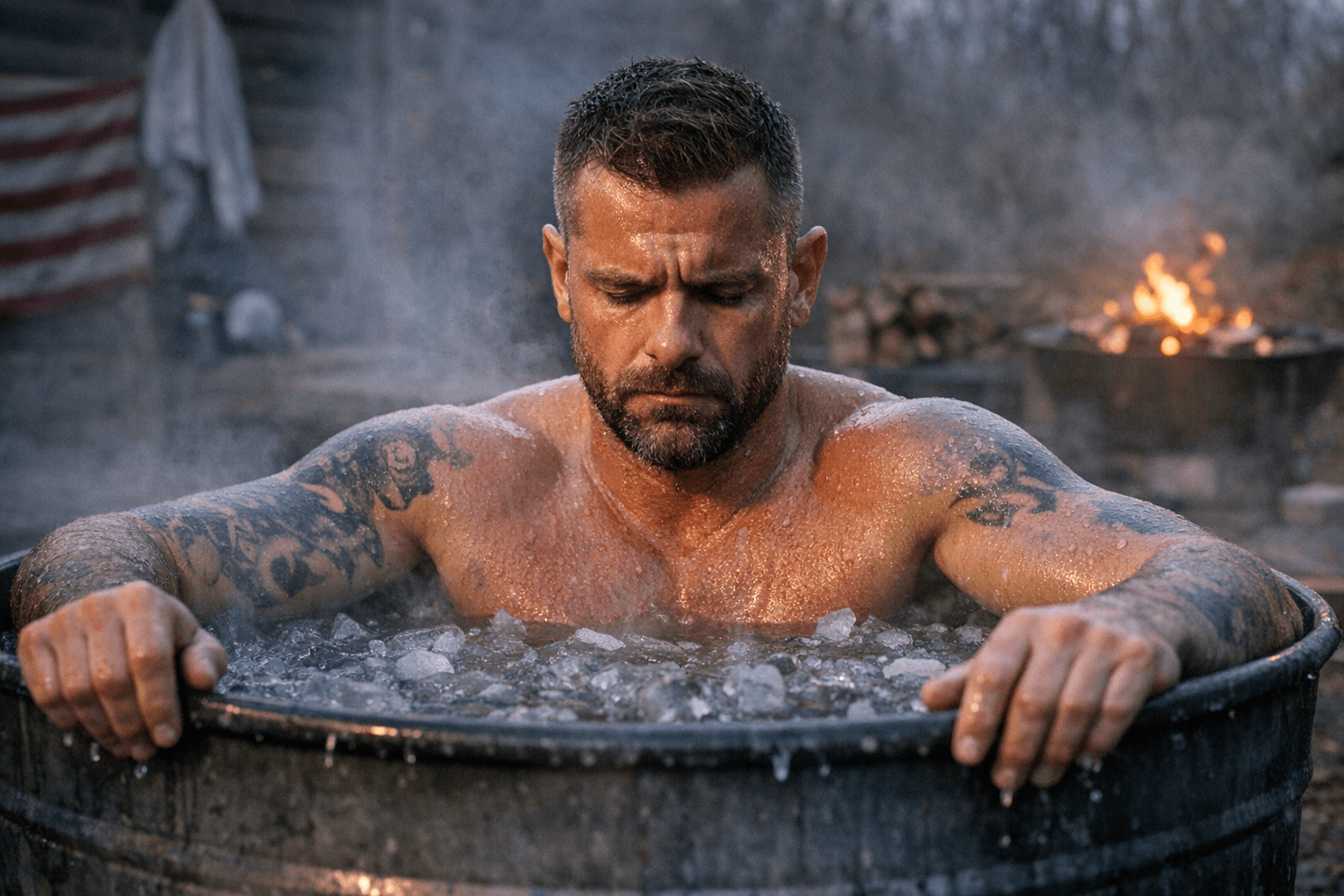
The water in Harry Beattie's ice bath sits at 2°C. He knows, because anything warmer doesn't work. At 9°C, the Guernsey sea that stretched in front of him earlier this year wasn't cold enough to do the job, so he set up a portable tub on the island's shore before wading in. "The sea is probably 9C but I need it down at 2C if I am going to get a real dopamine hit, I do it and I feel better for doing it," he told onlookers that day. This level of precision matters to Beattie in a way it doesn't for most cold plungers. For the 33-year-old from Waterlooville, the dopamine isn't a wellness bonus. It is, in a very real neurochemical sense, the whole point.
Beattie spent more than half a million pounds on cocaine and gambling over the course of his addiction. He was running up cocaine bills of more than £3,000 a month and gambling hundreds of thousands across blackjack, roulette, poker and slots. He had built a double-glazing business, got engaged, and was expecting a child, but the addiction dismantled all of it. He tried counselling, hypnotherapy, CBT, 12-step meetings and a stint in private residential rehab, but he wasn't ready to get clean despite wanting to.
"I spent years using drugs, drinking and gambling to try and change the way I felt because I was unhappy with who I was," he said.
That all changed on 21 July 2024. After another typical night using drugs and alcohol, he set up a new ice bath. He had read that cold water exposure could produce a dopamine response, and for someone whose brain had been depleted of its natural reward signalling by years of cocaine use, that detail mattered. "I remember getting into that cold water and getting out five minutes later and feeling incredible. I just had this surge of energy and felt my cortisol reducing. The cold water gives you a dopamine hit you see, which replaced what I was lacking due to prolonged drug abuse. I felt great and didn't use that day."
He set up a TikTok channel to hold himself accountable, committing to a daily ice bath for a year with the hope of finally getting clean. More than 300,000 people have joined Harry on his journey on TikTok alone. He has a further 54,000 followers on Facebook. Bath number 500 took place at Portsmouth FC's Fratton Park. Bath number 594 was taken in Guernsey's bathing pools. At 600 days and counting, the streak has not broken.
The mechanism Beattie describes, cold water as a substitute dopamine source for a chemically depleted brain, has genuine scientific grounding, even if the clinical picture is more complicated than any single story suggests. Research has shown that cold water immersion triggers significant increases in dopamine and norepinephrine. One study cited by neuroscientist Andrew Huberman found that immersion in cool water at roughly 15°C produced "significant and prolonged increases in dopamine" lasting well beyond the plunge itself. A study from the University of Florida Health puts the potential dopamine surge at up to 250%, which is a meaningful figure when the baseline is as suppressed as it typically is in cocaine recovery.
Anna Lembke, Chief of the Addiction Medicine Dual Diagnosis Clinic at Stanford University and author of Dopamine Nation, recommends graded exposure, starting with warmer temperatures and shorter sessions and observing each person's reaction. She notes that many patients with chronic pain and mental health conditions "feel better after graded exposure to ice baths," but that some patients have reacted negatively. The key phrase in her guidance is "graded": cold therapy entered slowly, monitored, and treated as one component among many rather than a replacement for structured addiction treatment.
Mark Harper, whose research on cold water swimming informed his book Chill, points to evidence that the maximum mental health response to cold water immersion occurs at water temperatures between 10°C and 15°C, with no significant additional effect below 10°C. Beattie's preference for 2°C sits well beneath that threshold, suggesting his protocol is driven more by the subjective intensity of the shock than by the science of optimal temperature for mood response. For addiction recovery specifically, the interruption effect, the abrupt jolt that redirects the nervous system and displaces a craving in real time, may matter as much as the neurochemical cascade itself.
Beattie has been careful not to oversell what ice baths can do, describing them as "another tool" for those fighting addiction, not a cure. Experts consistently echo that framing, noting that cold water immersion should not replace established treatments such as counselling, medical support, rehabilitation programmes and peer-support groups. What it can offer is a daily stress-resilience practice, a non-pharmacological dopamine stimulus, and a craving-interruption ritual that costs almost nothing and scales to any lifestyle.
For those wanting to try it responsibly, the protocol with the most scientific backing looks like this. Water temperature should sit between 48°F and 55°F (9°C to 13°C) for general cold water exposure, cold enough to trigger a genuine physiological response without the cardiac risk of extreme temperatures. Sessions run between one and five minutes, with the norepinephrine and dopamine benefits showing diminishing marginal returns beyond five minutes at that temperature range. A frequency of two to four sessions per week is the minimum threshold for consistent benefit, while daily use carries no documented downside for healthy individuals.
The contraindications are serious. Ice baths are not safe for everyone, particularly those with cardiovascular disease, high blood pressure and poor circulation. At temperatures below 47°F (8°C), the initial cold shock can cause a dangerous spike in heart rate and blood pressure. Never plunge alone in early sessions, enter slowly rather than jumping in, and treat any chest tightness, lightheadedness, or significant difficulty breathing as a signal to exit immediately.
Beattie recently welcomed a daughter named Billy. He now speaks publicly about addiction recovery and cold water therapy, fundraising for Mind, the mental health charity that supported him through the process. His story tends to get flattened into a tidy before-and-after. The version he tells is more honest: a man who tried every available intervention for a decade, wasn't ready for any of them, and then found something that gave his depleted brain enough of a signal to choose differently on one July morning. The ice bath didn't replace treatment. It gave him a day sober, and then another, and the streak from there has been his own.
This article was produced by Prism’s automated news system from verified source data, official records, and press releases, then run through automated quality and moderation checks before publishing. The system is built and supervised by the people who set the standards it runs under. Read our full AI policy.
Did this article answer your question?