How Hormones and Body Composition Shape Cold Plunge Results for Men and Women
Men shiver harder while women insulate smarter: sex hormones and body fat create fundamentally different ice bath experiences, and the optimal protocol for each follows suit.
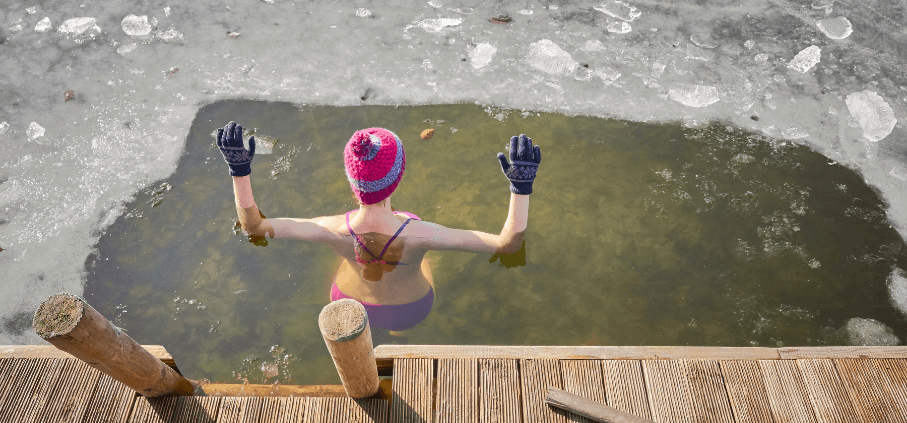
Step into 14°C water for an hour and your immune system shifts measurably. A six-week cold-water immersion study found that regulars at that temperature experienced increased IL-6 levels and higher CD3 T-cell counts, boosting the body's pathogen defense. But if two people, one male and one female, climb into that same tub at the same time, the physiology playing out beneath the surface looks remarkably different. Hormones, fat distribution, and thermoregulatory wiring all diverge by sex, and recognizing that divergence is the foundation of a smarter cold practice.
Why the Same Water Feels Different
Every cold plunge triggers the same opening sequence: hydrostatic pressure activates the sympathetic nervous system, peripheral blood vessels constrict, and the hypothalamus fires off epinephrine and norepinephrine to raise heart rate and blood pressure. Brown adipose tissue (BAT) ramps up lipid metabolism to generate heat, and shivering kicks in as skeletal muscles contract asynchronously to add more. That much is universal. What diverges is the timing, intensity, and hormonal context of each step.
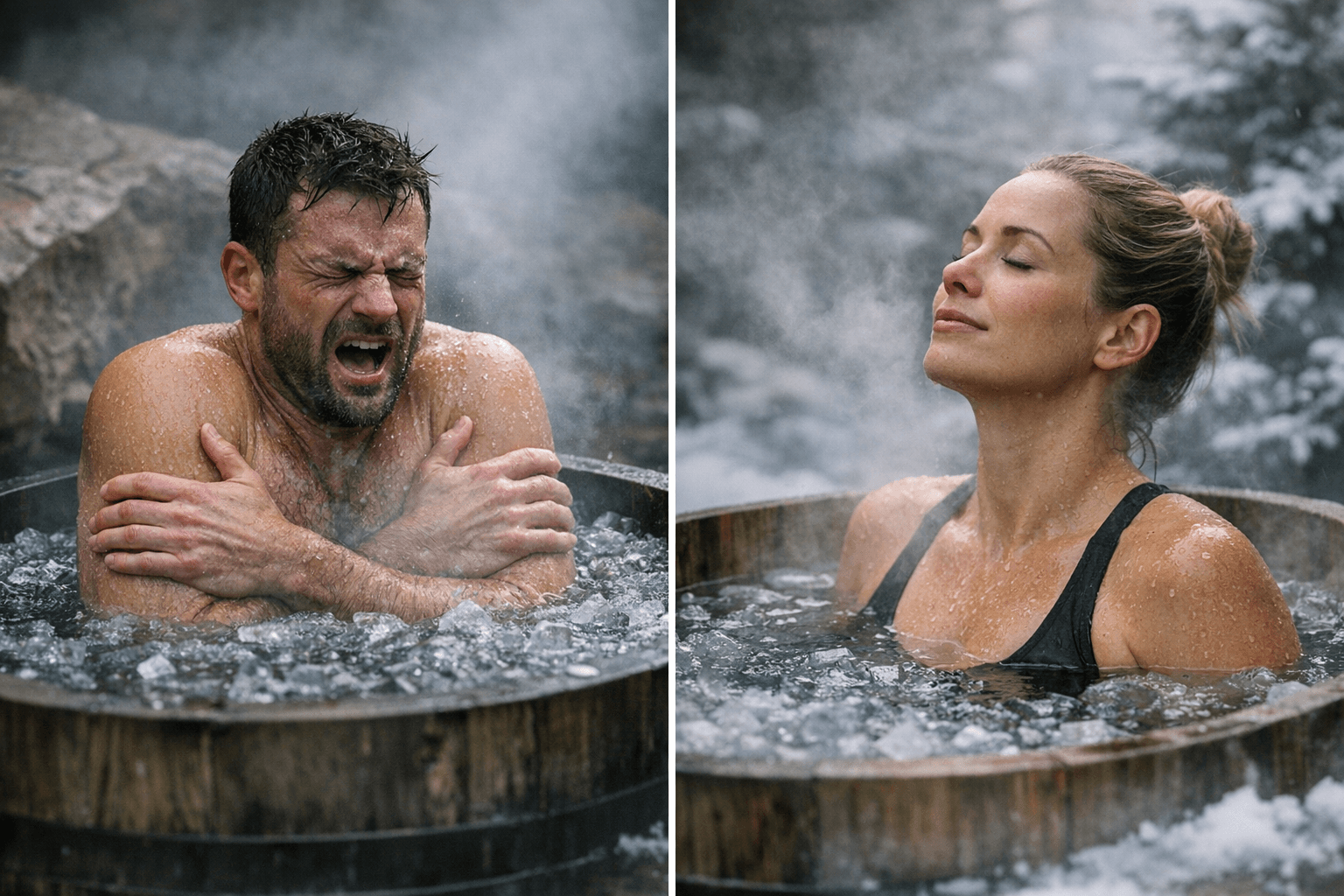
Research published in the Journal of Applied Physiology tracked eleven women and fourteen men immersed to neck level in 18°C water for up to 90 minutes. Both sexes saw metabolic rate climb to roughly three times resting levels. But the rate at which core temperature dropped in women was about half that of men, at 0.47°C per hour compared to nearly double in the male group. Women cooled more slowly, not because they produced less heat, but because they were built to hold it longer.
Fat Distribution and the Insulation Equation
Body composition is at the center of this difference. Women typically carry a higher percentage of body fat than men, and the location of that fat matters. As analyzed in a News-Medical review of sex-based thermal responses, estrogen promotes fat deposition around the breasts and hips, while testosterone drives accumulation around the trunk and abdomen. Subcutaneous fat, distributed more evenly across the female body, insulates core organs efficiently, slowing the rate of heat loss to surrounding water.
The catch is that this same distribution can leave extremities, hands, feet, and lower legs, colder and more vulnerable during immersion. Women often report colder hands and feet well before their core temperature shows significant change. Men, with more centrally located fat mass and greater muscle volume generating shivering heat, tend to experience the opposite: a faster core temperature drop offset by more aggressive thermogenesis.
Estrogen, Progesterone, and Temperature Set Points
Hormonal regulation of body temperature is not static in women, and it adds a layer of complexity that most cold plunge advice ignores entirely. Estrogen dilates blood vessels and actively promotes heat dissipation, which can amplify the vasodilatory rebound women experience when exiting cold water. Progesterone does the opposite: it raises the body's thermal set point, particularly during the luteal phase of the menstrual cycle, the roughly two weeks between ovulation and menstruation.
Research shows that women vasoconstrict faster and experience greater drops in core temperature during immersion specifically in the luteal phase, when progesterone is elevated. That means the same cold plunge at the same temperature can feel markedly more intense and deliver a stronger stress signal depending on where a woman is in her cycle. This is not a reason to avoid cold exposure in the luteal phase, but it is a reason to shorten session length and choose slightly warmer water.
For men, testosterone creates a more stable hormonal backdrop. Short, sharp cold exposure appears to temporarily elevate testosterone, particularly when combined with resistance training. Prolonged or excessively frequent plunges can trigger elevated cortisol that may suppress testosterone over time, which is worth tracking for anyone training hard and recovering harder.
The Menstrual Cycle as a Cold Plunge Calendar
Treating the menstrual cycle as a training variable, rather than an obstacle, unlocks a more precise approach. In the follicular phase, estrogen peaks and the body's temperature regulation and metabolic rate are at their most favorable for cold exposure. Longer, colder sessions tend to be better tolerated and may deliver stronger metabolic and mood benefits during this window.
At ovulation, localized cold application can reduce inflammation and pain for women dealing with ovulatory discomfort or endometriosis by modulating prostaglandin activity and local blood flow. Full-body immersion is not necessary here; targeted cold compresses or briefer plunges can achieve the therapeutic effect without driving an excessive systemic stress response.
During menstruation itself, some women tolerate cold plunges well and find that the anti-inflammatory effect eases cramping. Others feel more fatigued and temperature-sensitive. Neither response is wrong; the signal from your body is the data point worth tracking.
Brown Fat, Shivering, and Who Adapts Faster
One of the more counterintuitive findings in sex-based cold research involves brown adipose tissue. Researcher Dr. Susanna Søberg, whose decade of work on metabolism and cold exposure has influenced how practitioners think about thermal adaptation, notes that women tend to have more brown fat than men. Because BAT is highly efficient at generating heat through non-shivering thermogenesis, women may actually experience less shivering overall despite their smaller volume-to-mass ratio.
That smaller ratio, less body mass relative to surface area, is also why women typically begin shivering earlier than men when entering cold water. Heat escapes faster when you have more skin relative to the internal mass generating warmth. But the higher brown fat reserves may partially compensate, especially in women who have built a consistent cold practice. Some research suggests women may adapt to cold water immersion with less overall physiological strain than men, relying on more efficient blood flow regulation rather than brute-force shivering thermogenesis.
Two studies have found that cold-induced thermogenesis and the rate of fat oxidation during cold exposure improved by a greater margin in women than in men, which runs against the common assumption that men get more out of intense cold exposure protocols.
Timing Plunges Around Training
The interaction between cold water immersion and training adaptation is where protocol precision matters most for both sexes. Cold exposure dampens inflammatory signaling pathways, including mTOR and PGC-1α, the very pathways that drive muscle and mitochondrial growth after strength training. Using a cold plunge within an hour of lifting will likely blunt those adaptations, regardless of sex.
For post-exercise recovery after high-intensity or competition efforts, immersions in the 10 to 12°C range for around 10 minutes have demonstrated measurable reductions in muscle damage and perceived soreness. Men, with higher baseline muscle mass and faster resting metabolic rates, tend to recover from sessions more quickly in general, but the acute benefit of timed cold immersion is well supported across both sexes when applied to competition recovery rather than everyday training.
Building a Protocol That Matches Your Biology
The practical framework that emerges from the research is less about strict rules and more about calibrating effort to biology.
- Women in the follicular phase can experiment with colder temperatures and longer sessions, up to the 10 to 15-minute range.
- Women in the luteal phase should consider shortening sessions and choosing water that is cool rather than truly icy, roughly 15 to 18°C rather than sub-10°C.
- Men benefit from pairing cold plunges with recovery days rather than immediately post-lifting, and monitoring for chronic fatigue or libido changes that may signal cortisol overload from excessive cold stress.
- Both sexes should treat early morning plunges differently from evening sessions: cold exposure elevates norepinephrine and dopamine, the neurotransmitters driving alertness and motivation, which may disrupt sleep quality when used too close to bedtime.
- Women with PCOS, thyroid conditions, or adrenal fatigue should approach cold exposure cautiously. Small doses can support hormonal regulation, but intense protocols may amplify cortisol dysregulation rather than relieve it.
The evidence is increasingly clear that cold immersion is not a one-size-fits-all practice. The same plunge that accelerates a man's recovery from a weekend race may leave a woman in her late luteal phase feeling wiped out for two days. Getting those variables right, not just the temperature on the thermometer, is what separates a cold practice that builds you up from one that quietly wears you down.
This article was produced by Prism’s automated news system from verified source data, official records, and press releases, then run through automated quality and moderation checks before publishing. The system is built and supervised by the people who set the standards it runs under. Read our full AI policy.
Did this article answer your question?