InHouse Wellness asks whether cold plunging is good for women
Cold plunging can help some women recover, but the safest win is not the coldest tub. Hormones, heart health, and your goal for the session all change the answer.

The smartest cold plunge advice for women is not colder, longer, harder. It is more specific. If you are using cold water for recovery, mood, or alertness, the real question is not whether you can endure the tub. It is whether the dose fits your body, your training, and your health profile. That is the shift InHouse Wellness is tapping into with its women-focused framing: cold exposure can be useful, but the best version is the one you can repeat safely.
Who is likely to benefit, and what the payoff actually looks like The strongest case for cold-water immersion is still about recovery, not magic. A January 2025 systematic review and meta-analysis of 11 studies and 3,177 participants found that cold-water immersion, usually in the 7°C to 15°C range for 30 seconds to 2 hours, was linked to a significant stress reduction 12 hours later. It did not show a significant immediate stress effect, or a clear effect at 1 hour, 24 hours, or 48 hours, and pooled mood results were not significant.
That is a useful reality check for anyone hoping a plunge will flip a mental switch on demand. The same review did find improvements in sleep quality and quality of life in some studies, plus a narrative finding of a 29% reduction in sickness absence among cold-shower users. In other words, the upside looks modest, time-dependent, and practical rather than dramatic.
There is also some women-specific upside that fits the way many people already use cold exposure. A controlled study in healthy premenopausal women found that moderately cold water during aqua-cycling increased energy expenditure and decreased hunger, which helps explain why some women view cold exposure as part recovery tool, part energy-balance experiment. A 2020 hypothesis paper on pregnancy and cold-water swimming went further in a speculative way, noting that women who regularly swim in cold water report better mood, energy, and exercise recovery. None of that proves a universal benefit, but it does show why the interest keeps growing.
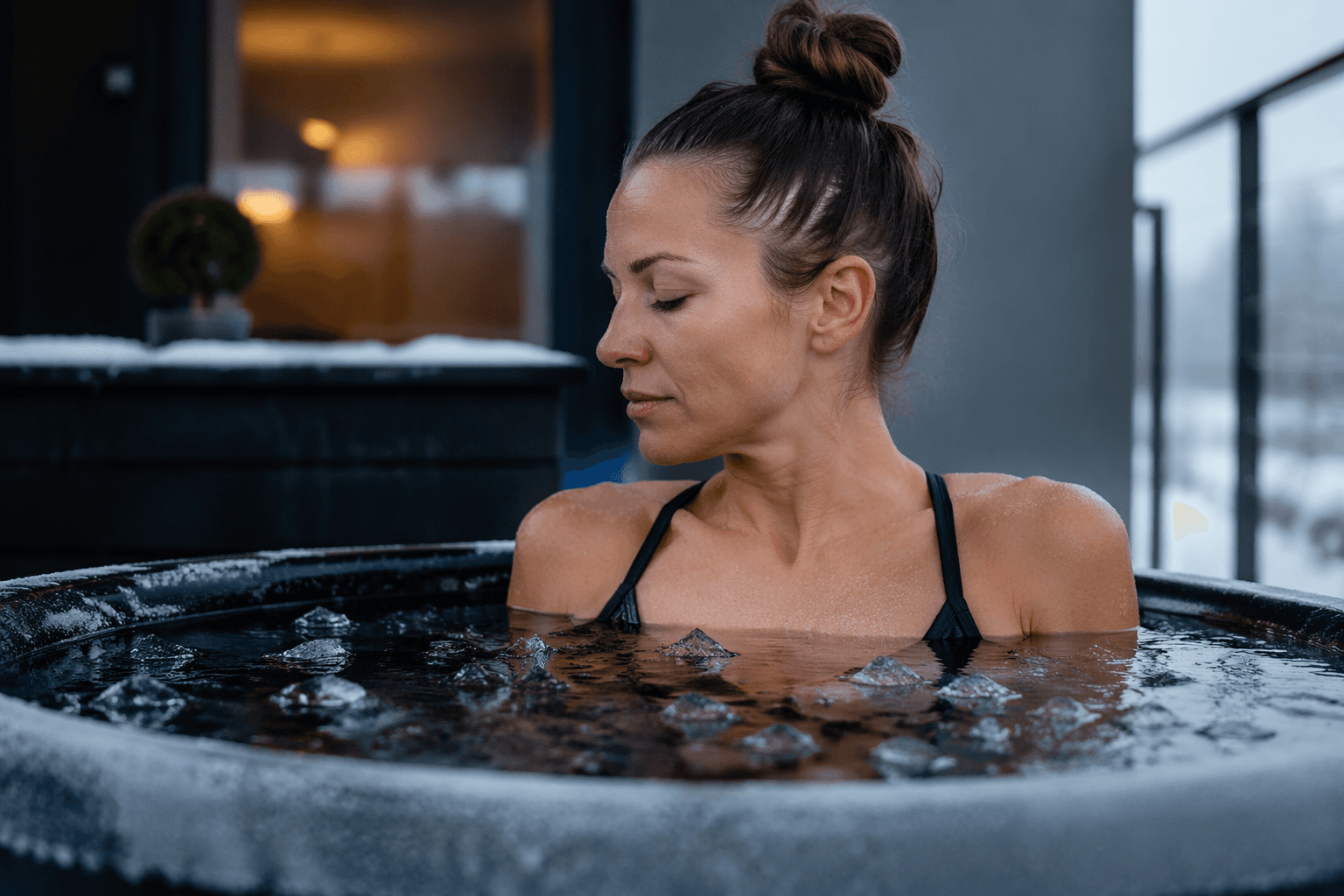
Why the sea-swim crowd matters here This is not just a theory-and-lab story. A 2024 mixed-methods study of 1,114 women who cold-water swim found that most respondents were in the United Kingdom, and most had been swimming for 1 to 5 years. The pattern was strikingly community-driven: 64.4% mainly swam in the sea, 15.5% swam alone, and 89.0% swam all year round. Women typically swam 30 to 60 minutes in summer and 5 to 15 minutes in winter.
The free-text responses leaned heavily toward mental and physical benefits, but the authors also called for safer and better supported access because of access and safety limitations. That is the part the broader wellness conversation often misses. Women are not only asking whether cold plunging is “good” in the abstract. Many are already doing it, in real weather, in real communities, and they need clearer guardrails.
Who should be cautious before making cold the habit The biggest caution is cardiovascular. Harvard Health says the evidence for cold-plunge benefits is thin, and that cold-water immersion can be risky for people with cardiovascular disease, especially heart rhythm abnormalities. It also warns that sudden cold exposure can trigger rapid breathing, involuntary gasping, and spikes in heart rate and blood pressure.
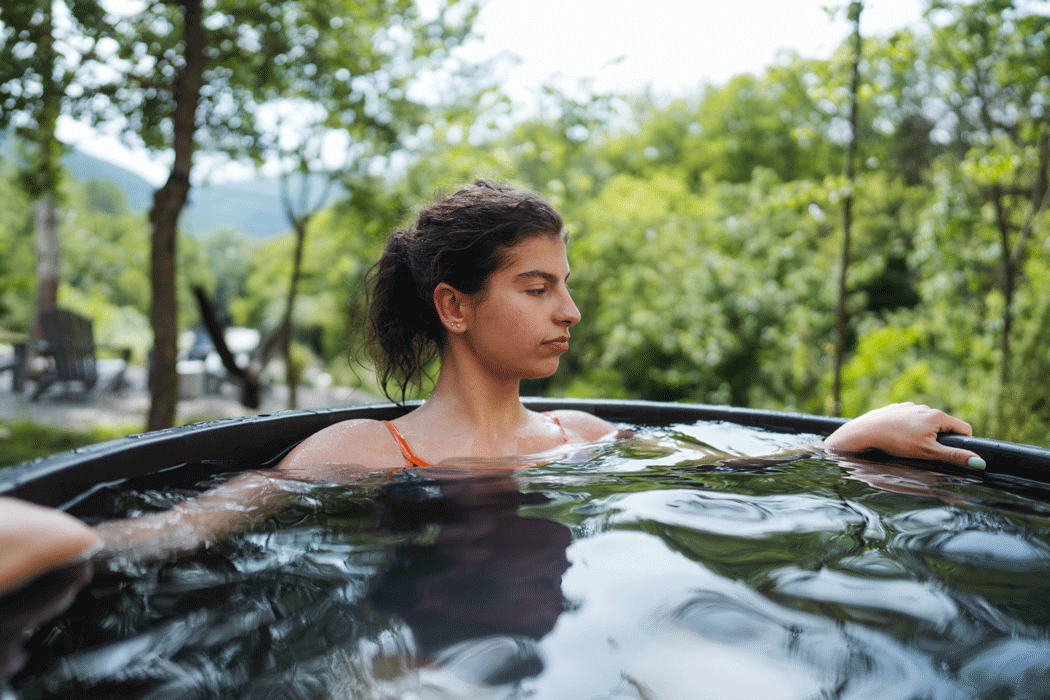
That matters because the wellness version of a plunge can look harmless while still provoking a real physiologic shock. Harvard’s practical advice is blunt: never take an ice bath alone, and generally stay in for no more than 15 minutes. It also notes that ice baths are typically about 50°F to 60°F, which should be a reminder that “effective” does not mean “extreme.” If a session turns into a prove-it test, the protocol has already gone off course.
Why menstrual cycle stage and hormone status change the conversation Women’s cold-plunge guidance cannot ignore thermoregulation. A review indexed in PubMed says estradiol and progesterone fluctuations affect how the body regulates temperature in both hot and cold environments. That does not mean there is a single rule for every phase of the menstrual cycle. It does mean that hormone status, cycle stage, stress load, and life stage can all shape how the same water feels and how the body responds.
That is why universal recipes keep falling apart in real life. A recent review of post-exercise cold-water immersion protocols says the evidence gaps are still substantial, especially for female athletes, and that universal application strategies are questionable. If you are using a plunge after training, the right question is not “What is the coldest acceptable temperature?” It is “What am I trying to recover from, and what dose actually helps me get back to that training tomorrow?”

How to set a more intelligent protocol If your goal is to recover from a hard session, lift your mood a bit, or feel more alert, the latest guidance points toward a measured, repeatable chill rather than an endurance challenge.
- Use the cold as a tool, not a trophy. The research range of 7°C to 15°C shows that benefit does not require the iciest option.
- Keep the dose aligned with the goal. Immediate performance recovery, sleep support, and general well-being are not the same problem.
- Treat sex, cycle phase, and training style as part of the prescription. Female athletes remain underrepresented in the protocol literature.
- Stay inside the safety lane. If you have cardiovascular disease or rhythm issues, cold immersion deserves extra caution.
- Do not confuse consumer plunging with medical cooling. Cold-water immersion is the gold-standard treatment for exertional heat illness when core temperature exceeds 40°C, but that emergency use still carries a hypothermia risk.
The point of the newest women-specific framing is not to make cold plunging smaller. It is to make it smarter. For many women, the best plunge will look less like a dare and more like a precise recovery decision, one that respects hormones, heart health, and the fact that colder is not automatically better.
This article was produced by Prism’s automated news system from verified source data, official records, and press releases, then run through automated quality and moderation checks before publishing. The system is built and supervised by the people who set the standards it runs under. Read our full AI policy.
Did this article answer your question?