Pennsylvania boy survives 177-minute ice plunge, recovers after ECMO treatment
An 8-year-old Pennsylvania boy survived a 177-minute ice plunge, hit 45 degrees, and had no heartbeat before CPR and ECMO brought him back.
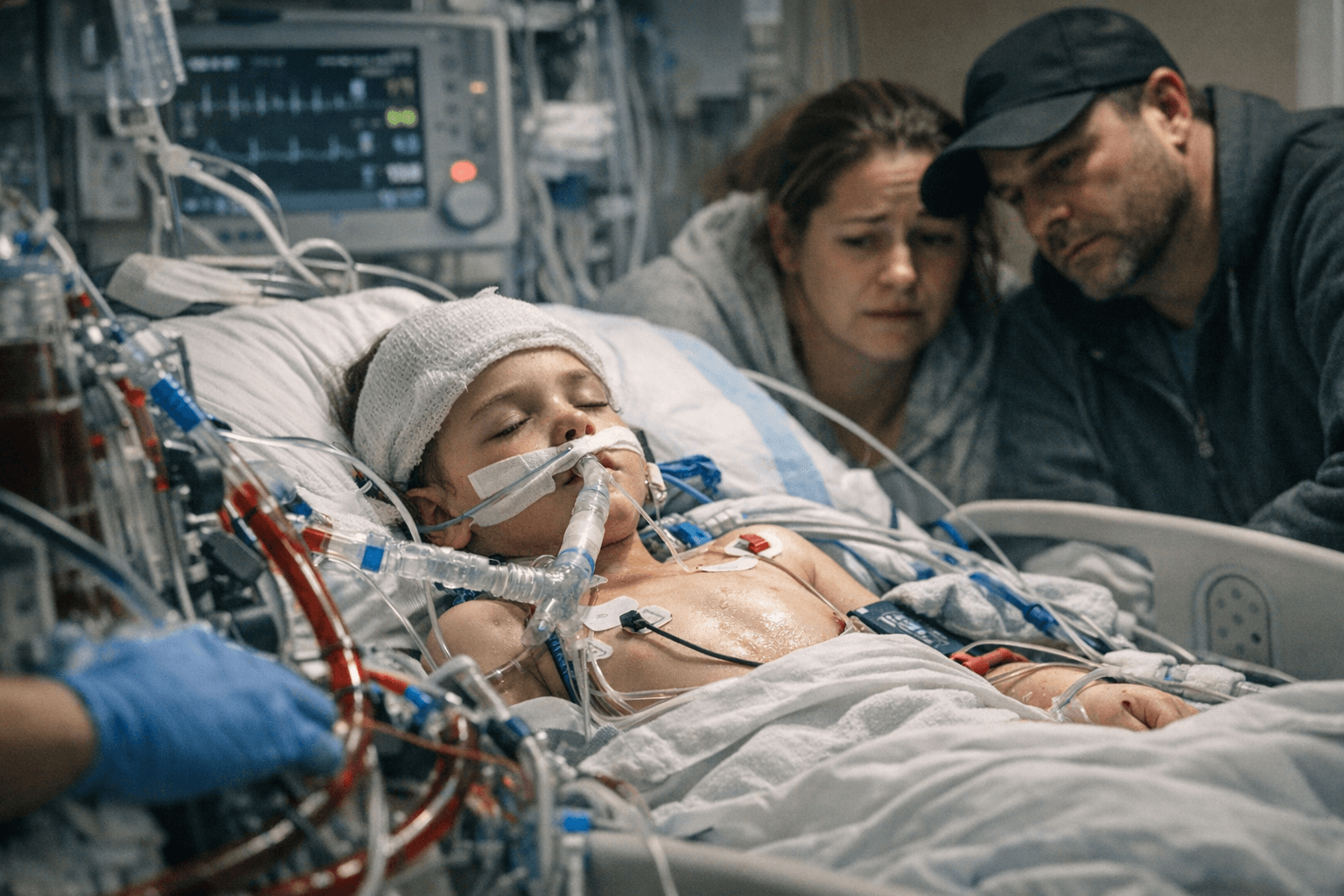
An 8-year-old Pennsylvania boy survived a 177-minute ice plunge, arrived with no heartbeat and a body temperature of 45 degrees, and later recovered after CPR and ECMO rewarming.
The child fell through pond ice in central Pennsylvania after going outside to play in roughly 27-degree weather, wearing boots and a snow jacket. His parents later found sled tracks leading from home to broken ice, and first responders, dive teams and Pennsylvania State Police searched the pond near South Avenue in Canton, Bradford County, on Dec. 6, 2024. He was in critical condition the next morning.
Doctors at Geisinger Medical Center in Danville and Children's Hospital of Philadelphia later described an extraordinary rescue built around hypothermia's protective effect. The boy was submerged for at least 147 minutes and reached a nadir peripheral body temperature of 7 C, or 45 F, before prolonged CPR and extracorporeal membrane oxygenation were used to rewarm his core. He then spent a long stretch in the hospital and went through neurorehabilitation before recovering to near-full function.
The case stood out because the authors described it as the longest submersion time and lowest body temperature survived in the medical literature. Their take-home message was direct: resuscitation and extracorporeal rewarming may be considered for upward of 2.5 hours of asystolic hypothermia, and ECMO may also bridge to pediatric organ donation if neurologic recovery does not appear. This was accidental hypothermia, not a deliberate cold plunge, and it showed how extreme cold can be both deadly and, in rare rescue scenarios, life-preserving.
Know something we missed? Have a correction or additional information?
Submit a Tip