PLOS One review finds ice baths raise inflammation, not immediate stress relief
Ice baths spiked inflammation right away and again at 1 hour in an 11-study review, while stress relief showed up only 12 hours later.
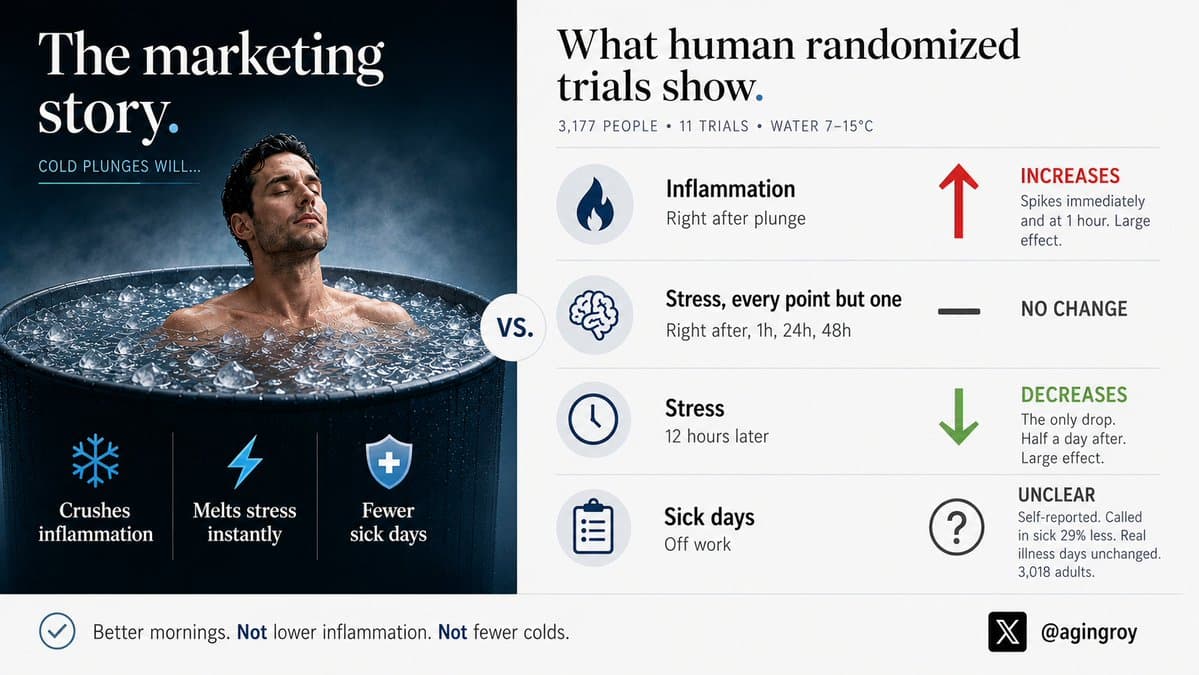
Cold-water immersion did not deliver the instant anti-inflammation story many plunge fans have been sold. In an 11-study review covering 3,177 healthy adults, inflammation markers rose immediately after ice baths, cold showers, and plunges, then climbed again at the 1-hour mark.
The PLOS One analysis, published January 29, 2025, was led by Tara Cain, Jacinta Brinsley, Hunter Bennett, Max Nelson, Carol Maher, and Ben Singh from the Alliance for Research in Exercise Nutrition and Activity at the University of South Australia in Adelaide. The team pulled together randomized trials in adults 18 and older who used water at 15C or colder for at least 30 seconds, with exposures ranging from 30 seconds to 2 hours. Ten of the studies used baths and only one used a shower, and the evidence base was mixed, with a mean PEDro quality score of 6.4, seven studies rated moderate and four rated high quality.
The sharpest signal in the review was the body’s acute stress response to the cold. Ben Singh said the immediate inflammation spike reflects that response, while Tara Cain said cold-water immersion has become popular in both athletic recovery and general wellness, but its effects are time-dependent and limited. Stress did not fall right away. It dropped significantly only at 12 hours, with no significant effect at 1 hour, 24 hours, or 48 hours. The review also found no significant immediate or 1-hour effect on immune function.
That leaves the familiar recovery pitch on shakier ground, at least for the fast payoff many users expect from a plunge. The review’s narrative synthesis did point to longer-term benefits in sleep quality and quality of life, but those were separate from the short-term inflammation and stress findings that dominate most ice bath conversations.

The “fewer sick days” line also needs a reset. A 2016 randomized trial in the Netherlands assigned 3,018 adults to hot showers alone or to showers finished with 30, 60, or 90 seconds of cold water. It found a 29% reduction in self-reported sickness absence, but no significant reduction in illness days, which means the headline gain was tied to reporting behavior, not fewer documented infections. The trial also reported no serious adverse events.
For plunge routines built around immediate recovery, the new evidence draws a clear line: the cold still hits the body hard, but the fast anti-inflammation and instant stress-relief claims are not holding up the way the community’s marketing has suggested.
This article was produced by Prism’s automated news system from verified source data, official records, and press releases, then run through automated quality and moderation checks before publishing. The system is built and supervised by the people who set the standards it runs under. Read our full AI policy.
Did this article answer your question?