SAINT brings private ice baths and design-driven recovery to Manhattan
SAINT bets that Manhattan wants cold therapy without the room: four private suites, softer pacing and a design-forward reset at 242 West 29th Street.
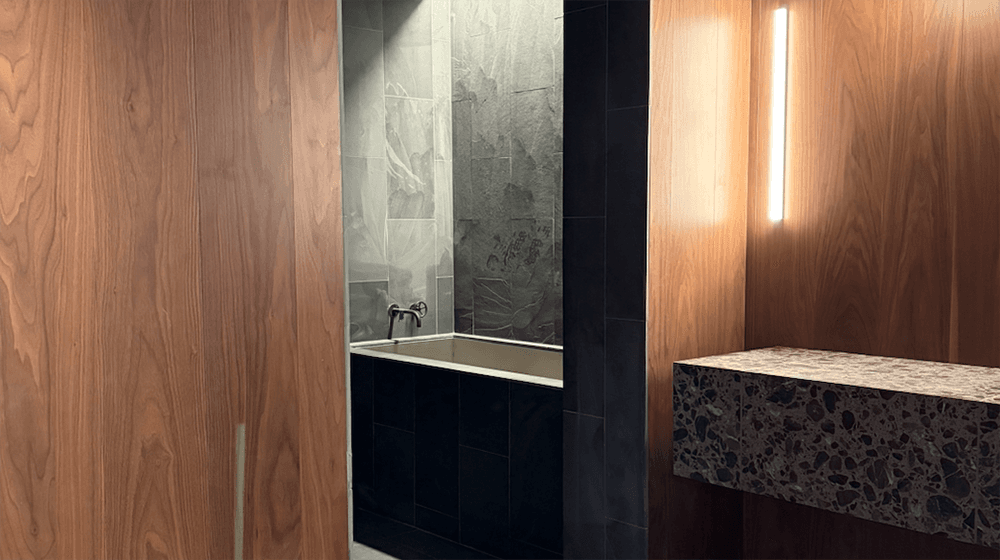
SAINT opens the cold-plunge conversation by closing the door. In Chelsea, the studio swaps the communal bathhouse mood for four private suites, each built for a slower, more controlled reset. For Manhattan clients, that privacy is the point: no crowd, no performance, just a sauna, a shower and an ice bath set up for one person or two.
A private reset in Chelsea
The studio opened in early May at 242 West 29th Street, after a leasing deal that placed SAINT in Ruby, the luxury rental building there. MAG Partners said the company signed a 10-year lease for slightly over 1,100 square feet, a footprint that feels deliberately intimate rather than club-like. The founders, Alex Feldman and Amanda Hensen, are first-time entrepreneurs and former WeWork colleagues who met there in 2015, and that origin story helps explain the studio’s instinct for solitude over spectacle.
That choice sets SAINT apart in a city where wellness can feel crowded, social and a little performative. Time Out described the studio as a fully private alternative to New York’s increasingly social spa culture, and that is the essential pitch: if the bathhouse model asks you to share the energy of the room, SAINT invites you to step out of it entirely. For people who want recovery without the room noise, that difference is huge.
What the room gives you that a communal plunge does not
Instead of a big shared pool or a single open plunge area, SAINT offers just four private treatment rooms. Each one includes a sauna, a rain shower and an ice bath, so the entire sequence happens inside one controlled space without shifting between public zones. The rooms can be booked for one person or shared with one other person, which keeps the experience private without making it feel solitary in a clinical sense.
The setup also lowers a common barrier for newcomers: fear of the unknown. Each room includes a changing area, snacks and electrolyte drinks, which makes the cold-plunge portion feel like part of a complete, self-contained ritual rather than a hard jump into discomfort. The plunge itself is set to a relatively approachable 50 degrees, a detail that matters because it preserves the cold-shock effect regular users want while making the first dip feel less intimidating.
That is a smart move for a market where the cold bath can still feel like a dare. A private room changes the psychology immediately: you can control the pace, recover between steps, and decide when the ice bath starts and stops without worrying about a line behind you.
How the routine is meant to flow
SAINT’s typical suggested routine makes that pacing explicit. The sequence pairs 10 to 15 minutes in the sauna with a rain shower rinse, breathwork and then one to six minutes in the ice bath. That order matters because it turns the session into a progression instead of a single endurance test, and the room itself supports that rhythm by keeping every step within reach.
Private guided sessions are also available, which should make the studio especially friendly to people who are curious about cold therapy but not yet confident about how to structure a session. The question with any ice-bath routine is not just how long to stay in, but how to move between heat, rinse, breath and plunge. SAINT answers that question by building the sequence into the room, so the experience feels less like improvisation and more like a guided reset.
Design is part of the recovery
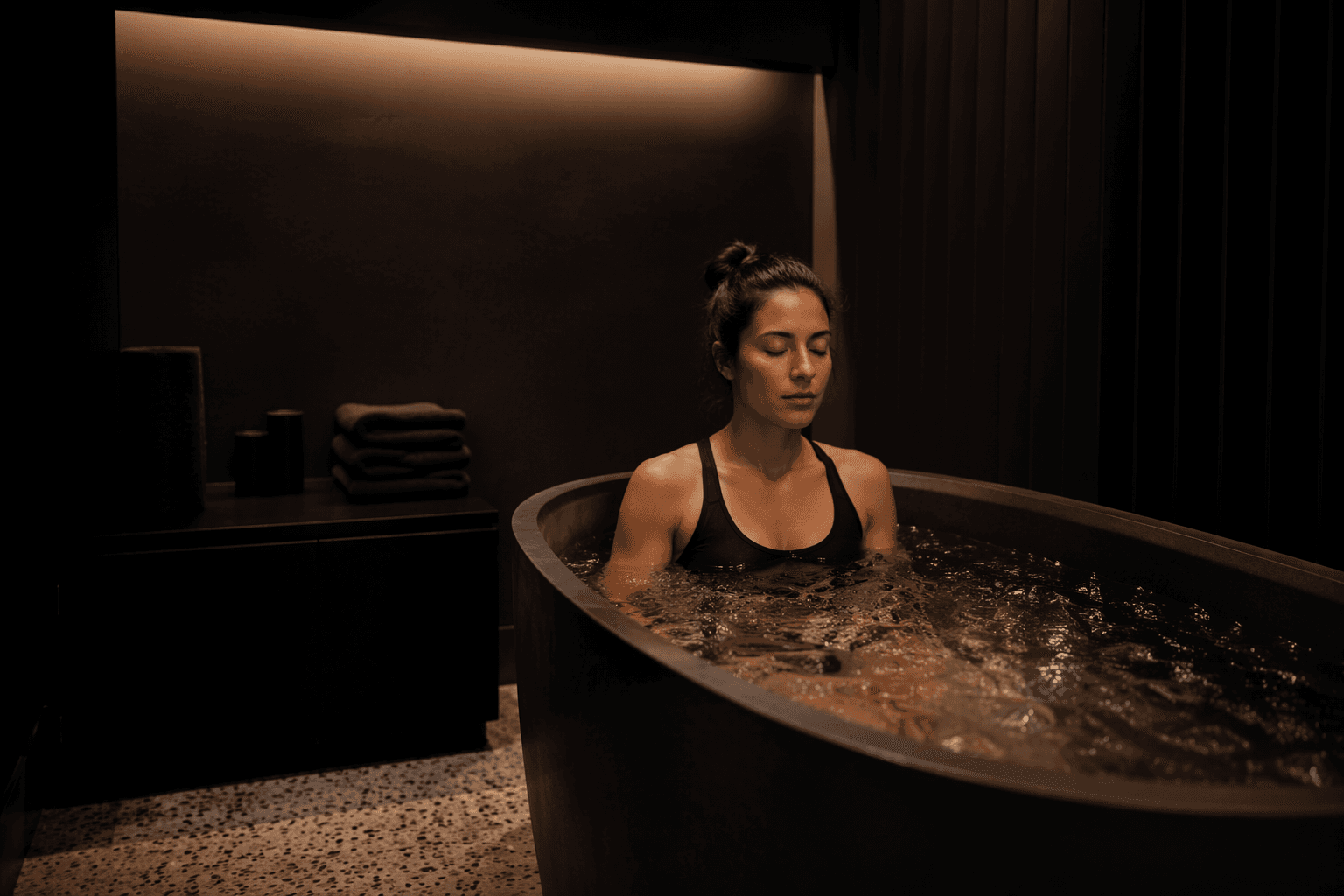
The atmosphere is not an afterthought here. Chelsea-based BoND designed the interiors with dark walls, black tile and a discreet entrance, giving the place the feel of a design showroom more than a conventional wellness club. BOND says the firm was engaged in 2024, before a site had even been identified, which suggests the look and the operating idea were developed together from the start.
There is also a softness to the arrival that fits the concept. BOND describes SAINT as a private sauna and cold-plunge club, and notes that the entrance is only marked by a soft glow from a circular lighting installation. That kind of restraint is exactly what makes the studio legible to a Manhattan client who may want the benefits of recovery without being seen doing recovery.
The result is a space that feels tailored to mood as much as muscle repair. For a newcomer, that can matter as much as the water temperature. A discreet entrance, a calm palette and a room that does not demand social performance all help make the first plunge feel manageable.
Why this model fits the Manhattan moment
SAINT is arriving into a market that is still expanding around wellness, even as its formats split in different directions. REBNY said fitness and wellness were among the main drivers of Manhattan retail leasing activity in both H1 and H2 2025, and the broader category continues to attract capital. Bathhouse raised $35 million in May 2026 for expansion, showing that communal sauna and plunge concepts still have momentum even as private formats carve out their own lane.
The wider wellness numbers are just as telling. The Global Wellness Institute says the global wellness economy reached $6.8 trillion in 2024 and projects it will hit $9.8 trillion by 2029. In its 2025 hydrothermal trends, the group says the ice bath craze is giving way to gentler, more accessible cooling rituals, while communal sauna culture is booming, which helps explain why SAINT can feel both like a countertrend and a natural next step.
That is the real appeal of the studio in Manhattan. It answers the same recovery impulse as the city’s busier bathhouses, but it removes the social layer that can make wellness feel like another kind of work. For people who want the cold without the crowd, SAINT’s private rooms, measured pacing and design-first approach turn the plunge into something quieter, easier to enter and easier to repeat.
In the end, the most distinctive thing about SAINT is not that it offers an ice bath in Chelsea. It is that it treats privacy as part of the therapy, and in a city full of loud wellness rituals, that closed door may be the feature that matters most.
This article was produced by Prism’s automated news system from verified source data, official records, and press releases, then run through automated quality and moderation checks before publishing. The system is built and supervised by the people who set the standards it runs under. Read our full AI policy.
Did this article answer your question?