Shared Ice Baths Turn Cold Plunging Into a Social Ritual
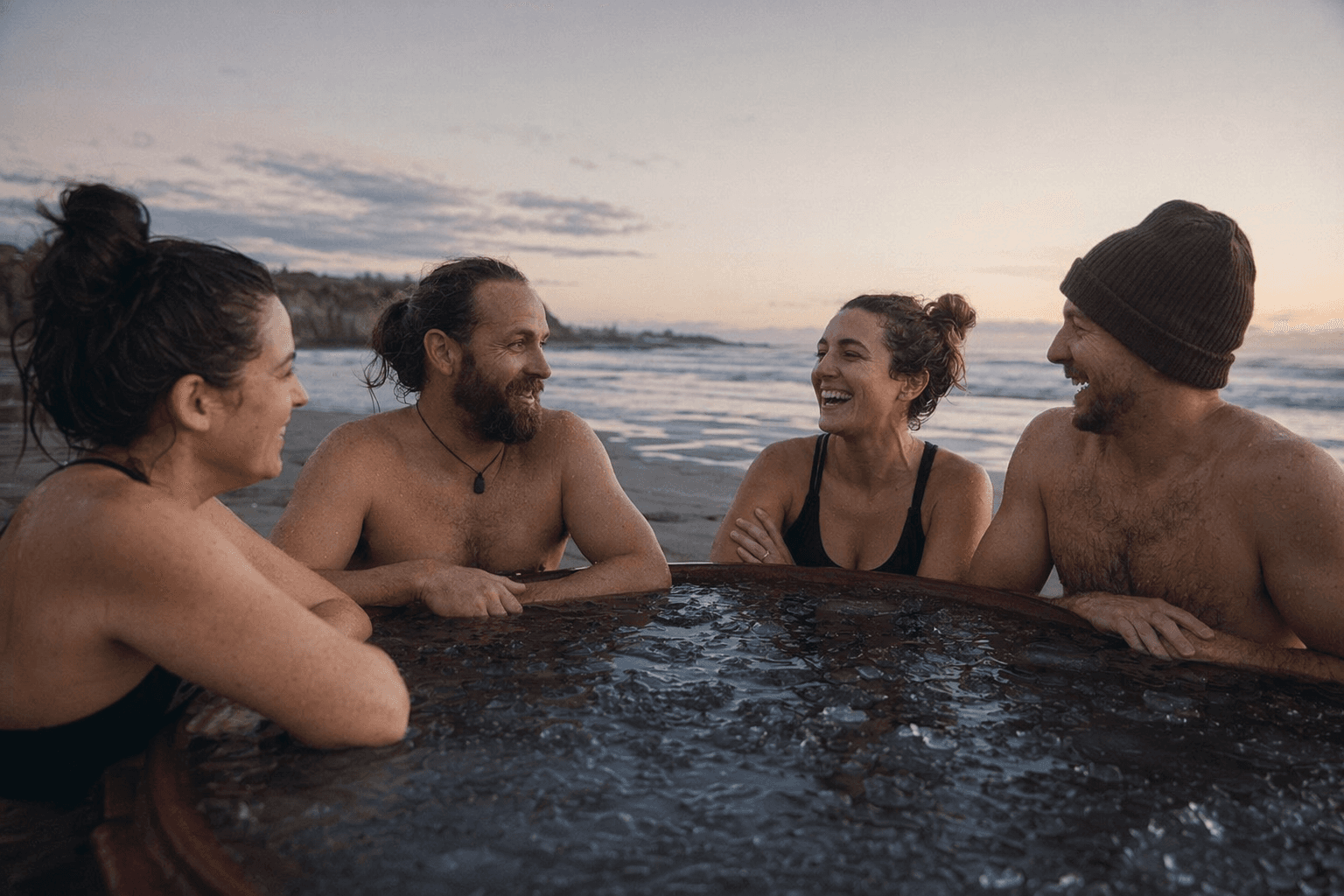
Shared plunges make the cold feel less like punishment and more like a ritual. At Ocean Beach, the social piece is what turns one hard dip into a habit.
Why shared plunges stick
The cold still hits first, but at Ocean Beach it is never the whole story. A windy Saturday morning on the edge of the Pacific turns into something stranger and better when you are there with a friend, laughing through the gasp reflex and realizing that discomfort can feel oddly repeatable.
That is the appeal of group plunging: it solves the biggest hobbyist problem in cold exposure, consistency. Solo plunges can become a test of willpower, and willpower is a thin foundation for a practice that asks you to step toward a shock response on purpose. Shared plunges add accountability, ritual, and a little bravado, which is often enough to make a hard thing feel worth doing again next weekend.
The Ocean Beach turning point
For this story, the turning point came at a group plunge hosted by Ocean Beach Plunge Club and Athleta for International Women’s Day in San Francisco. About 300 women gathered at Ocean Beach for a 45-minute shoreline walk that ended in freezing water, a setup that made the plunge feel less like a stunt and more like a communal threshold.
Athleta framed the March 7, 2026 event as “Wake The Water,” built around movement, community, and cold-water courage. The day also tied wellness to a concrete impact: Athleta said it would donate $250 per participant to Girls On the Run Bay Area, up to $50,000 total, turning each icy entry into a small fundraising engine for girls’ programming.
That structure matters because it gives the ritual more than adrenaline. Girls On the Run Bay Area says its programs use physical activity and dynamic discussions to build girls’ social, emotional, and physical skills, which makes the plunge feel connected to something larger than personal resilience. It becomes a shared act with visible purpose.
From scary to social
The emotional center of a group plunge is not the cold shock itself. It is the moment when fear gets translated into laughter, and then into pride. Bringing along a best friend changes the math: the water is still freezing, but now there is a witness, a partner, and someone to talk you into the next dip.
That is the social mechanics behind why community-based plunging can be more sustainable than doing it alone. A hard habit becomes easier to keep when it is attached to a group meeting, a shoreline walk, and a shared memory of getting through it together. What looks like a wellness trend from the outside often functions, in practice, like a friendship ritual.
Ocean Beach Plunge Club founder Krista Vendetti started the club because she wanted to get into the ocean more and kept asking friends to join her. That origin story explains the club’s appeal in one line: it lowers the barrier to entry by making cold exposure feel less like a performance and more like an invitation. Local profiles have described the club as a group started by Outer Sunset moms who bond over early morning walks and a dip in the Pacific, which roots the whole practice in neighborhood life rather than elite fitness culture.
What the science and caution say
The rise of cold plunging has been matched by a flood of caution. Harvard Health notes that cold-plunge pools are now found in gyms, wellness resorts, and hotels throughout the United States, which shows how far the practice has moved from niche recovery into mainstream wellness. At the same time, Harvard says the evidence for benefits such as less stress, better sleep, and enhanced immunity is still shaky, and it warns that people with cardiovascular disease, especially heart rhythm abnormalities, should avoid it.
The American Heart Association is even more direct about the risk. Sudden immersion in cold water can trigger a cold-shock response that rapidly raises breathing, heart rate, and blood pressure, which creates drowning and cardiac dangers. The association also cites a warning from the National Center for Cold Water Safety that sudden immersion in water under 60°F can kill a person in less than a minute.
That is why the social case for group plunging cannot skip safety. Friendship may reduce intimidation, but it does not remove risk. The shared ritual should make the practice feel more accessible, not more casual.
How to plunge more safely
Cleveland Clinic recommends keeping cold plunges brief, starting around three minutes and not going beyond five. It also suggests beginners start in a warmer range, roughly 50 to 59°F, and move gradually rather than treating the first session like an endurance contest.

- enter with a plan, not on impulse
- keep the first plunge short
- warm up afterward rather than chasing a longer freeze
- treat dizziness, chest discomfort, or panic as reasons to stop immediately
A smart group ritual usually keeps a few habits in place:
Those details are not there to dilute the experience. They make the habit more repeatable. In a group, the goal is not proving who can suffer longest. It is building a routine that people actually return to.
What the research suggests about the payoff
The latest research points to a mixed but intriguing picture. A 2025 systematic review and meta-analysis in PLOS One looked at 11 studies and 3,177 participants and found an acute inflammatory response right after cold-water immersion. It also found a significant stress reduction about 12 hours later, while showing no clear immediate mood benefit.
That pattern helps explain why the best argument for group plunging is not that it instantly fixes everything. The benefit may arrive in layers: the shock, the recovery, the laugh after the gasp, the sense of having done something hard with other people. Some longer-term findings in the review also suggest possible sleep and quality-of-life improvements, but the strongest takeaway is that the experience is more complicated than a single burst of euphoria.
Why the social model may last
The crowded wellness market is full of gadgets, routines, and private optimizations. Group plunging offers something simpler and harder to replace: a reason to show up. When a cold ritual is attached to a shoreline walk, a familiar face, a neighborhood club, and a clearly named purpose, it becomes easier to repeat and easier to talk about.
That is why the Ocean Beach version feels durable. It is not just about toughness or biohacking theater. It is about accountability, ritual, reduced intimidation, and the small joy of doing something difficult together. In a category that often sells isolation dressed up as discipline, the shared plunge makes consistency feel social, and that may be the most powerful wellness feature of all.
This article was produced by Prism’s automated news system from verified source data, official records, and press releases, then run through automated quality and moderation checks before publishing. The system is built and supervised by the people who set the standards it runs under. Read our full AI policy.
Did this article answer your question?