Study finds Wim Hof cold exposure may ease inflammation, but risks remain
A new review points to anti-inflammatory effects from Wim Hof-style cold exposure, but the evidence is still thin and the safety warnings are real.

Cold plunges are no longer just a grit test. A new UK review suggests Wim Hof-style cold exposure may ease inflammation, but the same body of research still stops short of making the practice a clear-cut recommendation for everyday users.
That tension is exactly why this story matters to the ice bath crowd. The signals of benefit are real enough to keep drawing people in, yet the evidence remains limited, the risks are not theoretical, and the question now is less about hype than about what cold exposure actually earns you in practice.
What the latest review actually found
A March 13, 2024 systematic review in PLOS ONE, led by University of Warwick researchers Omar Almahayni and Lucy Hammond, looked at eight trials of the Wim Hof Method. The strongest changes showed up in stress and anti-inflammatory response measures, including increased epinephrine and lower levels of pro-inflammatory cytokines in some studies.
That sounds encouraging, and for plunge regulars it is the kind of result that gets attention fast. But the Warwick team was equally clear that the evidence base is still small and at high risk of bias, which means the findings are promising rather than definitive. Their bottom line was that more robust confirmatory research is needed before the method can be recommended with confidence.
Why the science still has a split decision
Part of the uncertainty comes from the method itself. The Wim Hof Method is usually described as three pillars: breathing, cold therapy, and commitment. For people who already use ice baths, that raises the practical question: is the cold doing the heavy lifting, or is the breathing work changing the outcome too?
That is not a side issue. ClinicalTrials.gov lists an EXPOCOL study from Radboud University Medical Center that tested cold exposure and breathing techniques on immune response in human endotoxemia. The record notes that trained participants had previously shown profound increases in plasma adrenaline and attenuation of the pro-inflammatory response, and the study was designed to help separate which element mattered for a future safe and effective intervention.
That distinction matters for everyday users because it changes how the method should be read. If the cold and the breathing are both contributing, then the routine is more than a toughness drill. If one part matters more than the other, then the way people build sessions, pace exposure, and judge results should change too.
What this looks like outside the lab
The culture around cold therapy has moved well beyond solo suffering in a backyard tub. SBS News described a Sunday-morning scene behind Sydney’s Bronte Beach, where around 50 people gathered to breathe together before stepping into freezing tubs. That detail says a lot about where the practice has landed: it is now part wellness routine, part social ritual, and part shared test of tolerance.

Deb Sarah, who founded Ice Baths Sydney, sits at the center of that shift. She turned to cold exposure after breaking her spine in a car accident at 21, a turning point that took her from an active, high-achieving life into one shaped by chronic pain and anxiety. In her telling, the ice bath is not just about recovery after exercise. It is about reconnecting with the body and emotions, and about learning what it feels like to sit with discomfort for two minutes without backing away.
That emotional layer is a big reason the practice resonates. For many people in the scene, the real appeal is not a dramatic physiological claim. It is the sense that a controlled burst of discomfort can reset the rest of the day.
Why people keep coming back to it
Dallas Renshaw is a good example of how the method is being used on the ground. He has been taking ice baths most days for two years, mainly for mental health and to reduce muscle inflammation after exercise. His experience pushes the story past simple post-workout recovery and into steadier, less measurable territory: he says the practice gives him mental clarity and stability, helps him tolerate discomfort, and leaves him feeling less scattered when he skips a day.
That is the kind of evidence many plungers recognize in themselves. It is not a lab marker, but it is still meaningful because it affects whether the routine sticks. In a culture where consistency matters as much as intensity, the combination of mood, resilience, and habit can be just as powerful as the promise of reduced soreness.
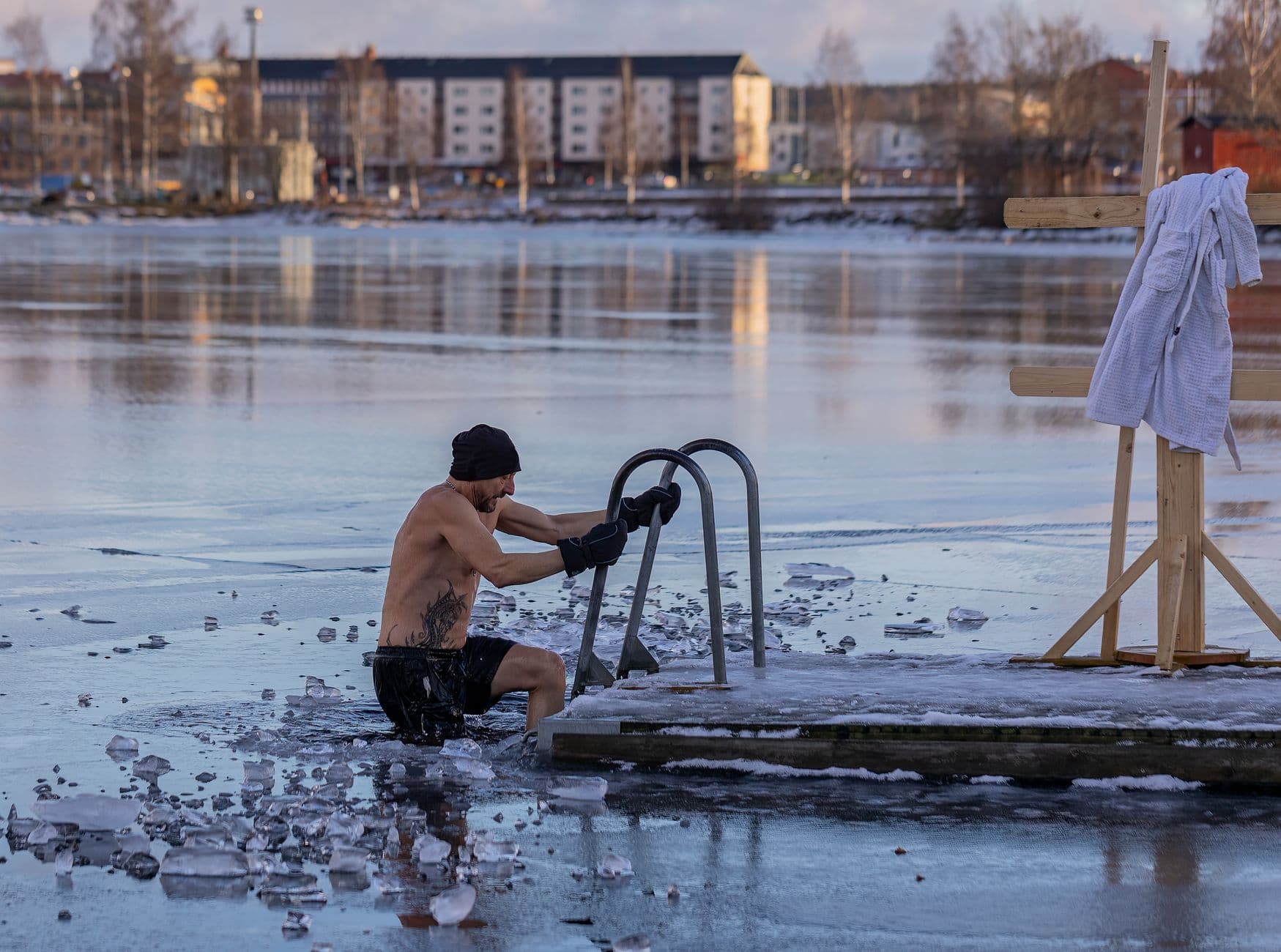
How to approach it without overreading the upside
The safest read on the current evidence is simple: there may be real benefits, but the claims should stay grounded. The Warwick review points to anti-inflammatory and stress-related changes, but it does not settle the question, and the wider literature still contains obvious gaps. A 2025 randomized controlled trial in women with high stress and high depressive symptoms shows the field is still expanding into mental-health and psychophysiology questions, not closing them.
Safety needs to stay part of the conversation too. Healthline reported that cold water immersion may not be safe for everyone, and noted a 2022 lawsuit filed against Wim Hof after a teenage girl drowned, along with other alleged drownings linked to the practice. It also reported standard advice from experts: warm up first, choose a safe temperature, and increase exposure gradually.
For regular users, that is the practical takeaway. The method may be doing something real, especially around inflammation and stress, but the plunge itself is not a shortcut around caution. The smarter read is to treat the breathwork and the cold as a controlled routine, not a guarantee.
The scene at Bronte Beach captures the whole paradox. People gather for the same reason they always have, to see what the cold can do, but the best evidence now suggests the answer is still partial. That leaves Wim Hof-style plunging in an interesting place: useful enough to keep people lining up, uncertain enough that the safest wins still come from restraint, pacing, and respect for the water.
This article was produced by Prism’s automated news system from verified source data, official records, and press releases, then run through automated quality and moderation checks before publishing. The system is built and supervised by the people who set the standards it runs under. Read our full AI policy.
Did this article answer your question?