Study says cold plunges may boost dopamine more than coffee
A lab study found 14°C immersion raised dopamine 250%, but it took one hour in 10 young men, not a quick ice bath.
Cold plunges have picked up a fresh number in the dopamine wars, and it is a big one: 250%. Dr. Mark Hyman has pointed to that figure while framing cold-water immersion as a steadier lift than morning coffee, with effects he says can last up to two hours without a crash. The catch is that the headline came from a very specific lab test, not the kind of short dip most plunge tubs are built for.
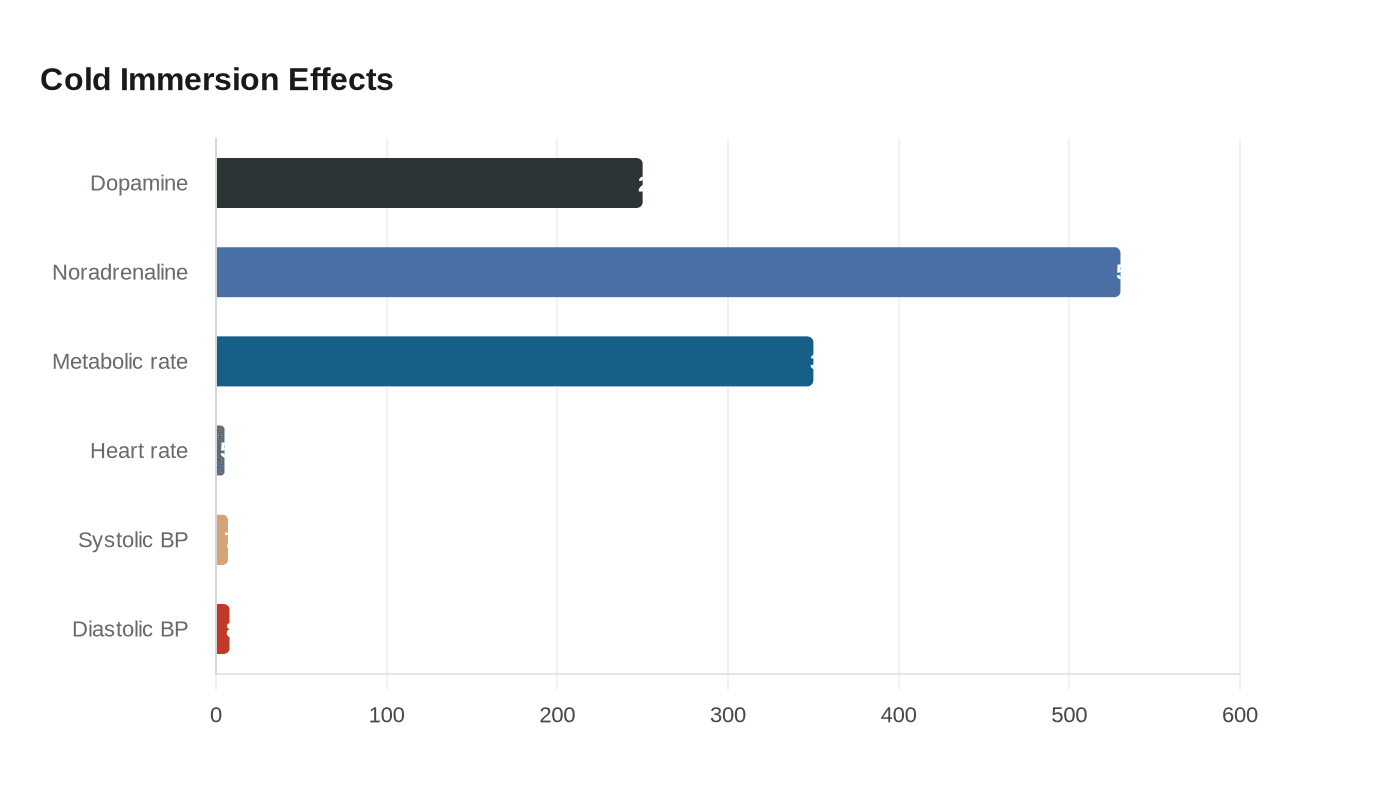
The best-known study behind the claim was published in 2000 in the European Journal of Applied Physiology. P. Srámek, M. Simecková, L. Janský, S. Savlíková and S. Vybíral studied 10 healthy young men who were immersed head-out in 14°C water for one hour. Under those conditions, plasma dopamine rose by 250% and noradrenaline by 530%. The same experiment found metabolic rate increased by 350%, while heart rate and systolic and diastolic blood pressure also climbed by 5%, 7% and 8%.
That detail matters because the protocol was a long, controlled immersion, not the faster, colder routines many people now call an ice bath. A typical backyard plunge or commercial cold tub session may look similar on the surface, but the body is not getting the same dose, for the same duration, under the same conditions. That makes the dopamine number useful as a signal that cold exposure can hit hard, but shaky as a direct promise for a two-minute dip.
The downside is just as real. Mayo Clinic Health System says cold plunging can bring obvious discomfort, frostbite risk in icy conditions and cardiovascular strain from rapid blood-vessel constriction and blood-pressure changes. Cold-water immersion is a sympathetic nervous system stressor first, mood tool second.
Even so, the mood story has not gone away. A 2023 peer-reviewed paper on short-term whole-body cold-water immersion found it may facilitate positive affect and reduce negative affect, and the researchers said the neural mechanisms behind those changes remain largely unknown. That leaves the modern plunge where many hobbyists already live: somewhere between a bold wellness claim and a protocol that still has to be earned in the cold.
This article was produced by Prism’s automated news system from verified source data, official records, and press releases, then run through automated quality and moderation checks before publishing. The system is built and supervised by the people who set the standards it runs under. Read our full AI policy.
Know something we missed? Have a correction or additional information?
Submit a Tip