Tidewater blends cold plunge wellness with cocktails, golf, and pickleball in Charleston
Tidewater turns the cold plunge into club status, pairing recovery with golf, pickleball and cocktails in downtown Charleston. The real sell is access, not just wellness.
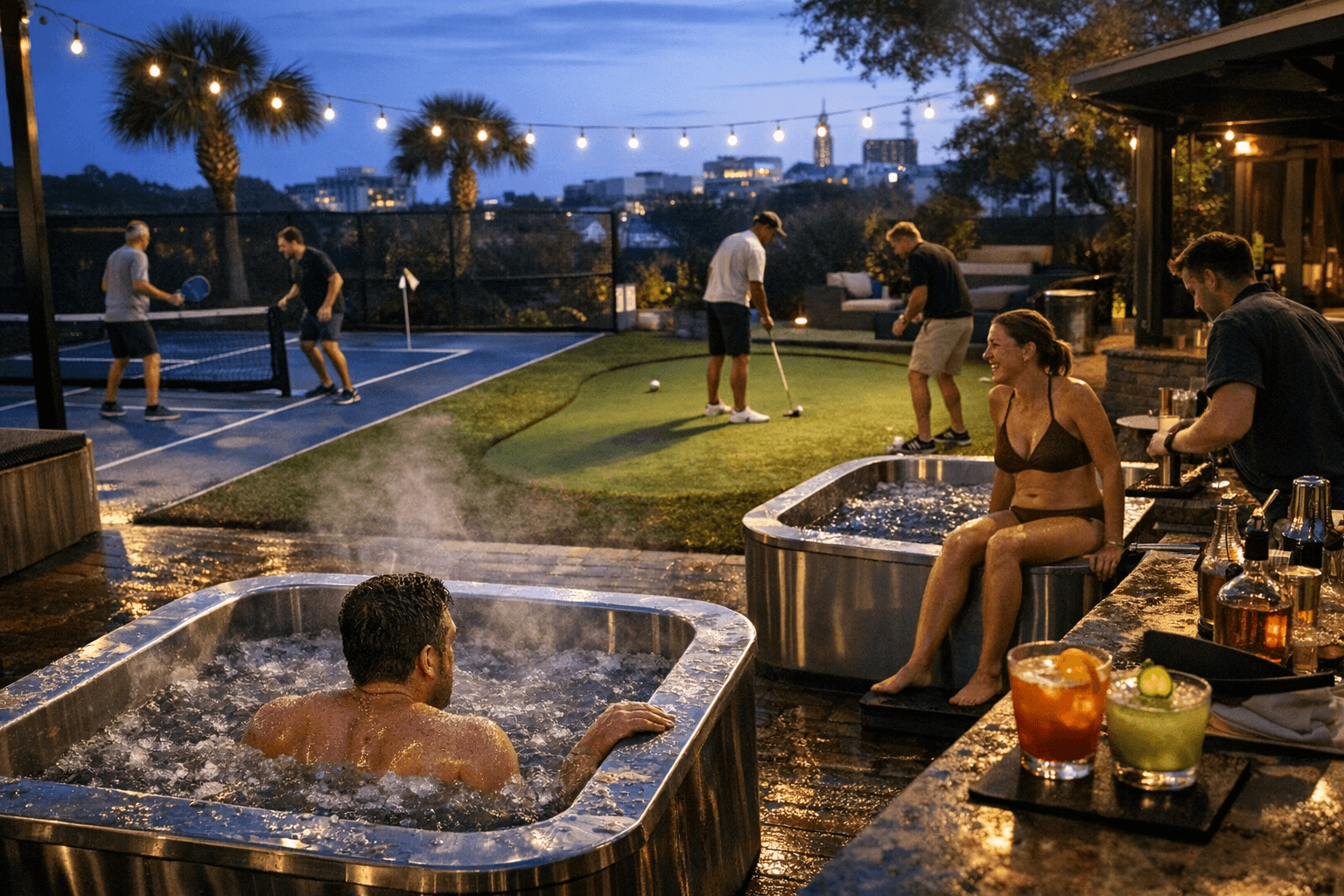
The cold plunge is just the clue
The cold plunge at Tidewater is not being pitched like a standalone wellness cure. It is being folded into a full members-only lifestyle package in downtown Charleston, where a cocktail bar, restaurant, indoor golf simulators, outdoor pickleball courts, and a sauna-steam-cold-plunge suite are all meant to live under one roof.
That is the real story here: Tidewater is treating wellness as part of the social-club value proposition, not as a separate spa visit. A member can show up to work, eat, recover, and stay for the evening calendar, which is exactly why the club feels less like a gym add-on and more like a status-coded third place.
What Tidewater is selling
Tidewater is slated to open at 2201 Mechanic Street, Suite A, with an official opening expected in July and memberships already open. The club is led by co-founder Ryan Covert, and its positioning is bluntly aspirational: a private social club in Downtown Charleston built for people who want their work life, social life, and wellness routine to overlap instead of compete.
On Tidewater’s own site, the club describes itself as a private social club with cocktail bars, indoor golf, pickleball, dining, and a built-in social calendar for members and guests. Its about page goes further, framing the club as a “third space” for people with “visionary, pioneer, and growth mindsets.” That language matters because it reveals the product. Tidewater is not only renting square footage; it is selling identity, access, and the feeling of being in the right room.
Woodlock Capital, which backs the project, describes Tidewater as a members-only club in the heart of downtown that combines a premium cocktail bar, state-of-the-art golf simulators, and pickleball courts, aimed at Charleston’s next generation of leaders. That is a classic private-club pitch, but updated for the wellness era.
Why the cold plunge changes the meaning of the club
Inside that broader mix, the cold plunge does more than round out the amenity list. It changes the tone of the whole place. The plunge signals discipline, recovery culture, and a certain social fluency with modern wellness language. It is an object people recognize instantly, even if they only know it from athletes, biohacking feeds, or sleek club interiors.
That makes it especially useful for a members-only business. A cold plunge is practical, but it is also performative in the best business sense: it tells prospective members that the club is current, premium, and attentive to the habits that signal ambition. At Tidewater, the plunge is not the headline. It is the proof that the club understands how wellness now functions as social capital.
The setup also reflects a larger shift in the category. Instead of asking members to choose between a place to socialize and a place to recover, Tidewater packages both together. Someone can move from work mode to golf simulator to dinner to cold plunge without leaving the building. That convenience is the product, and exclusivity is what keeps it desirable.
The social calendar is part of the amenity package
Tidewater’s food and event programming suggest that the club’s real operating model depends on rhythm, not just rooms. WhatNow reported that the club plans recurring dining events, chef experiences, and pop-ups two to four times a month, along with limited small dinner services, tastings, supper club events, and chef activations. Before the grand opening, Tidewater also plans a Kentucky Derby preview party featuring live music from Reverse Cowgurl.

That kind of calendar is important because it turns membership into participation. The club is not only promising a place to go; it is promising reasons to keep going back. In private-club terms, that is how you build habit, social gravity, and a sense that membership is unlocking a living network rather than a static room.
Food and drink are clearly being handled as part of the identity pitch, not as afterthoughts. Tidewater plans chef-curated bites from Asalea, while the drink list includes beer from Over the Horizon Brewing, Surfside seltzers, and Blade and Bow bourbon. The mix reads like a club trying to move easily from afternoon recovery to evening conviviality without ever breaking character.
The Charleston precedent is already there
Tidewater is not entering an empty market. Charleston already has a clear precedent for this blend of work, wellness, and social life in The Wonderer, an adults-only membership club that opened its Charleston campus over July 4 weekend in 2019. The Wonderer has long framed itself as a social, work, and wellness club, and its founders described the concept as a search for balance between health, work, and social life.
That matters because Tidewater looks like the next evolution of that same local idea. The model is no longer just a clubhouse with fitness perks. It is a lifestyle campus where the club itself becomes the destination. In that sense, Tidewater is part of a Charleston arms race for the modern social club: more amenities, more curation, more reasons to make membership feel scarce.
Wellness has become a club perk, not just a solo practice
The city’s broader wellness market helps explain why this works. SWTHZ in West Ashley advertises private suites with infrared sauna, cold plunge, and vitamin-C showers, showing that Charleston already has an audience for contrast-therapy experiences. And the research partnership between Plunge and the Medical University of South Carolina on cold plunge and sauna work at the MUSC Charleston campus underscores that these recovery methods are part of a serious local wellness conversation.
Tidewater is translating that conversation into a membership product. Instead of selling the plunge as a one-off recovery tool, it places the cold plunge inside a broader social ecosystem where wellness is visible, shareable, and intertwined with leisure. That is the key business move. The amenity is not just useful; it is legible.
What Tidewater says about the next phase of private clubs
MB Within Interior Design Studio is handling the design, and that fits the ambition. The firm describes itself as an award-winning Charleston interior design studio focused on commercial and restaurant work, which aligns with a space that needs to feel polished, social, and commercially sharp all at once. Tidewater is clearly aiming for a modern but upscale atmosphere, not a wellness retreat that happens to serve cocktails.
That distinction is why the project feels larger than one downtown opening. Tidewater suggests that the next generation of private clubs will be judged less by whether they have a bar or a court or a recovery room, and more by whether they can stitch those pieces into a single identity. In Charleston, where club culture already knows the value of belonging, the cold plunge is becoming part of the social grammar. It is not just where you recover. It is where you are seen choosing recovery.
This article was produced by Prism’s automated news system from verified source data, official records, and press releases, then run through automated quality and moderation checks before publishing. The system is built and supervised by the people who set the standards it runs under. Read our full AI policy.
Did this article answer your question?