Titan Wellness guide targets first-time cold-plunge buyers with $578 starter tub
Titan Wellness is using a $578 Bravo bundle to win first-time cold-plunge buyers, betting no-install setup will beat the messier reality of upkeep and durability.

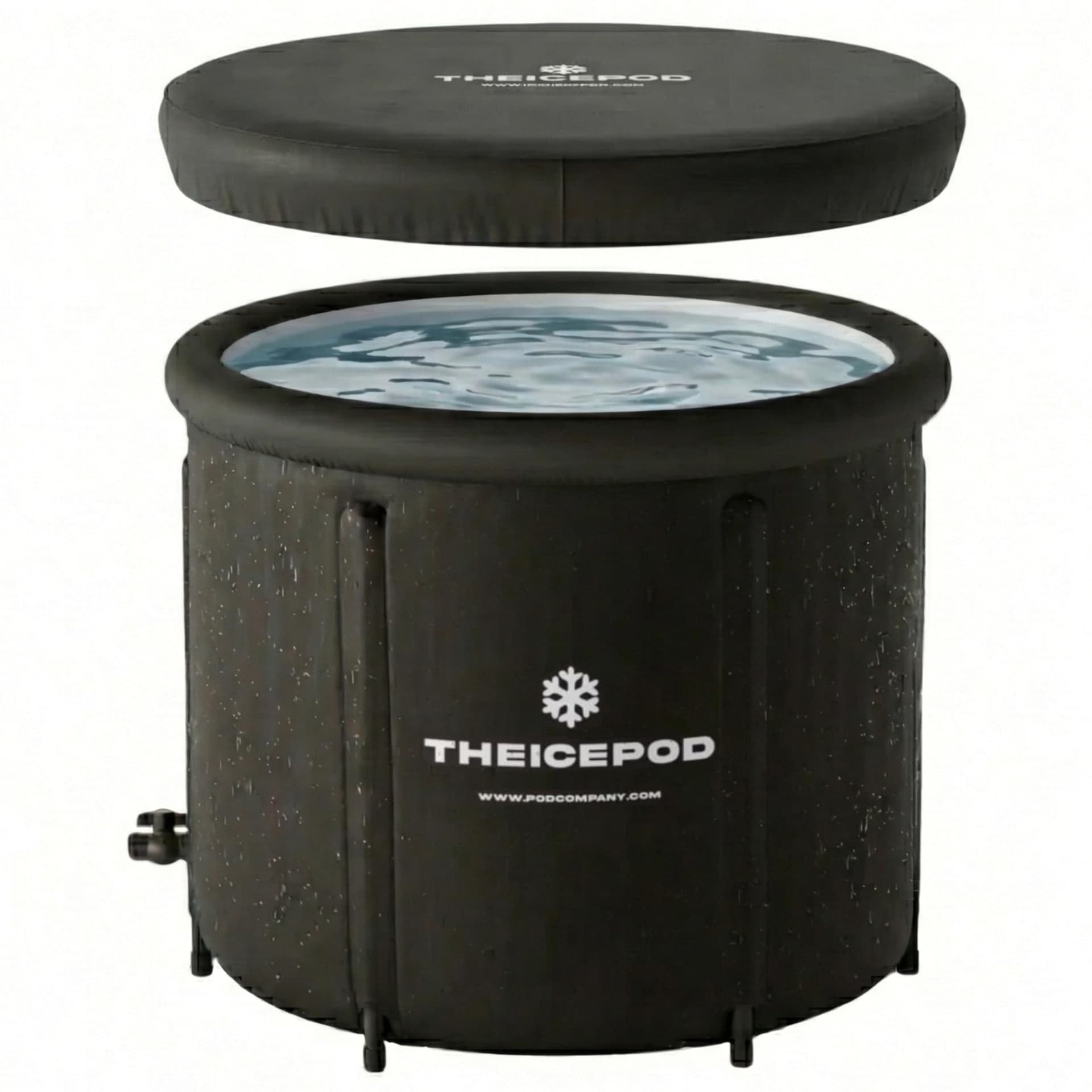
Titan Wellness is aiming the Bravo straight at first-time cold-plunge buyers, and the pitch is built around friction, or the lack of it. For $578, you get a compact portable tub, a Smart Chiller, 20-micron filtration, a 37-degree minimum temperature, and a standard 110V outlet, which means no permanent installation and no specialized wiring.
Why the Bravo is the entry-level fight
The cold-plunge category is no longer being sold as one blunt product. Titan’s lineup splits cleanly into segments: the Bravo at $578, the larger Bravo XL at $667, the Triumph at $948, and the permanent Apex Acrylic at $2,990. All four systems share the same Smart Chiller options and the same 37-degree floor, so the real choice is size, shape, and material, not how cold the water gets.
If the cooling ceiling is basically fixed, then the first-time buyer is not shopping for a superpower, they are shopping for the least annoying way to own one. The Bravo is the clearest version of that idea: portable, plug-in, and positioned as the low-commitment way to see whether daily cold exposure is actually going to stick.
What the low-friction pitch leaves out
The convenience is real, but it is not the same thing as simplicity forever. A portable tub with a Smart Chiller and filtration is easier to bring home than a built-in acrylic unit, yet it still asks you to think about water care, placement, and the realities of living with a machine rather than a novelty. The Bravo XL adds WiFi smart app control and optional built-in UV purification, which shows the maintenance conversation does not disappear once you buy in.
The bigger split is between temporary and permanent ownership. The Apex Acrylic, at $2,990, is the spa-grade end of the line, while the Bravo and Bravo XL are built for people who want a cold plunge without turning the garage, patio, or spare room into a construction project.
How Titan is widening the funnel
Titan offers 0% APR financing, free U.S. shipping, a 2-year warranty, and U.S.-based support, and says it is trusted by 50,000+ users. That bundle of promises is doing as much work as the hardware, because it turns a cold plunge from a luxury object into something that looks more like a household appliance.
The company is also pushing buyers toward a larger recovery habit, not just a single plunge. Its contrast-therapy bundle, the Triumph plus Sauna Duo-Therapy Pro, starts at $1,490.
Why budget-friendly plunges are becoming the battleground
The commercial logic is easy to see in the market numbers. Grand View Research put the global cold plunge tub market at $354.6 million in 2025, projected it at $381.7 million in 2026, and sees it reaching $659.9 million by 2033, which works out to 8.1% annual growth from 2026 to 2033. When a category is growing at that pace, brands do not just compete on features, they compete on where the entry point sits.
That is why you are seeing products sorted for renters, warm-climate households, people who need more legroom, and buyers who want spa-grade permanence. The Bravo is the most direct expression of the first group: a no-install, 110V, lower-cost package that lowers the barrier without trying to pretend the barrier does not exist.
The health story still cuts both ways
The science has not settled into a clean marketing script, and that is part of the story too. Harvard Health calls the evidence for many cold-plunge benefits shaky and warns that people with cardiovascular disease, especially heart rhythm abnormalities, should avoid the practice. The National Weather Service warns that cold-water immersion can trigger involuntary gasping, rapid breathing, or hyperventilation in the first 2 to 3 minutes, which is exactly the kind of cold-shock response that makes a controlled setup matter.
The National Center for Cold Water Safety, established in 2012, focuses on cold shock, swimming failure, incapacitation, and hypothermia. Against that backdrop, a 2025 systematic review and meta-analysis in PLOS ONE found cold-water immersion may lower stress, improve sleep quality, and boost quality of life, based on 11 studies.
The longer arc from a Harbor swim to home recovery gear
Cold exposure was never invented by a wellness brand. The L Street Brownies’ New Year’s Day swim in Boston Harbor dates to January 1, 1904, and the habit has outlasted several generations of fitness trends. The Wim Hof Method helped bring cold exposure out of niche endurance circles and into mainstream recovery culture, and now brands are trying to bottle that appeal into products people can actually live with at home.
This article was produced by Prism’s automated news system from verified source data, official records, and press releases, then run through automated quality and moderation checks before publishing. The system is built and supervised by the people who set the standards it runs under. Read our full AI policy.
Did this article answer your question?