Women Can Cold Plunge, But Personalization Matters Most
Cold plunging is not off-limits for women; the real question is how to match the plunge to your cycle, stress load, and goals.
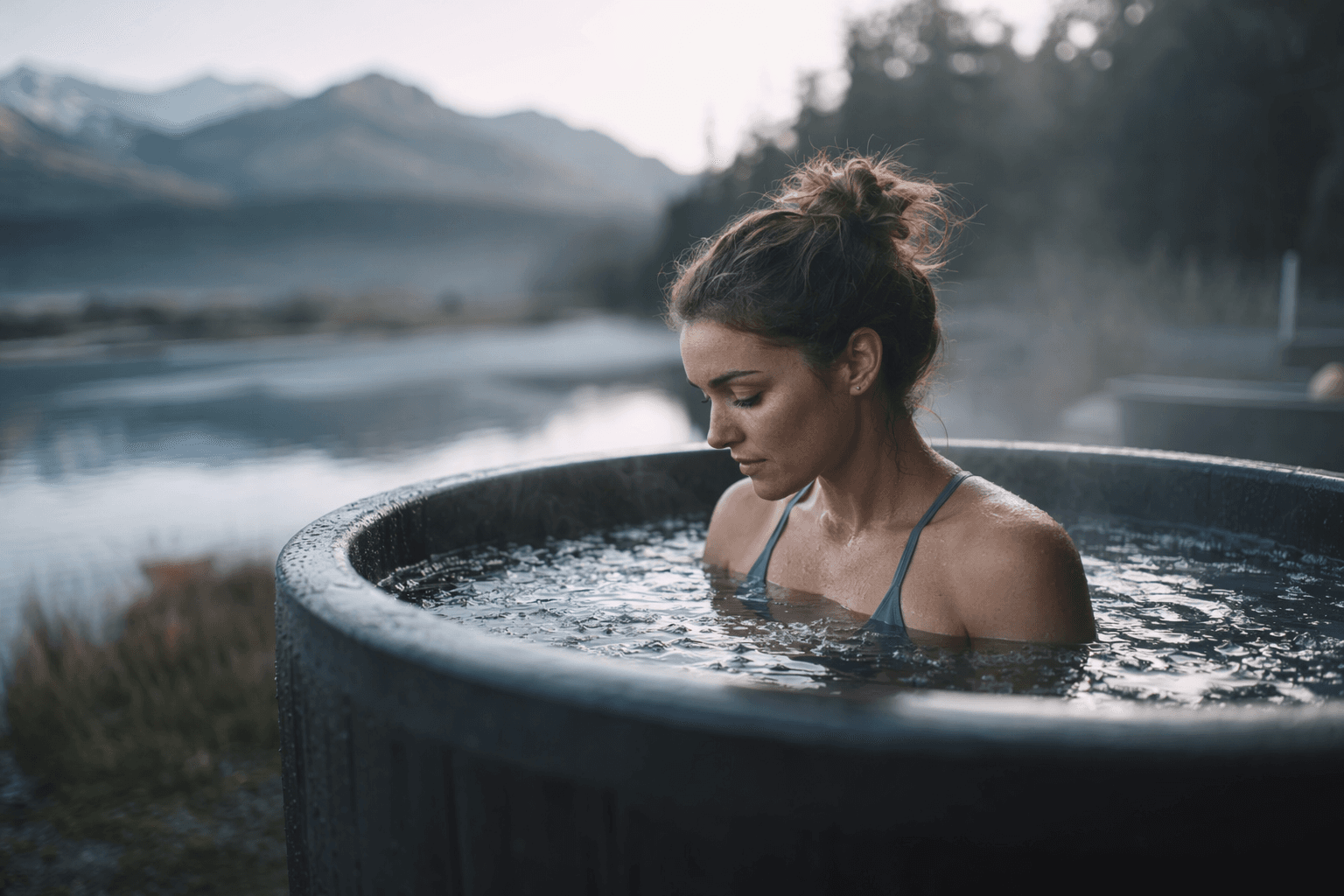
Cold plunging is not a dare, it is a protocol
The hottest takeaway from the ness’s latest post is also the simplest: women do not need to fear cold plunging, they need to personalize it. Colette Dong frames the plunge as a recovery ritual, not a novelty stunt, and that shift matters because it moves the conversation away from toughness and toward consistency.
That is the myth audit this category needs. Blanket warnings can flatten the real differences between one body, one season of training, one cycle phase, and the next. The more useful question is not whether women can cold plunge, but what version of cold exposure fits the day, the goal, and the nervous system.
Why the cold-plunge conversation got louder
Cold-water immersion is no longer a fringe habit. The British Journal of Sports Medicine describes the practice as a hot topic and says there has been an explosion in use, across ice baths, cold showers, open-water swims, and dips. That matters because the culture around cold exposure has raced ahead of the evidence in many places, which leaves plenty of room for inflated promises and overheated fear.
The same BJSM review on cold water therapies says current practice often outpaces clear guidelines. Another BJSM paper found only 16 primary studies that met its criteria for healthy humans immersed in cold water below 15°C for five minutes or less, with small samples and highly varied methods. That is a useful reality check: the category is popular, but the protocol science is still uneven.
What women are actually getting from it
The ness is not selling cold plunging as a medical cure-all. It is positioning it as a practical recovery ritual that can support mood, stress relief, and routine adherence, especially when it sits inside a broader wellness stack with infrared sauna, movement, and breathwork. That framing feels closer to how people actually use ice baths in daily life: not as a heroic one-off, but as one repeatable part of how they reset.
The appeal is partly sensory and partly chemical. The post ties cold exposure to a dopamine and norepinephrine response, brown fat activation, and that unmistakable feeling of a nervous-system reset. Even if the language is experiential rather than clinical, the draw is clear: for a lot of people, the plunge becomes a boundary between the chaos of the day and whatever comes next.
The personalization piece is where the story gets smarter
Dong’s most practical point is that women can treat cold exposure differently across the menstrual cycle. The first half of the cycle may feel more favorable for longer or colder plunges, while the luteal phase may call for shorter dips or even a brief cold rinse instead of a full session. That is not a blanket rule, but it is a useful operating model for anyone who has noticed that the same plunge can feel wildly different from one week to the next.
The bigger message is that colder is not automatically better. The ness argues that water around 15°C can still deliver the intended benefits without turning the session into an endurance contest. That detail is easy to underestimate in a culture that often treats discomfort as proof of effectiveness, but it is exactly the kind of adjustment that can make a practice sustainable.
Where the evidence supports caution, and where it does not
The case for personalized cold plunging is stronger than the case for one universal warning, but caution still has a place. A Frontiers mini-review on women’s response to cold-water immersion for exertional heat stroke said existing guidelines had not fully considered research on women and warned that applying current guidance without sex-specific nuance could risk overcooling. That is not a reason to avoid cold exposure entirely. It is a reason to stop assuming every body should be treated the same way.
A 2024 PubMed survey adds an important cultural clue. It looked at 1,114 women who cold-water swim, mostly from the United Kingdom, and found that 79.5% had been swimming for one to five years. That suggests this is not a passing novelty or a tiny subculture. It is a sustained practice with a real female participant base, and it helps explain why peer knowledge and lived experience matter so much in this space.
Recovery claims need a reality check too
Cold plunges are often marketed as a fast track to recovery, but the research is more mixed than the marketing. A 2023 meta-analysis reviewed 68 studies on cold-water immersion and physical recovery, which shows how broad the literature has become, but not how settled the answers are for every protocol. A 2024 randomized trial in females found no acceleration of recovery from exercise-induced muscle damage with cold-water immersion, a useful counterweight to the strongest recovery claims.
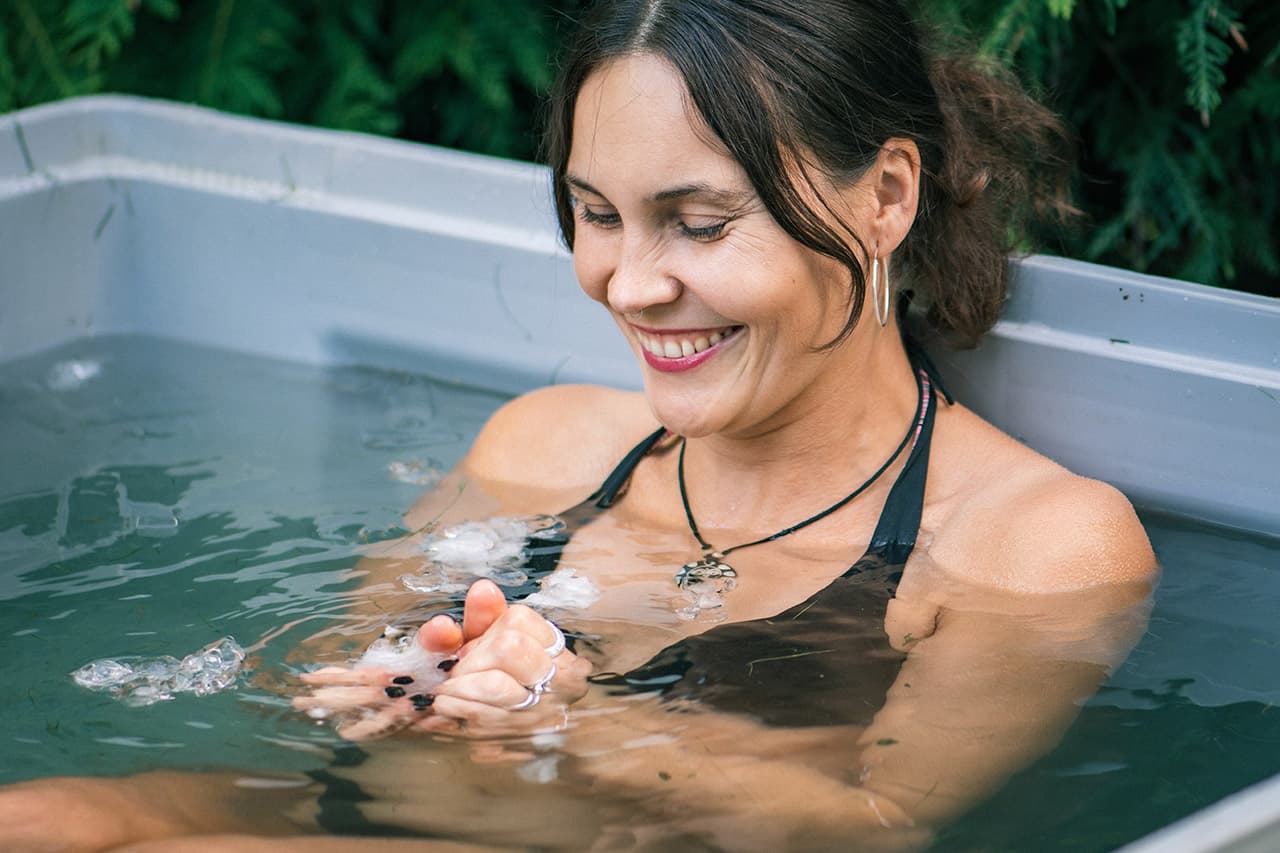
That does not make cold plunging useless. It means the benefit may be less about magic repair and more about how the ritual helps you feel, recover, and stay on track. For some women, that is still plenty, especially if the plunge supports sleep, mood, or the simple ability to keep showing up.
Why practice changes the risk profile
The good news is that repeated exposure appears to make the experience easier in a real physiological sense. A 2024 BJSM review found that repeated cold-water immersion can habituate the cold-shock response, which can reduce hyperventilation and related safety risk over time. In plain English, the gasp response does not stay equally dramatic forever if the practice is repeated thoughtfully.
That does not erase the risk. BJSM safety guidance notes that cold-water immersion can provoke hyperventilation, cardiac arrhythmias, impaired safety behavior, and drowning risk. Those are serious concerns, and they are exactly why the point is not to chase the coldest possible water or the longest possible hold. Progression, supervision when needed, and a sane entry point matter more than bragging rights.
The practical take for women who want to plunge
The ness’s position lands well because it treats cold exposure as a tool with settings, not a test of character. If the goal is recovery, mood support, or a reliable ritual you can repeat, then a 15°C plunge, a shorter dip in the luteal phase, or a brief cold rinse may be the smartest version of the practice. If the goal is to prove something, the whole thing gets less useful very quickly.
The larger lesson from the current wave of women-specific recovery guidance is that personalization is not a compromise. It is the point. Women can cold plunge, and in the right context it can fit beautifully into a recovery stack, but the best protocol is the one that respects the body in front of you and can be repeated long after the initial shock wears off.
This article was produced by Prism’s automated news system from verified source data, official records, and press releases, then run through automated quality and moderation checks before publishing. The system is built and supervised by the people who set the standards it runs under. Read our full AI policy.
Did this article answer your question?