100 kombucha brewing terms every beginner should know
Kombucha gets safer and easier when the vocabulary finally clicks. This beginner glossary turns SCOBYs, the second ferment, and fizz into brewing confidence.
1. Kombucha: The fermented tea drink at the center of the hobby.
2. Brew: The liquid you are making before it is bottled or chilled.
3. Batch: One full run from fresh sweet tea to finished kombucha.
4. Recipe: The ratio and timing that keep a brew consistent.
5. Tea base: The brewed tea that carries sugar and culture.
6. Sweet tea: Tea dissolved with sugar before fermentation begins.
7. Black tea: A classic base because it brings strong tannins.
8. Green tea: Lighter in flavor, but still a common base.
9. Oolong tea: A middle-ground tea with a balanced profile.
10. White tea: A gentler base that brews a milder kombucha.
11. Sugar: The fuel the culture consumes during fermentation.
12. Water: The medium that carries tea, sugar, and culture.
13. Filtered water: Water with fewer chemicals that can stress fermentation.
14. Boil: The step that extracts tea and dissolves sugar.
15. Steep: The time tea sits in hot water for flavor.
16. Cool: The pause that protects starter tea from heat damage.
17. Starter tea: Finished kombucha used to acidify and seed a new batch.
18. Starter liquid: The acidic liquid that lowers pH fast.
19. Starter ratio: The amount of starter tea added to fresh tea.
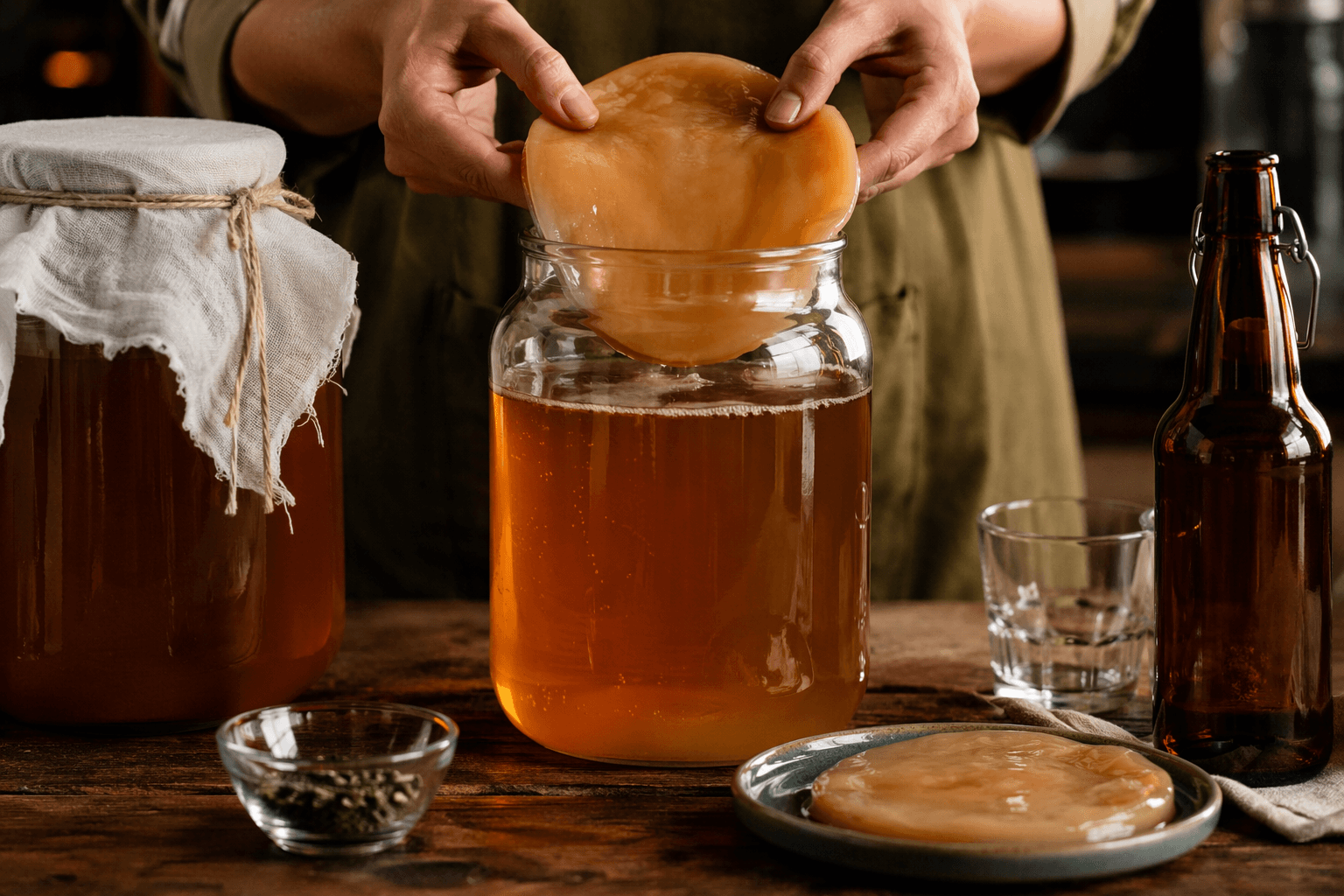
20. SCOBY: The living symbiotic culture that ferments kombucha.
21. Pellicle: The cellulose layer that forms on top of the brew.
22. Mother culture: The mature culture that helps start new batches.
23. Baby SCOBY: The new culture layer that forms during fermentation.
24. Culture: The combined community of microbes doing the work.
25. Yeast: The microbes that turn sugar into alcohol and gas.
26. Bacteria: The microbes that convert alcohol into acids.
27. Acetobacter: A key bacteria group tied to acidity and vinegar notes.
28. Cellulose: The material that gives the pellicle its structure.
29. Inoculation: Adding starter liquid and culture to begin fermentation.
30. Fermentation: The transformation from sweet tea to tart kombucha.
31. Primary fermentation: The first stage, done in a covered jar.
32. Secondary fermentation: The second stage, often done in bottles.
33. Second ferment: Brewer shorthand for the bottle-based flavoring stage.
34. Batch brewing: Making kombucha in separate, finished runs.
35. Continuous brew: A method that keeps one vessel cycling forward.
36. Fermenter: The jar or vessel where kombucha spends primary time.
37. Jar: The common home-brewing container for the first ferment.
38. Cover cloth: A breathable top that keeps dust and bugs out.
39. Rubber band: The simple fastener that holds the cloth in place.
40. Breathability: The airflow that lets fermentation continue safely.
41. Headspace: Empty space left at the top of a jar or bottle.
42. Temperature: The warmth that shapes speed, flavor, and sourness.
43. Warm spot: The stable location where fermentation tends to move fastest.
44. pH: The number used to track acidity and safety.
45. Acidity: The tart edge that helps preserve kombucha.
46. Tartness: The bright sour taste that tells you fermentation is progressing.
47. Sweetness: The residual sugar left when a batch is still young.
48. Carbonation: The dissolved gas that gives kombucha its sparkle.
49. Fizz: The quick burst of bubbles when a bottle opens.
50. Flavoring: Anything added after primary fermentation for taste.
51. Fruit: A common flavoring that adds sugar and aroma.
52. Juice: A fast way to add flavor and fermentable sugar.
53. Ginger: A favorite add-in for heat and bite.
54. Citrus: Lemon, lime, or orange for brightness and lift.
55. Herbs: Botanical add-ins that can soften or sharpen the profile.
56. Spices: Flavoring agents that bring depth and warmth.
57. Bottling: Moving kombucha into sealed containers for the next stage.
58. Swing-top bottle: A reusable bottle built for pressure and fizz.
59. Bottle conditioning: The final ferment that builds carbonation in the bottle.
60. Pressure: The force that builds as gas gets trapped in bottles.
61. Burping: Releasing pressure from a sealed bottle if needed.
62. Sediment: The settled yeast and particles at the bottom.
63. Straining: Removing solids before bottling or serving.
64. Racking: Transferring clear kombucha off the sediment.
65. Decanting: Pouring carefully so the lees stay behind.
66. Cloudiness: The hazy look that often comes from yeast and fruit.
67. Clarity: A cleaner appearance after settling or chilling.
68. Cleanliness: The habit that keeps wild microbes from taking over.
69. Sanitizing: Preparing jars, bottles, and tools before use.
70. Contamination: Unwanted microbes that can spoil a batch.
71. Cross-contamination: Moving germs from one tool or batch to another.
72. Mold: Fuzzy growth that means a batch should be discarded.
73. Kahm yeast: A harmless but unwelcome surface yeast film.
74. Off flavors: Strange tastes that usually point to a process problem.
75. Vinegar taste: A sharp result from overextended fermentation.
76. Overfermented: Too far past balance, usually sour and thin.
77. Underfermented: Not far enough along, often too sweet and weak.
78. Strong brew: A starter or tea base with enough acidity and body.
79. Weak brew: A batch that lacks enough starter power or flavor.
80. Cold crash: Chilling kombucha to slow fermentation and settle solids.
81. Refrigeration: The step that pauses active fermentation after bottling.
82. Storage: Where finished bottles sit before opening and drinking.
83. Shelf life: How long kombucha stays pleasant and safe to drink.
84. SCOBY hotel: A jar where extra cultures rest in starter liquid.
85. Tannins: Tea compounds that add structure and support fermentation.
86. Caffeine: The natural tea compound that remains in finished kombucha.
87. Water quality: The mineral and chemical profile of your brewing water.
88. Mineral content: The dissolved minerals that can affect yeast and bacteria.
89. Chlorine: A tap-water chemical that can slow or stress culture activity.
90. Filtration: The step that removes chlorine and other unwanted elements.
91. Tea-to-sugar ratio: The balance that shapes flavor and fermentation speed.
92. Yeast strands: The stringy bits that often drift through a healthy brew.
93. Starter acidity: The protective sourness that helps lower pH quickly.
94. Acid barrier: The low-pH environment that discourages unwanted microbes.
95. Aroma: The smell that reveals fruit, tea, and fermentation notes.
96. Taste test: The simplest way to check sweetness, sourness, and fizz.
97. Brew log: Notes on timing, temperature, ingredients, and results.
98. Troubleshooting: The habit of linking a flaw to a process step.
99. Carbonation level: The amount of fizz your bottles actually hold.
100. Food safety: The non-negotiable practice of keeping the brew clean and acidic.
This article was produced by Prism’s automated news system from verified source data, official records, and press releases, then run through automated quality and moderation checks before publishing. The system is built and supervised by the people who set the standards it runs under. Read our full AI policy.
Did this article answer your question?