Kombucha sourcing shifts as China and France post gains, Germany falls
China and France are pulling more kombucha supply activity while Germany cools, and that ripple shows up in tea, sugar, cultures, prices, and what you can brew at home.
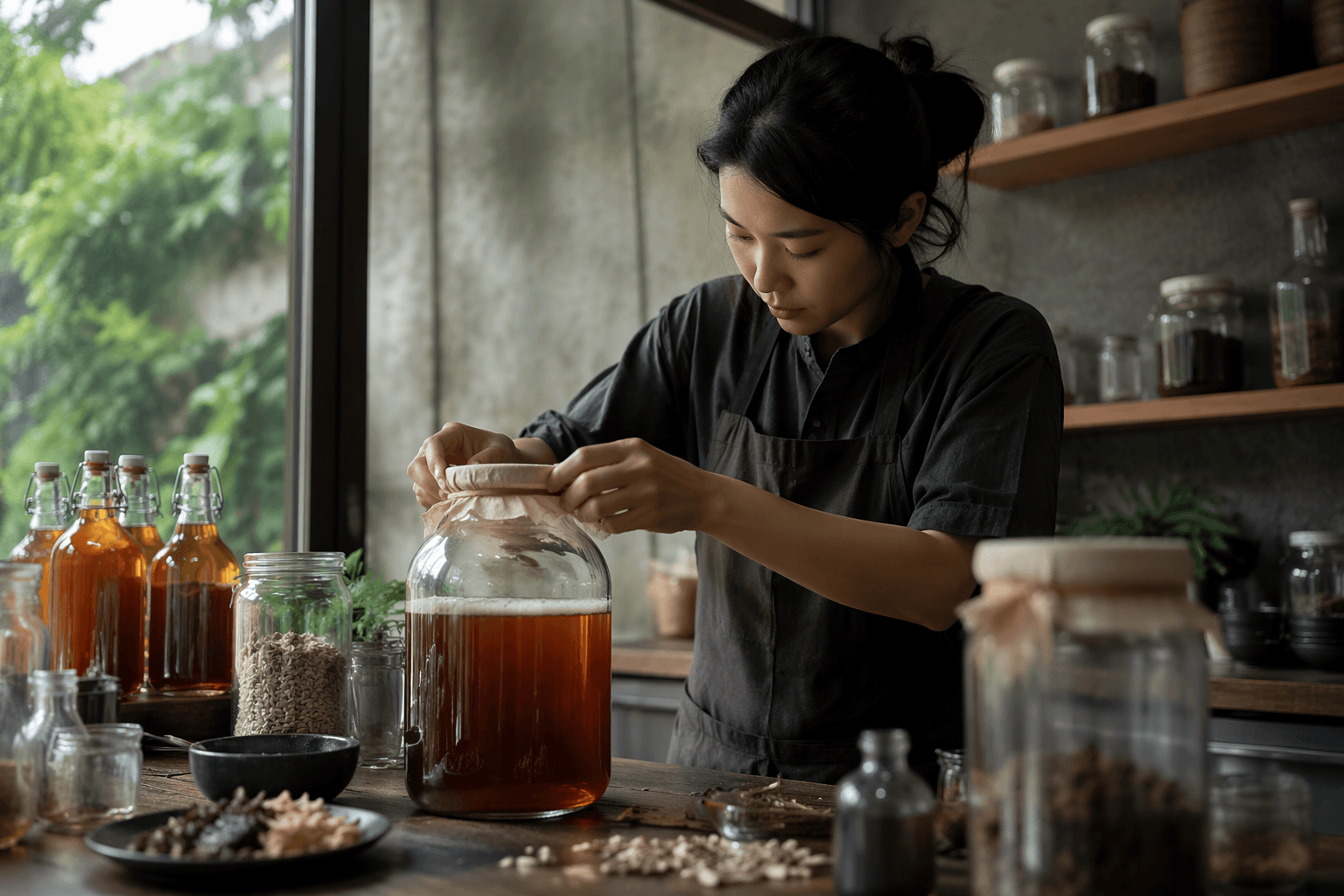
The kombucha shelf looks simple until you trace the ingredients backward. Behind every fizzy bottle is a chain that starts with tea fields, sugar mills, yeast, bacteria, labels, and freight lanes, and the latest market map shows that chain moving unevenly, not in lockstep. China and France are posting supplier-transaction gains while Germany is sliding, which is exactly the kind of shift that can change what ends up in your brew bucket, what it costs, and which flavor experiments are easiest to pull off.
The market is bigger than the starter jar
Kombucha is no longer a tiny wellness niche. Grand View Research puts the global kombucha market at USD 4.8 billion in 2025, then projects USD 5.5 billion in 2026 and USD 9.1 billion by 2033. Another Grand View Research estimate pegs the 2025 global value at US$4,818.3 million, with a 12.4% CAGR from 2025 to 2033, which tells you the category still has room to expand even as it matures.
North America is still doing a lot of the heavy lifting. Grand View Research estimates the region at USD 1.88 billion in 2024, growing at a 13.7% CAGR from 2025 to 2030, while the United States alone is expected to reach US$3,458.1 million by 2033, with a 7.5% CAGR from 2026 to 2033. That scale matters because a market this size pulls on packaging, flavor systems, and ingredient demand far beyond the home-brewing aisle.
What the trade map says about sourcing
Tridge’s kombucha overview, updated on June 29, 2026, covers 30 countries and tracks 135 exporter companies and 119 importer companies. It also summarizes 372 supplier-linked transactions across the top 20 countries, which is enough activity to show real sourcing patterns instead of just brand noise. The page groups the category into classic kombucha, flavored kombucha, fruit kombucha, and herbal kombucha, then ties it back to raw materials such as black tea, green tea, white sugar, and yeast.
The most useful detail for brewers is the direction of movement. China and France posted the strongest year-over-year supplier-transaction gains, while Germany showed a steep decline. That does not mean a global boom everywhere at once; it means sourcing is shifting country by country, and the places supplying your tea base, sweetener, or ferment-friendly inputs can change faster than the labels on the retail shelf.
Tridge also lists 0 premium suppliers and 0 catalog items on the overview page, which is a clue about how the tool is being used. This is not a shopping cart dressed up as a market report. It is a sourcing intelligence view, and that matters if you care about where ingredients come from before you care about who sells them.
Tea is the real backbone
Kombucha lives or dies on tea availability, and tea has deep, stubborn roots in global trade. The Food and Agriculture Organization of the United Nations says tea is one of the world’s oldest beverages, the most consumed drink in the world after water, and that it has been consumed in China for about 5,000 years. The same organization says global tea consumption expanded by 2.0% in 2022 versus 2021, supported by strong import demand.
That upstream strength matters at the brewing bench. If black tea tightens up in one region or green tea shifts in another, you feel it immediately in base flavor, tannin structure, and cost per batch. A 2024 FAO study on tea trade networks adds another layer: between 2005 and 2020, trade became less concentrated in individual hubs, and most countries traded with more partners in 2020 than in 2005. In plain English, tea sourcing is getting broader and less dependent on a few choke points, which is good news when you are trying to keep a kombucha line stable.
Why the ingredient mix changes your style choices
The raw-material list on Tridge is practically a recipe roadmap: black tea, green tea, white sugar, and yeast are the backbone. Once you understand that mix, the product groupings make more sense too. Classic kombucha leans on a straightforward tea profile, while flavored, fruit, and herbal versions depend more on whether the base ingredients are available at the right price and consistency.
That is where the China, France, and Germany split becomes practical. A stronger supply flow in one country can make a given tea grade or fermentation input easier to source, while a decline elsewhere can tighten availability and push up costs. If you are testing a cleaner green-tea kombucha, a fruit-forward second fermentation, or an herbal blend that relies on stable upstream sourcing, these shifts can decide whether a batch feels repeatable or finicky.
Packaging and cross-border trade conditions sit in the same bucket. Even when the recipe is simple, bottle supply, label compliance, and freight costs can swing the economics enough to push brands toward one flavor format over another. That is why market intelligence on exporter counts and transaction flow matters to a brewer who is thinking beyond a single five-gallon carboy.
Regulation is part of the recipe
Kombucha is not just tea, sugar, and microbes. The U.S. Alcohol and Tobacco Tax and Trade Bureau says kombucha is generally a fermented beverage made from steeped tea and sugar with a culture of yeast and bacteria, and that fermentation can produce alcohol content of 0.5% ABV or more. At that point, the drink is regulated as an alcohol beverage under federal law.
That line has real consequences for fermentation choices. Push the ferment too long, use a more active culture, or let flavor additions ride the second fermentation harder than planned, and you can drift into a different regulatory category. TTB also says kombucha at or above 0.5% ABV must bear the alcohol health warning statement required by law, which is why scale, test discipline, and batch consistency matter once you stop thinking of kombucha as a kitchen experiment and start treating it like a sellable beverage.
What changes for the next round of brewing
For home brewers, the takeaway is not that China and France are winners and Germany is a loser. The real lesson is that kombucha supply is becoming more globally linked and more uneven at the same time. If tea trade keeps spreading across more partners, ingredients may become easier to source in some formats and less predictable in others, especially for the styles that rely on specific teas or cleaner sugar inputs.
That is the story hiding inside the market numbers. Kombucha still feels like a simple jar on the counter, but the drink now sits inside a broad trade network that runs through tea, sugar, yeast, packaging, and compliance. When the sourcing map shifts, the brew on your shelf shifts with it.
This article was produced by Prism’s automated news system from verified source data, official records, and press releases, then run through automated quality and moderation checks before publishing. The system is built and supervised by the people who set the standards it runs under. Read our full AI policy.
Did this article answer your question?