Study finds artichoke can ferment into kombucha with strong SCOBY growth
Artichoke fed the culture, pushed pH down, and beat tea in sensory testing. For adventurous brewers, it looks like a real substrate, not just a novelty.
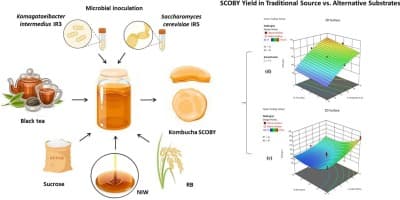
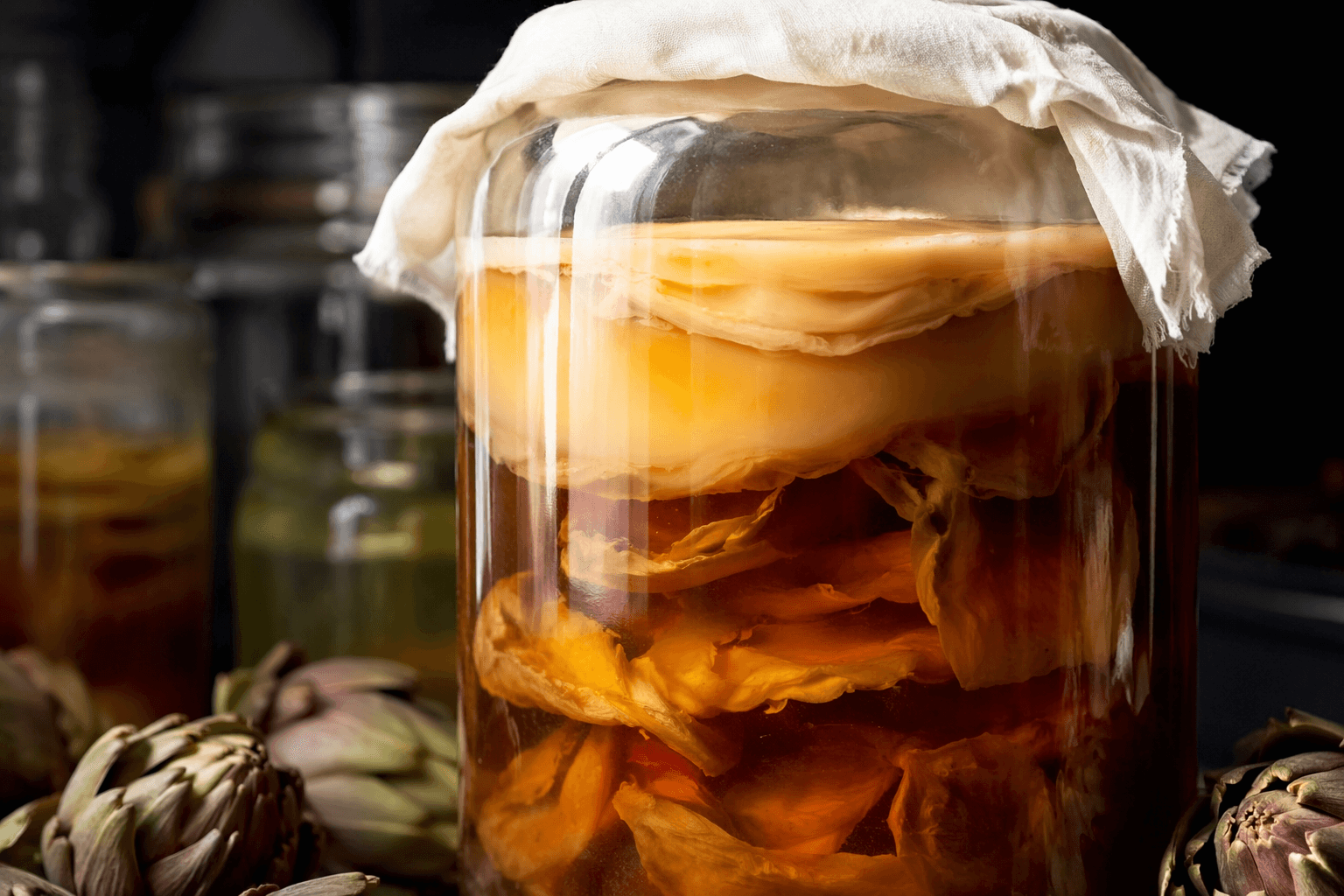
Artichoke did not just survive kombucha fermentation, it powered it. In a study published in the Czech Journal of Food Sciences, a brew made from Cynara scolymus developed a strong SCOBY by day 21, steadily consumed soluble solids, and moved in the classic direction brewers want to see: more acidity, lower pH, and a living ferment that kept working.
What the artichoke trial actually tested
The paper comes from a four-author team, Anh Duy Do, Xuyen Nguyen Le Bao, Hong Viet La, and Thach Phan Van, with affiliations tied to CIRTech Institute at HUTECH University in Ho Chi Minh City, Hanyang University in Seoul, Hanoi Pedagogical University 2, and Nguyen Tat Thanh University. Their question was straightforward but useful for anyone who experiments beyond black tea or green tea: can artichoke function as a non-traditional kombucha substrate without collapsing the fermentation?
The answer was yes, and in more than one way. The study found pronounced SCOBY development by day 21, which is the kind of result that separates a real ferment from a flavor-infused drink that never quite takes off. For a kombucha maker, that matters because a healthy culture is not just a biological curiosity, it is the engine that shapes acid production, sugar consumption, and the final texture of the batch.
What changed during fermentation
The most practical signal in the study was the chemistry that moved in the right direction over time. Soluble solids dropped as fermentation progressed, while acidity rose and pH fell, a pattern that points to active microbial metabolism rather than a stalled or decorative ferment. That matters because home brewers often judge a batch by smell and taste long before they have lab instruments, and these changes are the same basic markers they are trying to read by eye.
The midpoint of the ferment was especially interesting. Total phenolics peaked on day 14 at 342.47 ± 16.89 mg GAE/L, and total flavonoids peaked at 44.54 ± 3.35 mg QE/L. Those rises lined up with stronger antioxidant activity in DPPH and ABTS assays, which suggests the fermentation was doing more than preserving the artichoke’s plant compounds. It was reshaping them into a beverage with a different functional profile than standard tea kombucha.
For brewers thinking in process terms, that day 14 peak is a clue. If the goal is to capture the brightest bioactive profile before the culture pushes the drink further down the acid curve, artichoke may have a useful harvest window that is not identical to the one you use for sweetened tea.
Why artichoke behaves differently from tea
Artichoke is not just another green vegetable dropped into a jar. It carries phenolic compounds such as chlorogenic acid and cynarin derivatives, plus flavonoids like luteolin and apigenin. Reviews of the plant also point to its fiber and other bioactive components, which helps explain why researchers keep looking at it as more than a dinner plate ingredient.
That chemical starting point gives the brew a different raw material than sweetened tea. Standard kombucha starts with black or green tea, sugar, and a SCOBY, then relies on the culture to transform that base. Artichoke adds its own phenolic load from the outset, which is one reason the finished drink can shift in antioxidant profile, mouthfeel, and likely flavor perception as fermentation unfolds.
What it means for flavor, stability, and the home brewer’s question
The sensory data is the part that should make brewers sit up. The artichoke-based kombucha scored higher overall acceptability than the tea-based formulation, which means this was not just a lab result with promising numbers and a rough taste. For an adventurous brewer, that is the important practical test: does the substrate support a drink people might actually want to finish?
The study also found antibacterial activity against Escherichia coli, Salmonella typhi, Vibrio cholerae, and Staphylococcus aureus, along with moderate alpha-amylase inhibition. Those findings add to the brew’s functional profile, but they do not replace the basic brewing test. The strongest sign here is still the combination of healthy SCOBY growth, stable acidification, and a sensory score that beat the tea control.
A few practical takeaways follow naturally from that pattern:
- Track pH closely when moving away from tea, because the study showed a steady drop that signals a live, active ferment.
- Pay attention around the midpoint if you are chasing the brightest phenolic and flavonoid profile, since day 14 was the chemical peak in this trial.
- Treat alcohol as part of the equation, not an afterthought, because U.S. TTB guidance says kombucha at 0.5% ABV or more can fall under alcohol-beverage rules.
That last point matters whenever a brewer starts swapping in new substrates. Alternative bases can change fermentation dynamics, flavor, and bottle behavior, which in turn can change whether a batch stays in the ordinary beverage lane or starts crossing into regulated territory.
Why kombucha research keeps moving beyond tea
Artichoke fits a much bigger pattern in kombucha research. Recent reviews have tracked growing interest in fruit, vegetable, herbal, algal, cereal, dairy, and food-by-product substrates, largely because they can alter microbial ecology, metabolite composition, and bioactivity. In other words, the field is no longer just asking how to make tea ferment better, but how far the SCOBY can travel into new plant matrices without losing the signature kombucha arc.
That broader push makes commercial sense too. Britannica still describes kombucha as a fermented tea beverage that has moved into the mainstream as a health food, and market forecasts put the category at roughly USD 5.5 billion in 2026. Once a drink becomes that large, ingredient innovation stops being a novelty and starts becoming a development strategy.
Artichoke, then, looks less like a weird one-off and more like a credible side road for brewers who want to move past the same tea base they have been using for years. The culture grew, the acids moved, the bioactive compounds climbed, and the tea control lost the sensory comparison, which is exactly the kind of result that turns a lab curiosity into a real brewing possibility.
This article was produced by Prism’s automated news system from verified source data, official records, and press releases, then run through automated quality and moderation checks before publishing. The system is built and supervised by the people who set the standards it runs under. Read our full AI policy.
Did this article answer your question?