Arthurdale workshop teaches hands-on kombucha brewing and seasonal flavoring
Arthurdale's kombucha workshop turns the usual online guesswork into hands-on practice, with starter-culture handling, flavoring and take-home brews.

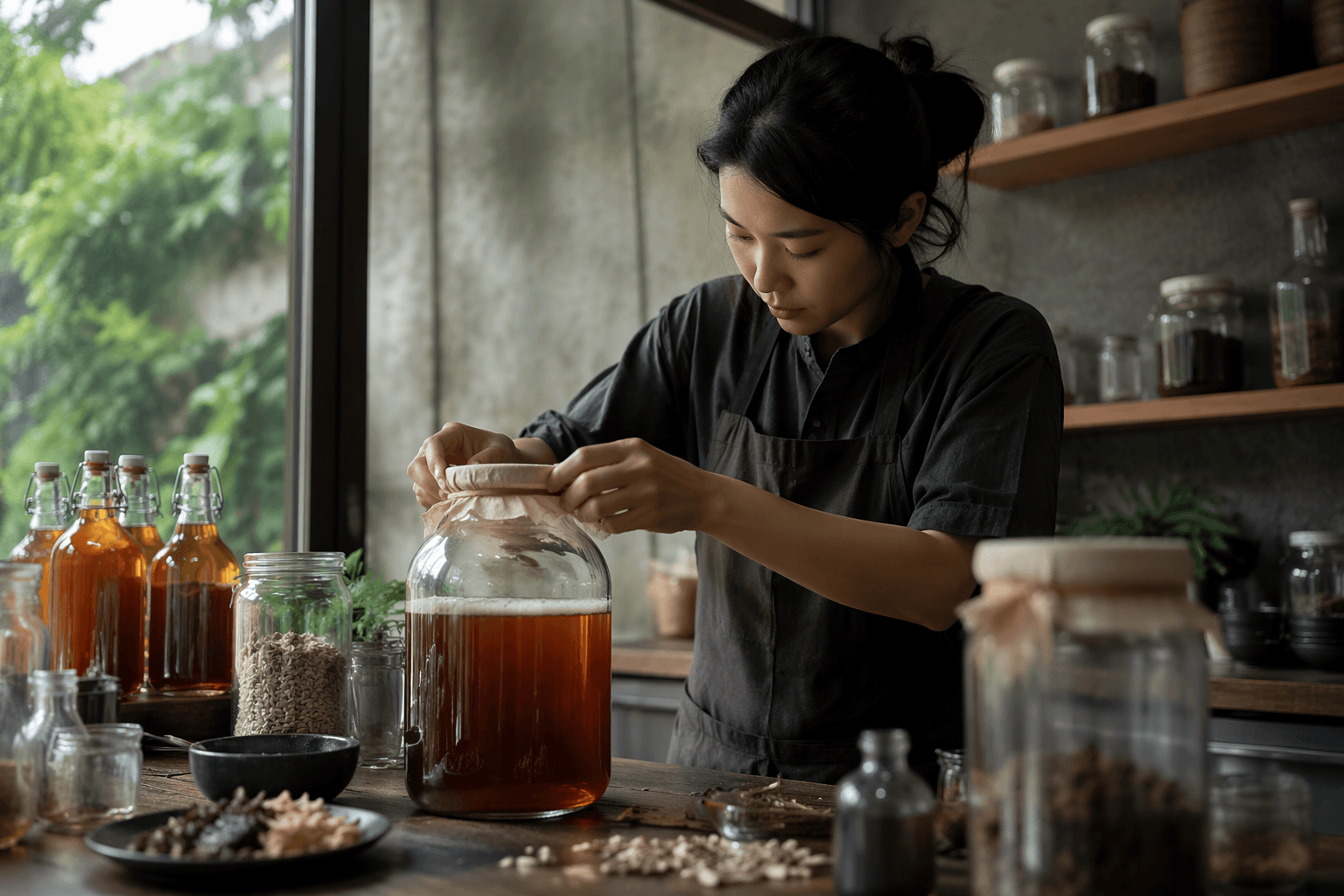
For kombucha brewers tired of guessing their way through vague tutorials, Arthurdale Heritage is offering something increasingly rare: an in-person class where the process can be seen, handled, and corrected on the spot. The workshop is built around the practical questions that matter most at home, from starter culture care to flavoring, with students expected to leave with kombucha of their own to keep fermenting.
A small class built for real troubleshooting
The kombucha workshop is scheduled for June 22, 2026, from 6:00 pm to 8:00 pm at Arthurdale Heritage, 18 Q Rd., Arthurdale, WV 26520. Registration is set at $25 for members and $30 for non-members, and the class size is capped at 20 with a minimum of 4. That small footprint is part of the appeal: kombucha questions tend to be specific, and the difference between a lively brew and a flat, over-sour batch often comes down to tiny details that are easier to understand when someone can show you directly.
The listing describes the session as hands-on, with step-by-step instruction on making kombucha at home and an introduction to the science behind the drink. It also says the class will cover wild ingredients and seasonal flavorings, which points to one of kombucha’s biggest draws for home brewers: once the base ferment is under control, the drink becomes a flexible canvas for herbs, fruit, spices, and whatever else is in season.
What the workshop is likely to cover at the bench
The most useful part of a class like this is not just the recipe itself, but the choreography of the brew day. Starter liquid, tea choice, sugar balance, clean equipment, and fermentation timing all shape the final result, and those are the exact points where beginners often get stuck when they are working from a screen instead of a person across the table.
That is why the promise of a take-home brew matters. When students leave with kombucha they made themselves, the lesson does not end at the workshop door. They can continue fermenting, taste changes over time, and practice flavoring in a way that turns a one-night lesson into an at-home brewing cycle.
The class also connects naturally to the practical steps that experienced brewers keep on repeat. Utah State University Extension advises home kombucha brewers to save 2 cups of kombucha and the SCOBY as starter for the next batch, ferment the first stage for a minimum of 7 days and up to 21 days, then bottle and flavor for 1 to 3 days with fruits, spices, or other additions. Those time windows are exactly the sort of thing that becomes much easier to internalize when someone can explain what to look for in the jar, rather than leaving you to interpret a dozen conflicting posts online.
Why starter care and timing matter
Starter culture handling is one of the quiet make-or-break skills in kombucha. If the starter is too weak, too warm, or handled carelessly, the batch can drift off course; if it is healthy and used correctly, it helps the fermentation get established quickly and predictably. The workshop’s hands-on format suggests it is designed to make those invisible decisions visible, which is especially helpful for anyone trying to produce consistent batches at home.

Fermentation timing is equally important. A batch that is pulled too early can taste thin and sugary, while one left too long can become sharply acidic before flavoring ever begins. The 7-to-21-day primary ferment window from Utah State University Extension gives home brewers a useful range, but the real skill is learning how temperature, tea strength, and starter volume affect where a particular batch lands inside that range.
That is also where sanitation comes in. Kombucha is a fermentation that rewards cleanliness without demanding laboratory perfection, and beginners benefit from seeing how to rinse, prepare, and handle equipment in a way that supports the culture rather than fighting it. A live class gives that process shape in a way a printed recipe rarely can.
Seasonal flavoring and the appeal of wild ingredients
The workshop’s attention to wild ingredients and seasonal flavorings is a natural fit for kombucha culture, where the second ferment often becomes the most creative part of the process. Fruit in summer, herbs in spring, warming spices in colder months: once the base brew is stable, the possibilities widen quickly. For home brewers, that flexibility is part of the fun, but it works best when the underlying ferment is consistent enough to support experimentation.
That scientific side matters, too. A recent review of kombucha fermentation notes that processing produces various bioactive compounds and that microbial activity changes the drink’s flavor and composition. In plain terms, that means the brew is not just tea with bubbles added later. It is a living process, and the ingredients, timing, and microbes are all shaping the final cup.
A workshop that fits Arthurdale’s setting
Arthurdale Heritage adds a layer of context that feels unusually fitting for a fermentation class. Visit Mountaineer Country describes Arthurdale as the nation’s first New Deal Homestead Community, established in 1933, and says the site includes 160 original homesteads and the New Deal Homestead Museum. A hands-on food workshop at a place defined by self-sufficiency and community education feels less like a novelty and more like a continuation of that mission.
That same spirit shows up in broader public programming around fermentation. WVSU Extension Service has offered a free workshop focused on safe home fermentation and probiotic-rich products, underscoring how much interest there is in practical food skills that people can use in their own kitchens. Kombucha sits comfortably in that world: part craft, part science, part daily routine.
For anyone trying to improve home batches, the value of a class like this is simple. It turns kombucha from a mysterious jar on the counter into a process you can actually control, from starter to second ferment to seasonal flavoring. In a room at Arthurdale, the difference between following a recipe and understanding the brew looks a lot smaller, and that is exactly where better kombucha begins.
This article was produced by Prism’s automated news system from verified source data, official records, and press releases, then run through automated quality and moderation checks before publishing. The system is built and supervised by the people who set the standards it runs under. Read our full AI policy.
Did this article answer your question?