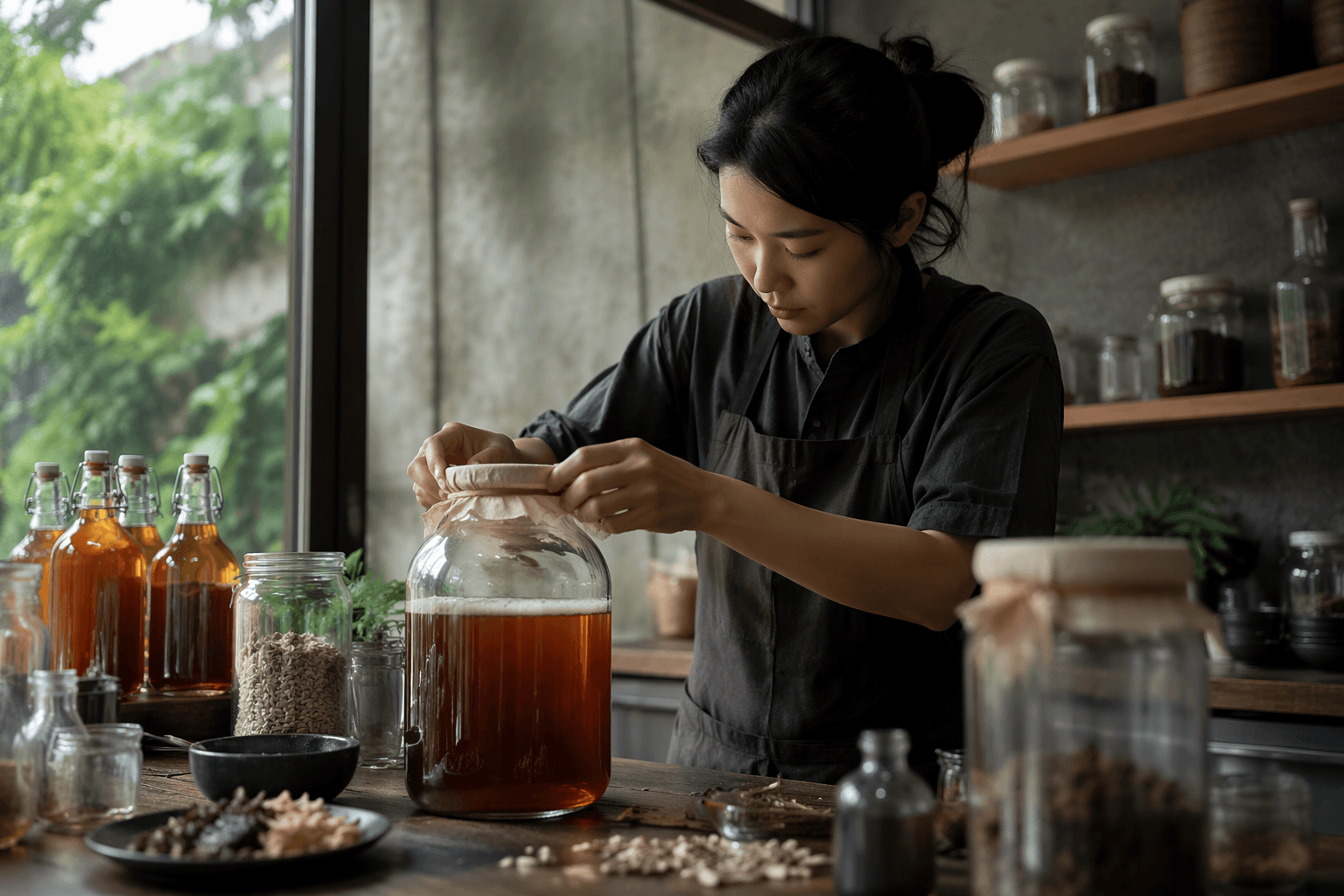
Bloom Cooking explains kombucha brewing, starter liquid and fermentation basics
The first batch succeeds when the starter liquid is strong, the room stays steady, and the brewer respects the 7-to-14-day ferment.

The first kombucha batch usually comes down to a few plain variables, not ritual and not luck. If the starter liquid is strong, the brew stays at room temperature, the equipment is clean, and the fermentation gets enough time, the odds shift fast in your favor.
What actually drives a beginner batch
Bloom Cooking’s guide strips kombucha back to its essentials: sweet tea, a SCOBY, and starter liquid. The key correction for new brewers is that the starter liquid is what really starts the batch. It is the acidic fermented liquid that lowers pH and helps shield the tea from unwanted microbes, which is why experienced brewers treat it as the real engine of the process.
That matters because kombucha can look more mysterious than it is. The solid disc may be the most visible part of the culture, but the liquid is the part that sets the tone for the whole brew. If you want a first-batch success story, this is where it begins: strong starter tea, clean gear, and enough patience to let the culture do its work.
The SCOBY is real, just not magical
The guide is clear about what the SCOBY actually is. It is a rubbery cellulose mat formed by bacteria at the surface of the brew, not a mystical object with a job separate from the liquid around it. That framing helps demystify the process without flattening it, because the SCOBY is still part of a living system even if it is not the only part that matters.
Bloom Cooking also points out an important practical detail: a batch can succeed without a visible disc if the starter liquid is strong enough. That is useful for anyone restarting from a liquid-only culture or trying to recover a batch after the culture mat looks thin, torn, or absent. In kombucha, appearance can mislead, but acidity and healthy fermentation tell the real story.
Fermentation is a timed microbial shift
Once the tea is inoculated, the culture changes it over roughly 7 to 14 days at room temperature. During that window, the microbes consume most of the sugar and caffeine while producing organic acids, a small amount of alcohol, carbon dioxide, and a living microbial community. That is the transformation that takes the liquid from sweet tea to tangy, lightly effervescent kombucha.
The timing is not arbitrary. Shorter fermentation leaves more sweetness behind; longer fermentation pushes the drink further toward acidity. Bloom Cooking’s pH range, 2.5 to 3.5, helps explain why seasoned brewers pay close attention to starter strength and sanitation. A batch that acidifies properly is doing the work that keeps the culture on track.
Why sanitation and steady conditions matter so much
Kombucha rewards clean habits because the brew is living in an environment where acidity is doing a lot of the protection. The starter liquid lowers pH, but that protection is strongest when the equipment, jars, and handling are also clean. For a beginner, sanitation is not a bonus step, it is part of what keeps the culture from getting crowded out by unwanted microbes.
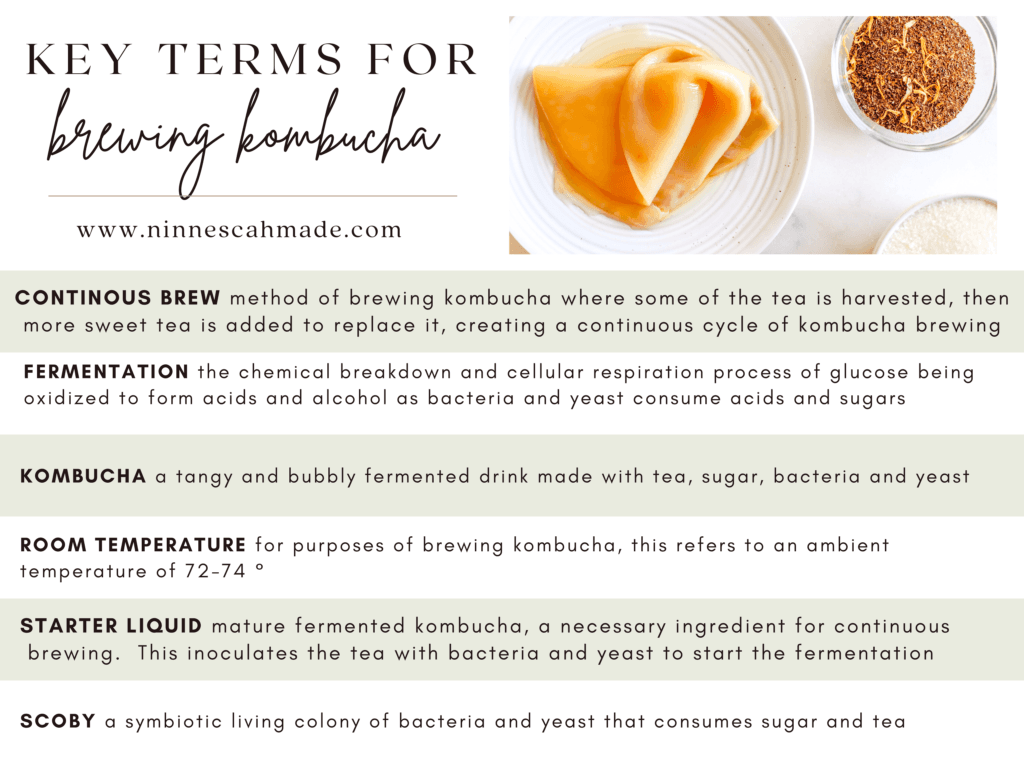
Temperature control is just as practical. Bloom Cooking describes the ferment as happening at room temperature, which means the batch needs a stable environment for that 7-to-14-day stretch. The goal is consistency, not fussiness. If the tea sits where conditions are steady, the microbes can keep moving through the sugar, acid, and carbonation changes that define a healthy brew.
What to focus on, and what to ignore
A lot of kombucha advice makes the process sound more elaborate than it is. Bloom Cooking’s guide is useful because it points readers toward what actually matters first. You do not need to treat the SCOBY as the star of the show, and you do not need to assume that more gear will solve a weak batch.
- make a proper sweet tea base
- use enough strong starter liquid
- keep the brew at room temperature
- sanitize the vessel and tools
- give the batch the full 7 to 14 days before judging it
Keep your attention on the basics:
That short list is where most beginner mistakes get solved. Underpowered starter liquid, rushed timing, or sloppy sanitation are the usual ways a batch goes sideways, not a missing gadget or a lack of fermentation folklore.
A modern practice with older roots
The guide also places kombucha in a longer history, noting possible origins in Northeast China centuries ago. That historical note adds useful perspective: home brewing today is part of a much older fermentation tradition, even if the current wave of brewers tends to learn it through kitchen counter experiments and starter jars. The drink’s current popularity has not changed the basic logic of the process.
That older lineage fits the way the guide presents the brew itself. Kombucha is accessible, but it works because the brewer respects a few conditions that have always mattered: tea, sugar, starter liquid, oxygen exposure, and time. The method is less about mystique than about creating the right environment for a living culture to do what it does best.
The first batch comes together when the basics stay in view
The reason Bloom Cooking’s breakdown works is that it refuses to overcomplicate the first batch. The starter liquid does the heavy lifting, the SCOBY is a cellulose mat at the surface, and the fermentation window gives microbes time to transform sweet tea into something acidic and lightly sparkling. Once those pieces are understood, kombucha stops feeling like a kitchen puzzle and starts behaving like the dependable ferment it is.
This article was produced by Prism’s automated news system from verified source data, official records, and press releases, then run through automated quality and moderation checks before publishing. The system is built and supervised by the people who set the standards it runs under. Read our full AI policy.
Did this article answer your question?