Herbal teas reshape kombucha’s acidity, phenolics and antimicrobial power
Herbal teas can make real kombucha bases, but they do not ferment the same way. Sage, chamomile, and linden shifted the chemistry most, while rosehip looks the least forgiving.
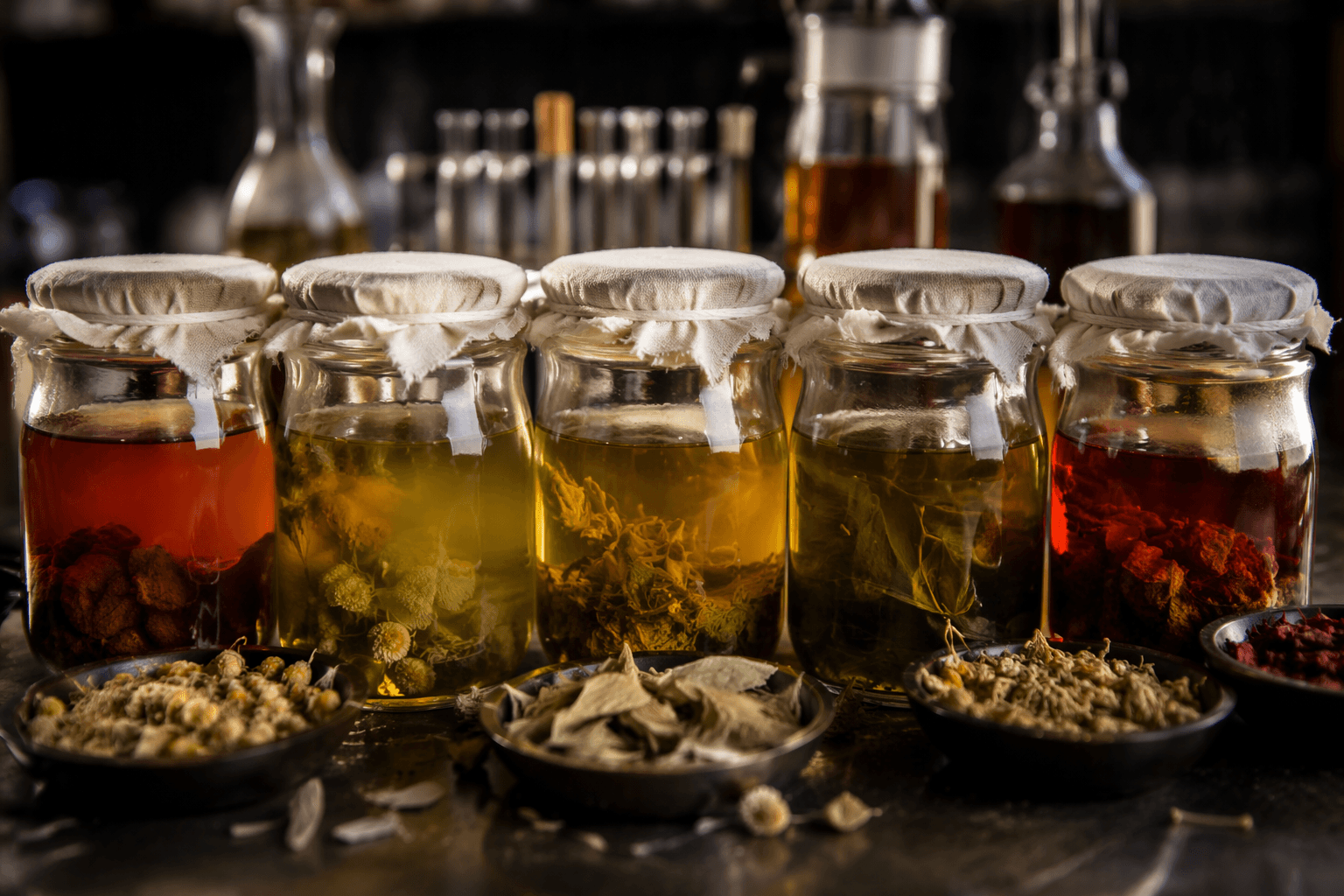
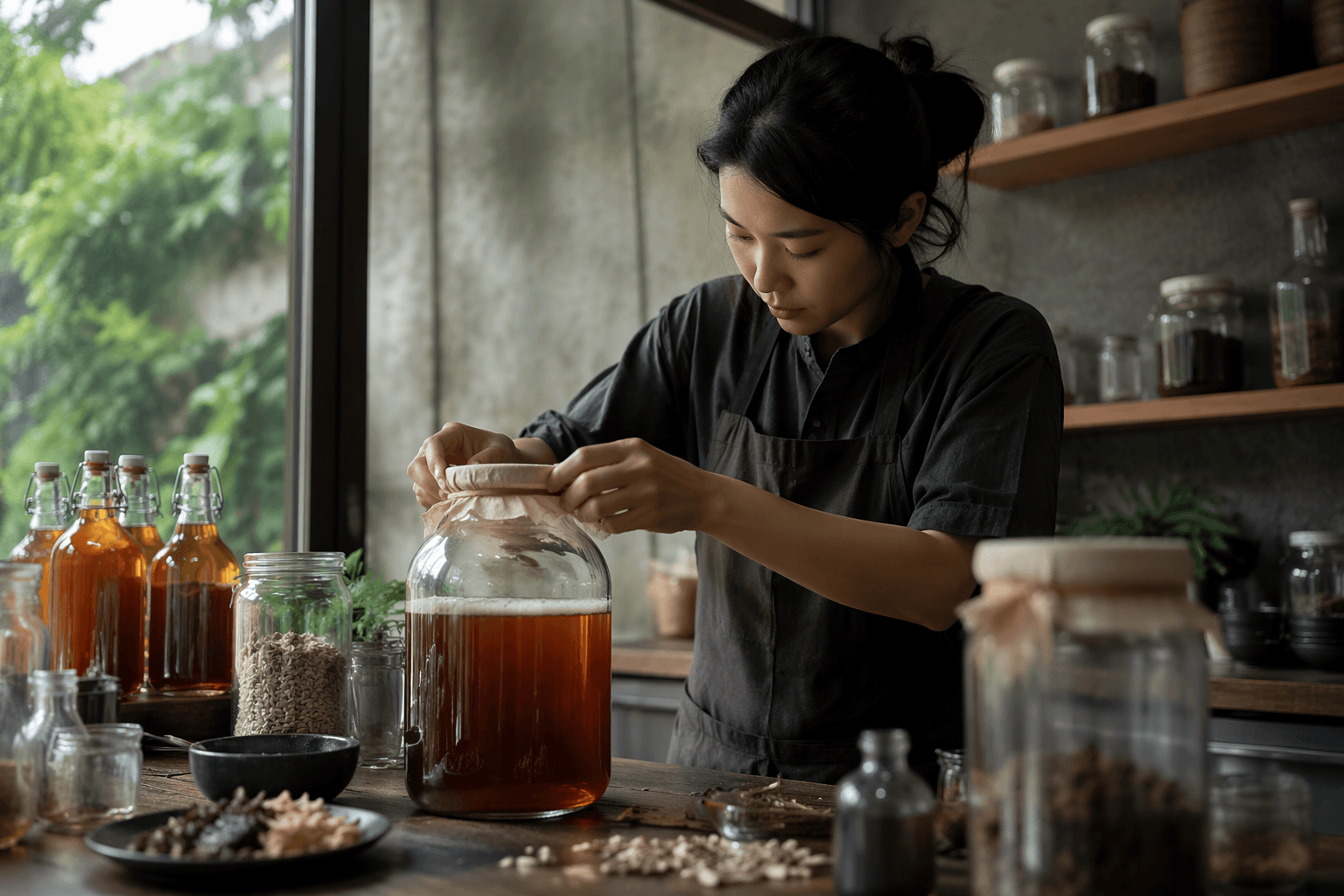
Herbal tea is not just a flavor swap in kombucha, it changes the ferment itself. In this batch of five infusions, every jar acidified as expected, but the chemistry moved in different directions enough to make each base feel like its own recipe rather than a substitute for black or green tea.
What changes when you leave traditional tea behind
Kombucha still starts the same way: sweetened tea meets a SCOBY, the symbiotic culture of bacteria and yeast that drives the fermentation. What this work shows is that once you replace the usual tea base with botanicals, the culture does not behave as if nothing changed. The study tested rose mallow, sage, chamomile, linden, and rosehip, and tracked pH, total acidity, color, density, alcohol, °Brix, antioxidant activity, total phenolic content, and antimicrobial properties.
The most universal result was also the most reassuring for brewers: pH dropped in all five samples during fermentation. That fits standard kombucha behavior, where the microbes convert sugar into acids. Pennsylvania food-safety guidance says kombucha typically starts around pH 5 and that unpasteurized bottled kombucha should aim for pH 4.2 or below, while U.S. regulators treat kombucha at or above 0.5% alcohol by volume as an alcohol beverage. For anyone brewing herbal kombucha at home, that means the base tea is not just a flavor call, it is part of the safety and compliance picture too.
Phenolics tell the real story
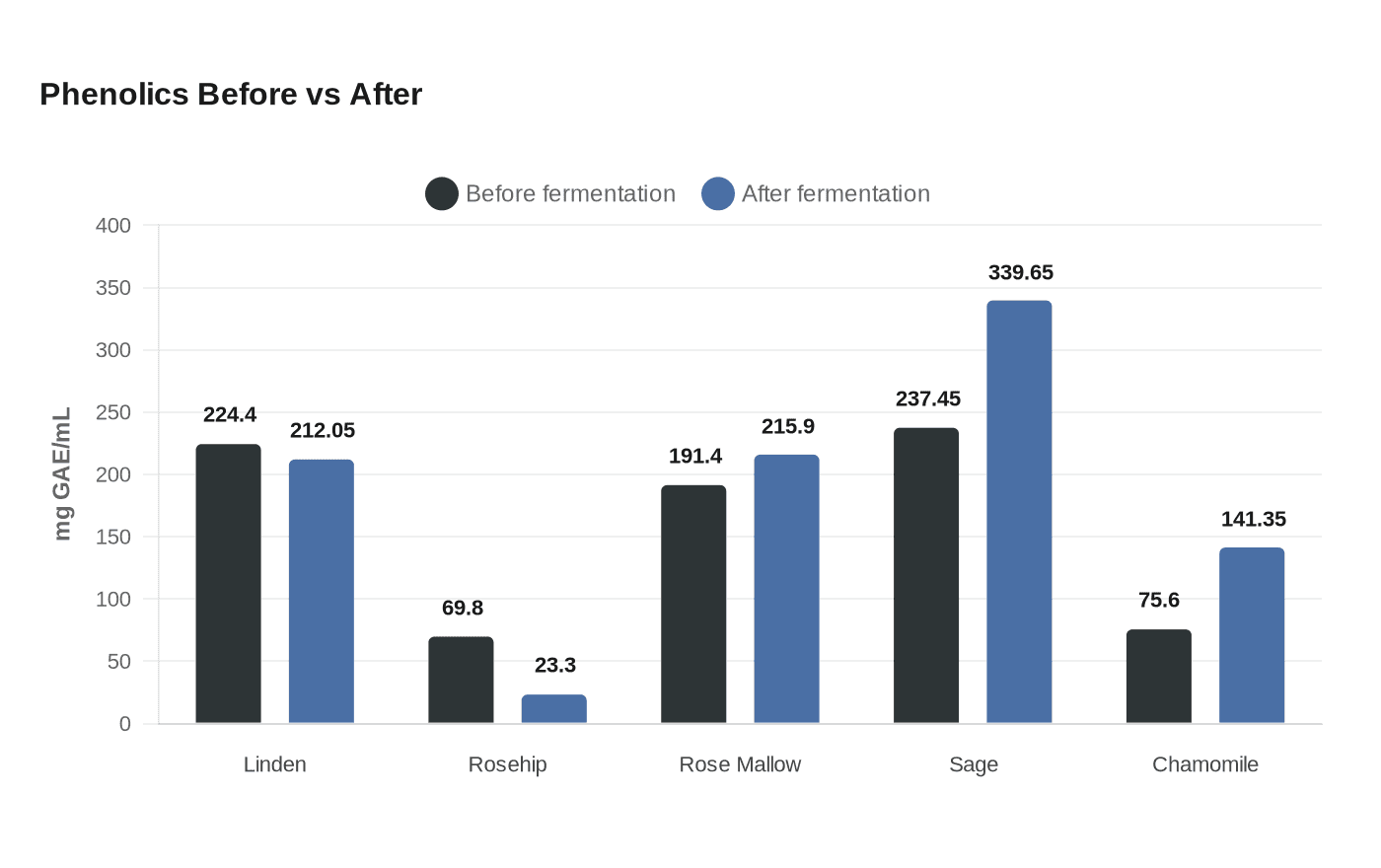
The clearest comparison came from total phenolic content, because each herb shifted differently after fermentation. Before fermentation, the phenolic contents were 224.4 mg GAE/mL for linden, 69.8 for rosehip, 191.4 for rose mallow, 237.45 for sage, and 75.6 for chamomile. After fermentation, those values became 212.05, 23.3, 215.9, 339.65, and 141.35 mg GAE/mL, respectively.
Read like a brewer, that means the plant matrix matters as much as the SCOBY. Linden slipped slightly, rosehip fell hard, rose mallow gained modestly, chamomile nearly doubled, and sage jumped the most. This is not a uniform kombucha result with five different labels on it. It is five distinct fermentation paths, each pulling out or transforming compounds differently, and that is exactly why herbal kombucha can be exciting and frustrating at the same time.
If you are looking for a base that seems more chemically responsive, sage and chamomile stand out from these numbers. If you want the cleanest warning sign that not every botanical behaves gently, rosehip is the one to watch, because its phenolic content dropped from 69.8 to 23.3 mg GAE/mL.
Antioxidant power rose only once
The antioxidant test was more selective than the phenolic data. DPPH inhibition improved only in linden kombucha, rising from 25% to 31.7%. That makes linden the only base in this set that showed a clear gain in that particular antioxidant assay, even though sage and chamomile posted bigger phenolic increases.
For home brewers, that is an important distinction. A higher phenolic number does not automatically translate into a stronger antioxidant readout, and a botanical that looks gentle on paper may still deliver the cleanest functional lift in the glass. Linden is the best example here: not the flashiest phenolic performer, but the only one with improved DPPH inhibition.
What did not happen matters too
The antimicrobial results were a useful reality check. Disk-diffusion testing found no antimicrobial effect against Staphylococcus aureus or Escherichia coli. In other words, these herbal kombuchas did not turn into natural disinfectants just because the base tea changed.
That does not make the brews uninteresting. It means the practical value of herbal kombucha is likely to live in fermentation behavior, acidity balance, aroma, and mouthfeel rather than in assuming a built-in antimicrobial edge. For small producers and kitchen brewers, that is a better way to think about recipe development anyway: botanical choice shapes the drink, but it does not guarantee a health halo.
How to read the five teas as brew bases
The most useful way to translate these results into the kitchen is to treat each herb as a different fermentation partner.
- Linden looks like the most balanced candidate if you care about antioxidant behavior, since it was the only one to improve DPPH inhibition.
- Sage delivered the largest phenolic increase, which makes it a strong candidate for a more assertive, chemistry-heavy brew.
- Chamomile also rose sharply in phenolics, suggesting it can support a notably different fermentation profile even from a delicate-tasting botanical.
- Rose mallow increased modestly and looks compatible with fermentation without the dramatic swings seen elsewhere.
- Rosehip showed the steepest phenolic decline, so it is the one that deserves the most caution if you expect the plant itself to carry the final profile.
The study does not show a failed ferment in any of the five bases, but it does show that “herbal kombucha” is not one product category. It is a family of ferments, and each one may land differently on acidity, bioactive compounds, and final sensory balance.
Why kombucha people should care now
That broader curiosity matches where kombucha science has been heading. A 2022 review from University College Cork and APC Microbiome Ireland described the growing use of alternative substrates and modified fermentation parameters, alongside safety concerns for home-brewing. Historical reviews place kombucha’s roots in northeast China more than 2,000 years ago, with recorded use in 220 BC in Manchuria, before it spread into Russia and Eastern Europe in the 1800s and later to Western Europe and North Africa during World War II.
The modern market is no small niche either. Industry research puts kombucha in a billions-dollar category that is still growing, with North America as a major market. That commercial scale helps explain why these herb-by-herb comparisons matter: once kombucha moves from a single tea recipe into a broad botanical aisle, the differences stop being novelty and start becoming product design.
Herbal tea can absolutely serve as a kombucha base, but the smartest lesson from these five ferments is simple: do not assume the SCOBY will treat every plant the same. The jar will tell you what kind of base you have, and in this set, it told a very different story for linden, sage, chamomile, rose mallow, and rosehip.
This article was produced by Prism’s automated news system from verified source data, official records, and press releases, then run through automated quality and moderation checks before publishing. The system is built and supervised by the people who set the standards it runs under. Read our full AI policy.
Did this article answer your question?