Jun tea offers a faster, lighter alternative to kombucha brewing
Jun swaps black tea and sugar for green tea and honey, giving kombucha brewers a faster, lighter summer ferment with different timing and culture handling.
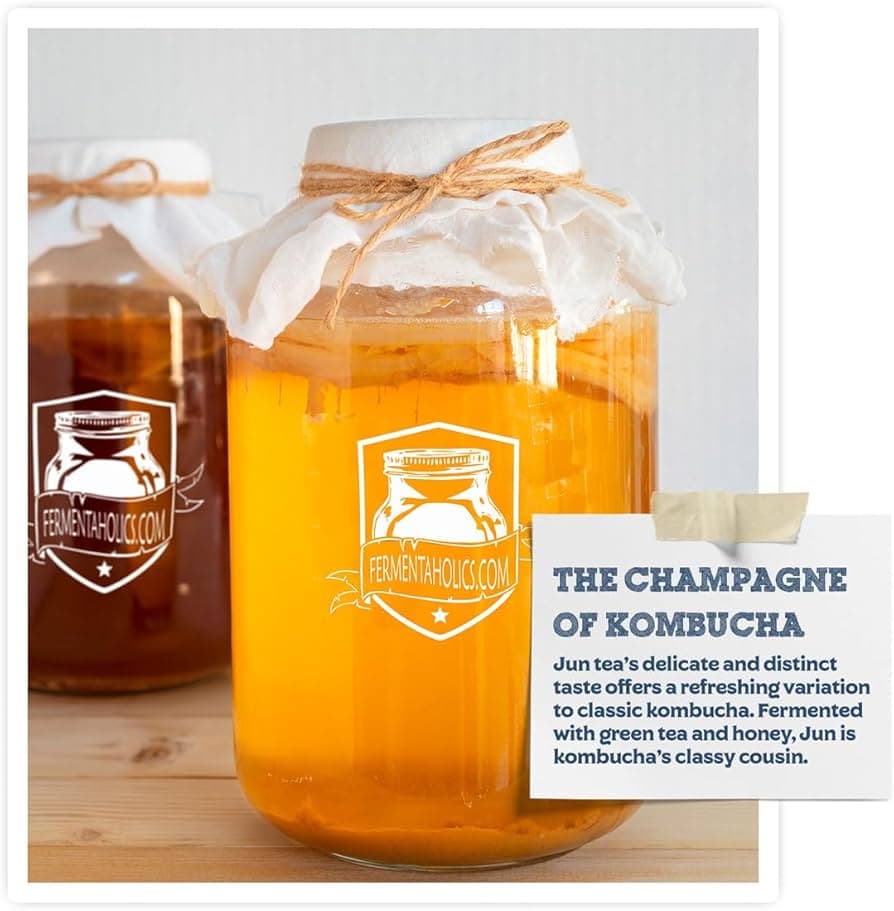
Jun lands in the same family as kombucha, but it behaves like a very different brew in the jar. If you already know how to keep a SCOBY happy, the appeal is obvious: green tea, honey, a shorter primary ferment, and a finished drink that reads lighter and more delicate than the black-tea version.
What jun changes at the starting line
The biggest shift is the ingredient base. Jun is commonly described as honey-sweetened green tea, while standard kombucha is made from steeped tea and sugar, usually black tea and cane sugar. A 2025 academic paper puts the distinction bluntly: jun differs from kombucha only in the basic ingredients, with honey-sweetened green tea standing in for cane sugar-sweetened black tea.
That ingredient switch matters before fermentation even starts. Britannica notes that green tea is unfermented tea, while black tea is fermented or oxidized tea, so jun begins with a different tea character from the jump. The result is not just a sweeter or more floral kombucha clone. It is a separate fermentation with a gentler backbone, especially once honey and green tea start shaping the flavor.
Why the pace feels different
Jun is often described as a probiotic soda pop, and the comparison makes sense once you look at timing. The guide points to a primary fermentation of roughly two to three days, which is notably shorter than the 7 to 10 days many home kombucha brewers use at room temperature. That faster window is one of jun’s main attractions for anyone looking for a summer side-project that does not occupy the counter for a week or more.
The speed also changes how you watch the batch. Jun is commonly fermented a little cooler and faster than kombucha, so the brewer’s instinct to leave a batch sitting until it tastes fully dry can backfire. With a shorter ferment, flavor development happens quickly, and the line between bright and overly sharp can arrive sooner than it does in a standard black-tea brew.

Why fermentation details matter more than usual
This is where jun becomes especially useful for existing kombucha brewers. The U.S. Alcohol and Tobacco Tax and Trade Bureau says kombucha generally refers to a fermented beverage made from steeped tea and sugar, combined with a culture of yeast strains and bacteria. The same agency notes that kombucha can reach 0.5% alcohol by volume or more during production, which brings it under federal alcohol regulations.
That makes ferment time, sugar source, and final alcohol levels more than kitchen trivia. If you are used to standard kombucha routines, jun’s shorter ferment and honey-based recipe push you to pay closer attention to what is happening in the vessel. The point is not just taste. It is also about keeping the drink in the range you expect, especially if you brew at home or scale up for a commercial setting where alcohol thresholds matter.
Know what the culture actually is
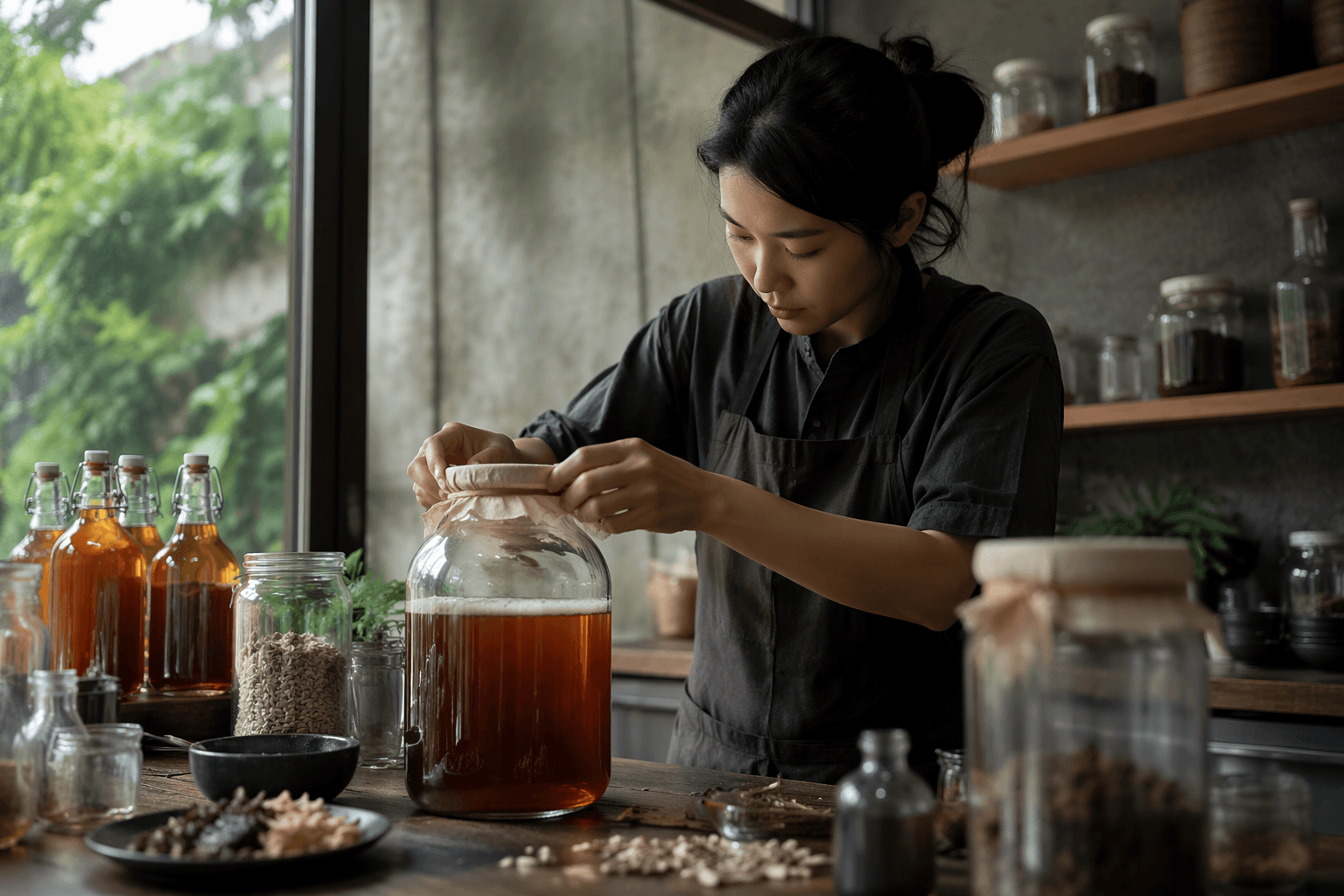
Jun also gives you a chance to clean up one of the most persistent kombucha misconceptions. The rubbery disc that forms on top of the brew is technically a pellicle, not the SCOBY itself. The liquid is the actual culture, the living starter that carries the microbes forward. That distinction matters because a lot of home fermenters treat the disc as the essential part and ignore the starter liquid that actually inoculates the next batch.
For jun, that practical detail affects how you source your culture. You can get one from another brewer, buy a live batch locally, order a culture online, or convert a kombucha SCOBY. The catch is that a truly live product can be hard to identify, which means not every bottle on the shelf is useful as starter material. If you are trying to seed a batch, the liquid culture matters more than the decorative cap that grows on top.
A simple first batch, built for speed
The guide’s basic jun method is intentionally low-drama: a quart-sized brew using filtered water, tea, honey, and brewed jun, then a short fermentation in a warm location. That setup is helpful because it keeps the focus on the variables that really change from kombucha to jun, especially sweetener choice and timing. You are not chasing a complicated recipe so much as learning how honey and green tea behave under a faster ferment.
Jun can also be ready to drink right away, which is another reason it fits a summer brewing schedule. If you want more complexity, you can push it into a second fermentation and add flavorings there. The suggested directions, rhubarb, apple, and pineapple, make the point clearly: jun is not just a lighter version of kombucha, it is flexible enough to take fruit-forward flavors without losing its bright profile.
A close cousin with an uncertain past
Jun’s origin story remains hazy, and that uncertainty is part of its odd charm. Popular stories place it in Tibet or the Himalayan region, but those accounts are generally treated as folklore rather than established history. Modern brewing guides and academic writing tend to stay more cautious, describing jun simply as a kombucha-like beverage made from honey-sweetened green tea.
That is probably the right frame for a kombucha brewer approaching it now. Jun does not need a romantic backstory to be interesting. It offers a practical comparison point for anyone who wants to test how a different tea, a different sweetener, and a much shorter ferment change the rhythm of a familiar culture.
Jun is worth the counter space if you want a batch that moves fast, tastes lighter, and forces you to think more carefully about starter liquid, not just the pellicle on top. For kombucha brewers, that makes jun less of a novelty and more of a useful summer experiment, one that shows how close two ferments can look while behaving just differently enough to keep you honest.
This article was produced by Prism’s automated news system from verified source data, official records, and press releases, then run through automated quality and moderation checks before publishing. The system is built and supervised by the people who set the standards it runs under. Read our full AI policy.
Did this article answer your question?