Kombucha flavoring turns second fermentation into fizz and aroma
Second fermentation is where kombucha turns custom flavor into active fizz, but fruit load, bottle space, and warm time all change the pressure game.
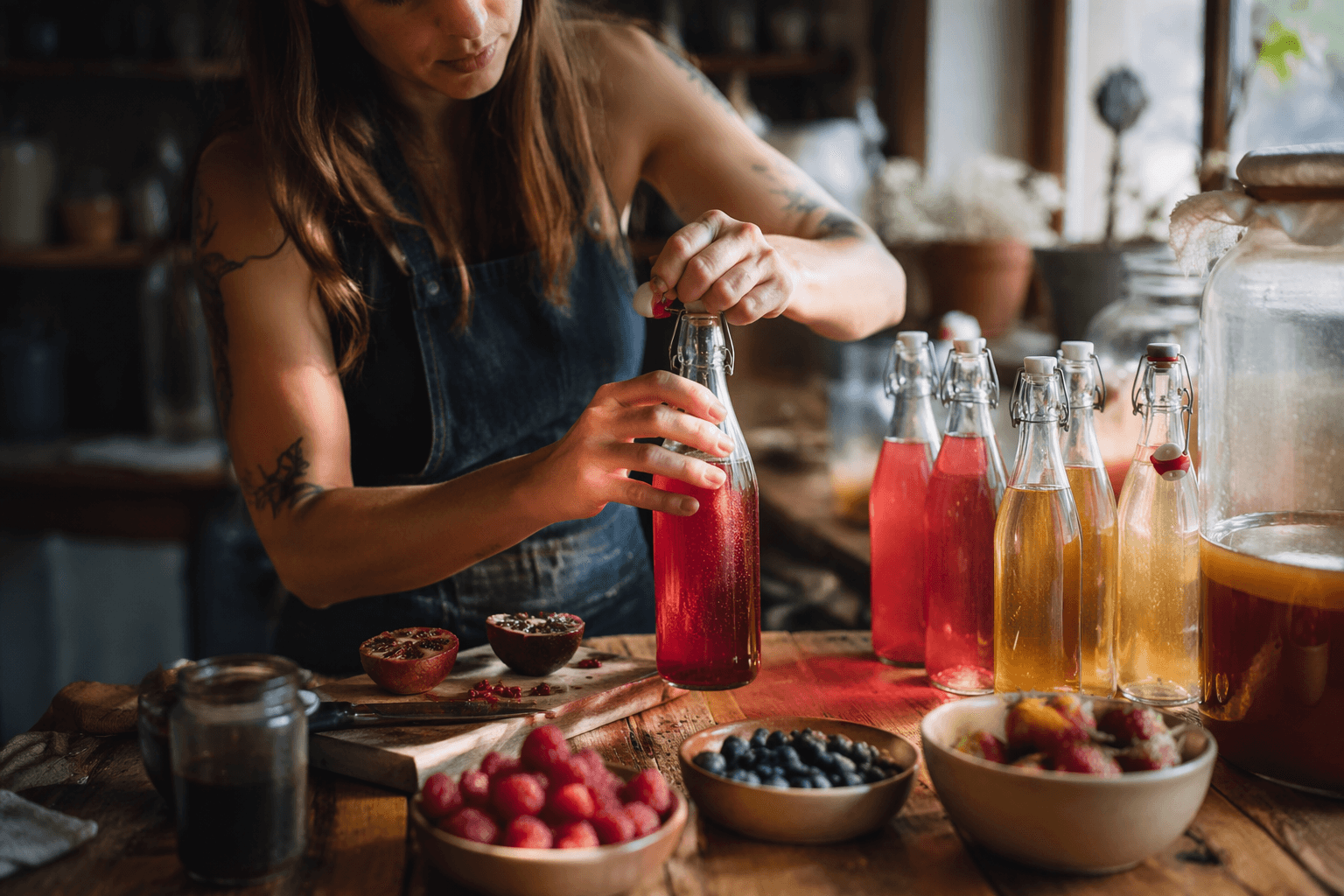
After the SCOBY comes out and the base tea goes into bottles, a plain, lightly effervescent brew can turn brighter, stronger, and almost soda-like when the sugar and yeast are working in sync. The appeal is obvious, but so is the risk: the same second fermentation that builds fizz can also build pressure fast if the bottles are packed too full or left unchecked.
Second fermentation is the flavor engine
Kombucha is a lightly effervescent, cider-like beverage made from sweetened tea and a SCOBY, which places it squarely in standard home food-preservation territory rather than novelty brewing. Yeast in the SCOBY first ferments added sugar into alcohol and carbon dioxide, then bacteria convert alcohol into acetic acid. Even after the SCOBY is removed, fermentation does not stop cleanly, because tiny fragments remain in the liquid and keep the process moving.
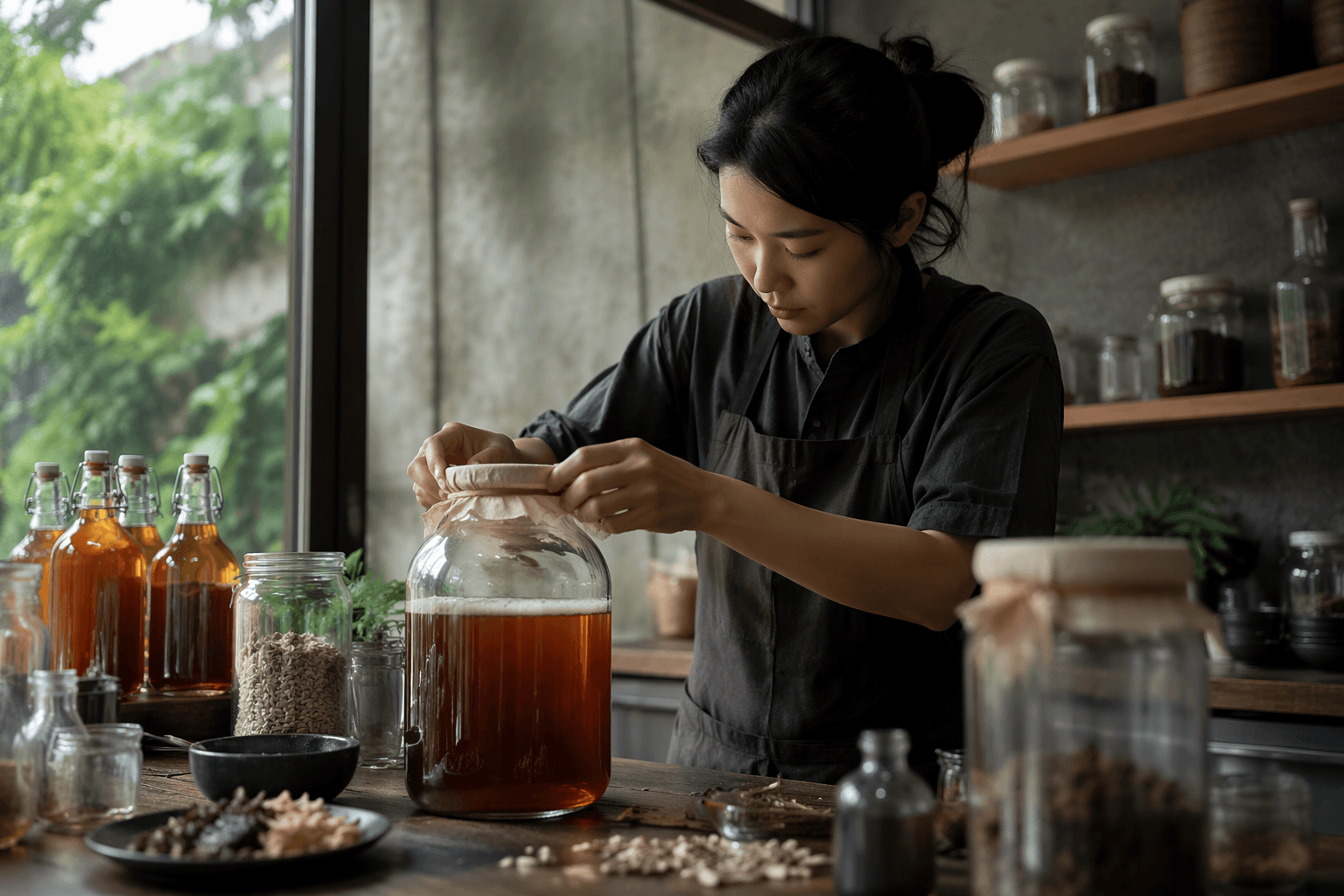
That matters for flavoring because the bottle is where the process finishes. Second fermentation is the point where the brewer decides whether the batch stays bright and restrained or becomes deeply aromatic and lively with bubbles. The practical sequence is straightforward: finish first fermentation, taste the brew, remove the culture and starter liquid, bottle the kombucha, add flavorings, seal tightly, let the bottles sit warm for a short stretch, and then refrigerate once the carbonation and taste land where you want them.
Fruit choice changes both taste and pressure
Flavoring is not only about what the kombucha tastes like. It is also a carbonation tool, because fruit, juices, herbs, spices, and extracts all bring sugars and aromatic compounds that yeast can convert into gas. That is why a berry-heavy bottle can ferment differently from one flavored with a lighter herbal blend, even when the base tea is the same.
The size of the ingredient matters, too. Smaller fruit pieces release more surface area and tend to drive more intense extraction, while larger pieces create a gentler flavor profile. That gives you a real control knob: diced fruit or purees can make a batch feel bold and ripe, while bigger chunks can leave more of the original kombucha character intact. There is no single correct combination, because the flavor base also shapes how active the bottle becomes.
Sugar load, warmth, and headspace decide the fizz
The tradeoff at the heart of second fermentation is that more flavor often means more fermentation activity. Juicier fruit, sweeter blends, and richer aromatic additions can feed the yeast harder, which means more carbonation and a bigger pressure spike. That is why headspace matters so much. A little empty space at the top of the bottle gives the gas somewhere to go, while overpacked bottles can turn into a safety problem.
Keep some headspace, store the bottles warm for one to five days, check progress daily, and chill when the balance of sweetness, flavor, and fizz feels right. That daily check is how you catch the moment before the bottle goes from pleasantly sparkling to overpressurized, especially when using ingredients that are naturally high in sugar.
Burping bottles is part of that pressure management, particularly when the second fermentation is vigorous. It is a small habit that helps home brewers stay ahead of buildup instead of discovering too late that the batch has pushed too hard.
Alcohol, acidity, and bottle conditions are part of the same equation
Production practices and fermentation conditions affect the final alcohol and vinegar content, which means second fermentation is not only about sparkle. The longer the microbes keep working, the more the flavor can tilt toward sharper acidity. If fermentation continues too long, the drink can become too acidic for frequent consumption.
The U.S. Alcohol and Tobacco Tax and Trade Bureau says some kombucha products contain 0.5% alcohol by volume or more, and if kombucha reaches 0.5% ABV at any point during production, it must be made on TTB-qualified premises. Kombucha may continue fermenting in the bottle after bottling, depending on how it is made and stored, which is exactly why warm storage and sugar-rich flavorings deserve attention. A 2019 AOAC International study highlighted scrutiny because some products tested above the legal nonalcoholic threshold of 0.5% ABV.
Safety is not separate from the brewing process
The Centers for Disease Control and Prevention warns that botulinum toxin cannot be seen, smelled, or tasted, and that homemade foods that have been improperly canned, preserved, or fermented are common sources of foodborne botulism. Kombucha is not the same thing as low-acid canned food, but the warning underscores how much depends on clean equipment, disciplined handling, and reliable fermentation.
A cautionary reference is the 1995 Iowa case. During April of that year, health officials investigated two severe illnesses, including one death, in people who had been drinking kombucha daily for about two months. The Iowa Department of Public Health initially advised people to stop drinking kombucha while the cases were being evaluated.
A drink with ancient roots and modern consequences
A review in PubMed Central places reported kombucha consumption as early as 220 B.C. The same sugar-to-ethanol-to-organic-acid cascade that shapes the flavor also shapes the fizz, the aroma, the acidity, and the shelf behavior.
This article was produced by Prism’s automated news system from verified source data, official records, and press releases, then run through automated quality and moderation checks before publishing. The system is built and supervised by the people who set the standards it runs under. Read our full AI policy.
Did this article answer your question?