Kombucha market set to reach $14.9 billion by 2035
A $14.9 billion kombucha forecast looks less like a homebrew boom than a sign the category is already winning shelf space, bars, and regulatory scrutiny.

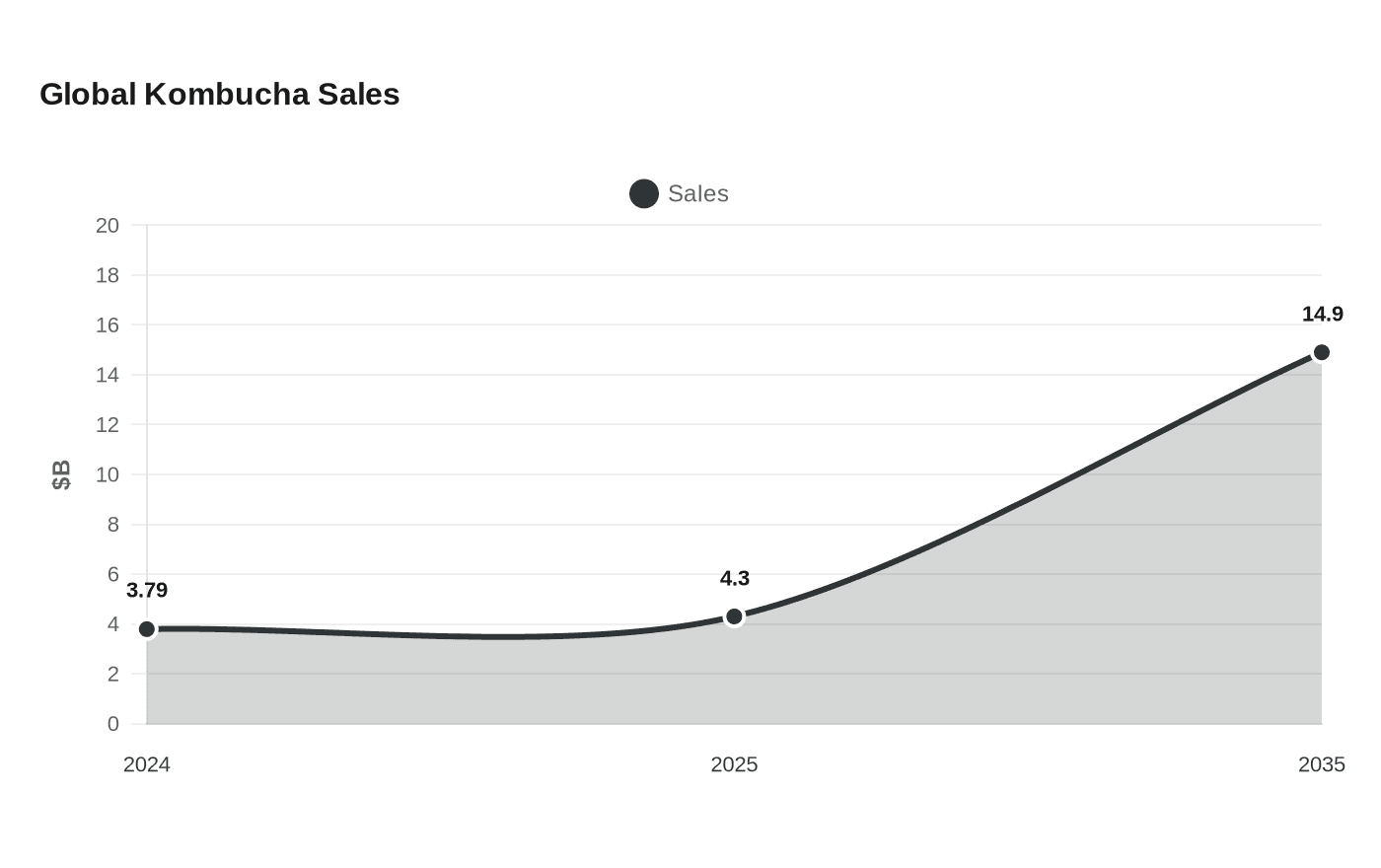
A market report released June 22 put global kombucha sales on a path to $14.9 billion by 2035, up from $3.79 billion in 2024 and $4.3 billion in 2025. Market Research Future projected 13.3% annual growth, but the sharper question for brewers is whether that number points to cheaper, easier access to the basics of fermentation or to a more crowded, retail-driven market.
The evidence leans toward the second. Grand View Research says kombucha is already in mainstream channels including Whole Foods Market, Target, Walmart and 7-Eleven, and that on-trade venues accounted for 55.30% of U.S. kombucha revenue in 2024. That is a category that has moved well beyond the edge of the refrigerated case. For anyone brewing at home, the market story reads less like a guarantee of better bottle or sugar prices and more like proof that kombucha has become a packaged beverage business with real shelf-space pressure.
That shift has not erased the category’s old risks. The U.S. Alcohol and Tobacco Tax and Trade Bureau says kombucha becomes an alcohol beverage if its alcohol content reaches 0.5% ABV or more at any point during production, bottling or afterward, and that labeling rules apply at that threshold. The category has lived through that line before: in 2010, some grocery shelves were cleared after elevated alcohol concerns surfaced, a reminder that fermentation can create compliance headaches as quickly as it creates buzz.
The wellness pitch driving sales is also more complicated than the marketing suggests. The National Institutes of Health Office of Dietary Supplements says probiotic effects depend on the specific strain and the amount consumed, while a 2024 systematic review said clinical evidence on kombucha’s health effects remains limited. Even so, the brands leading the category have leaned hard into the functional-drink language. GT’s Living Foods says it helped pioneer flavored kombucha, expanded from Los Angeles health-food stores into Whole Foods in California, and later moved into a larger brewing facility for national distribution. Health-Ade Kombucha says it began in 2012 as a farmers’ market startup run by a husband, wife and best friend.
The market forecast, then, is best read as a sign of maturation, not necessarily a windfall for every brewer. GT’s, Health-Ade, Humm, Brew Dr., Kombucha Town, Revive and Kombucha Culture are fighting in a category where clean labels, organic claims, packaging and flavor innovation matter as much as the ferment itself. The $14.9 billion number is big, but the real story is that kombucha’s biggest gains are now being won in stores, restaurants and chain coolers, not just in the brew bucket.
This article was produced by Prism’s automated news system from verified source data, official records, and press releases, then run through automated quality and moderation checks before publishing. The system is built and supervised by the people who set the standards it runs under. Read our full AI policy.
Did this article answer your question?