Kombuchacha dominates Chile’s kombucha market, eyes Brazil and Mexico
Kombuchacha went from a Zurich kitchen experiment to 64% of Chile’s kombucha market, with Brazil and Mexico next on its expansion list.

Kombuchacha has locked up 64% of Chile’s kombucha market and is now aiming at Brazil, Mexico and Uruguay, a scale that points to a brew the company has learned to keep consistent well beyond a home kitchen. For founders María Prieto and Antonio Sánchez, the arc began in Freire, in La Araucanía, after Prieto first encountered kombucha in Zurich in 2011 while looking for a probiotic drink her young daughter would actually drink.
That origin still shapes the brand’s identity. Prieto turned a homemade recipe into a business after returning to Chile, and Kombuchacha formally launched in January 2018. The company has described itself as built on three ideas, “100% natural, 100% viva and 100% justa,” while also saying it wanted to create non-seasonal work with social and environmental impact. For home brewers, the lesson is plain: a kombucha that can leave the kitchen and enter retail usually has to nail the basics batch after batch, from fermentation consistency to flavor balance and packaging that keeps the drink alive on the shelf.

The growth numbers show how far that standardization went. In April 2024, María Prieto said the company had 74% of Chile’s kombucha category, 67.7% of the ready-to-drink cold tea category excluding Lipton, and sales approaching 1 million liters a year. Emol also noted that Kombuchacha reached more than 1,000 points of sale in Chile in less than five years and became the first kombucha certified organic in the country. That kind of reach suggests a production system built to hold acidity, carbonation and taste steady enough for supermarkets, not just a few neighborhood fridges.
Kombuchacha has also widened its lineup beyond the original tea, including flavored drinks such as maqui. That kind of move matters for brewers watching how the market shifts: a fruit-forward version can soften kombucha’s edge for drinkers who want less bite, while the core fermented tea keeps the brand anchored. The strategy gives Kombuchacha more ways to meet different palates without losing the probiotic identity that got Prieto started in the first place.
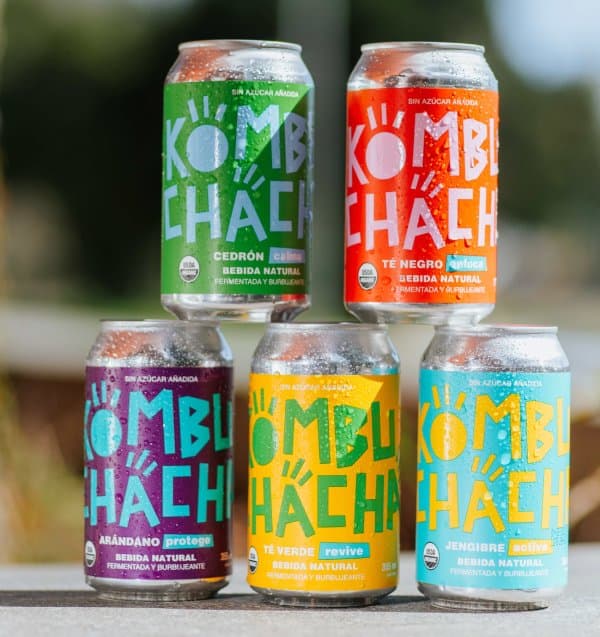
By May 2026, Forbes Chile said Kombuchacha had 64% of the national market, was already operating in the United States and Paraguay, and had Uruguay, Brazil and Mexico next in line. From a kitchen experiment sparked in Zurich to a dominant Chilean brand with continental ambitions, Kombuchacha has already proved the brew can travel.
This article was produced by Prism’s automated news system from verified source data, official records, and press releases, then run through automated quality and moderation checks before publishing. The system is built and supervised by the people who set the standards it runs under. Read our full AI policy.
Did this article answer your question?