How Kasing Lung turned Labubu into a global storytelling icon
Labubu makes the most sense when you trace it back to Kasing Lung’s storybook world, where Nordic folklore, character design, and painting all feed the same universe.

Labubu is easier to read, and easier to collect well, when you stop treating it like a random viral hit. Kasing Lung built the character out of a much larger imaginative system, and that background tells you why certain releases feel deeper than a fast-moving colorway.
The artist world behind the hype
Kasing Lung was born in Hong Kong in 1972, began collaborating with How2Work in 2011 as an illustrator, and published his first illustrated book in Chinese, My Little Planet, in Taiwan in 2013. The next year, Belgian publisher De Eenhoorn released Lizzy Wil Dansen, his collaboration with Brigitte Minne. That early path matters because it shows Lung coming from books, illustration, and character-led storytelling, not from a toy factory pipeline.
By the time he created Labubu in 2015, Lung had already spent years building the habits that make a character feel durable: recurring figures, visual continuity, and a world that can move across formats without losing its identity. Kaikai Kiki’s artist profile says his recent bases have been Hong Kong and Belgium, and that in recent years he has focused on painting. That matters to collectors because it explains why Labubu still feels authored, even when it appears in an endless stream of products.
What The Monsters really is
Labubu did not arrive alone. POP MART says Lung brought the character to life as part of The Monsters, a fairy world that was shaped from years of conceptual artwork into three picture books: The Story of Puca, Pato and the Girl, and Miró’s Requiem. In POP MART’s framing, each book stands as an independent narrative within The Monsters Trilogy, which is the key to understanding the line: these are not just mascots, they are chapters in a connected world.
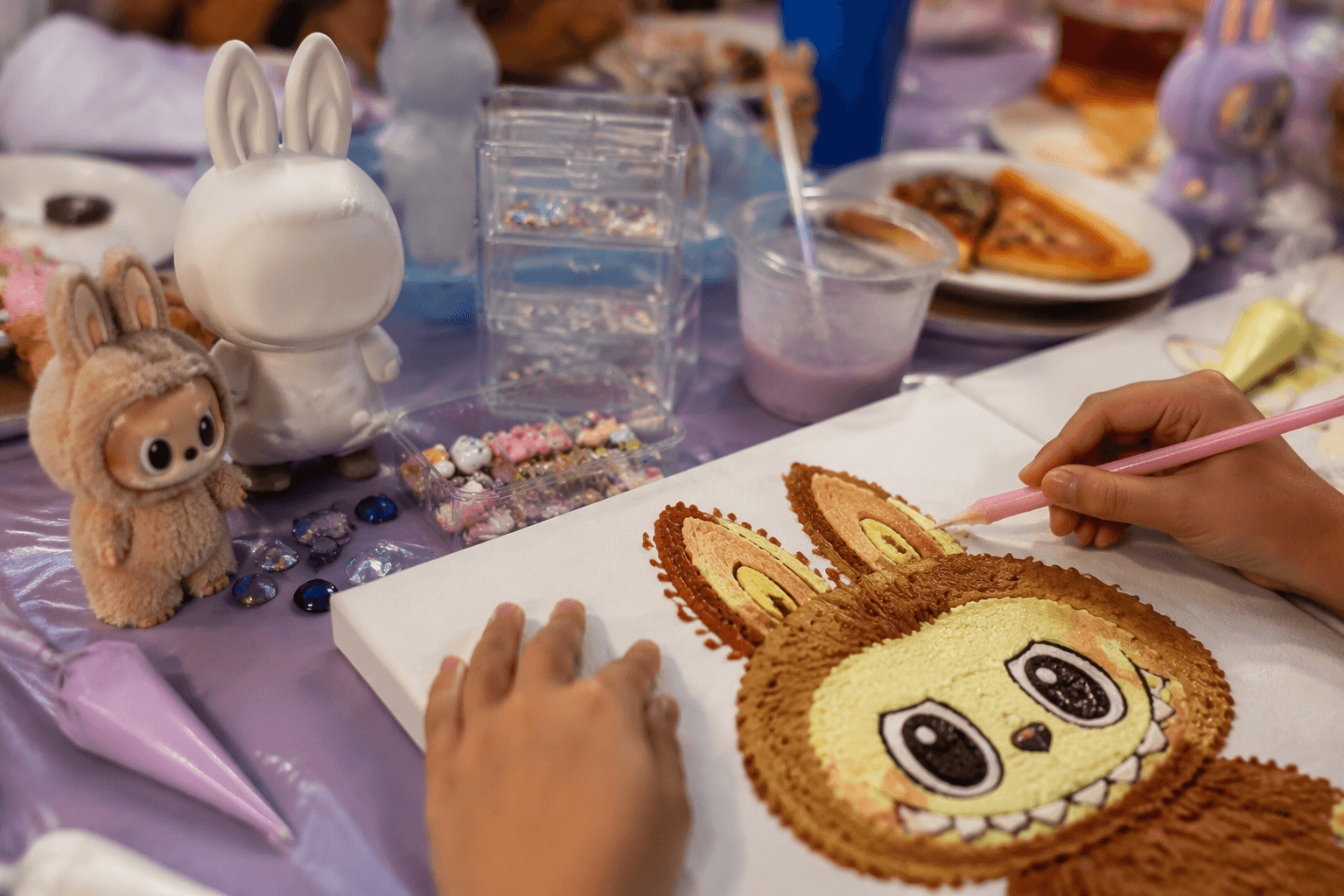
POP MART’s U.S. site describes THE MONSTERS as a magical world inspired by Nordic myths, with Labubus living in a great Nordic forest. That mythic setting is not decorative branding. It gives the character a visual and emotional logic that shows up in every expression, pose, and release. Labubu is described by POP MART as mischievous yet kind-hearted, with pointed ears and serrated teeth, and those details are the backbone of the design language collectors keep chasing.
For serious fans, the practical takeaway is simple: if a release still feels like it belongs in that forest, it usually carries more of Lung’s original intent. If it strips away the pointed ears, the toothy grin, or the storybook mood, it may be louder on social media but weaker as a piece of the universe.
How to read a Labubu release like a collector
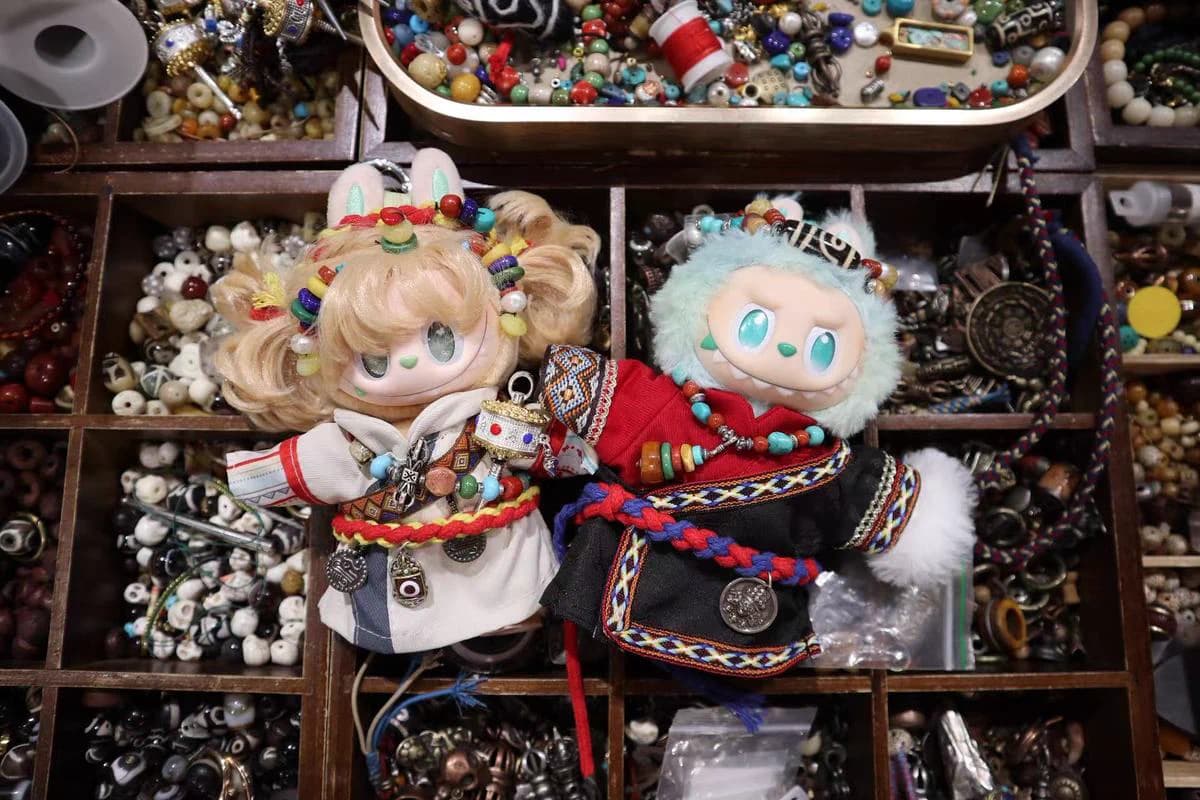
Lung’s wider body of work gives you a way to separate meaningful lineage from viral noise. Kaikai Kiki says Labubu has been released in more than 300 colors, shapes, and sizes, which means the market is full of variants that may look different at a glance while still drawing from the same core character. The challenge is not spotting the most unusual version. It is understanding which version stays closest to the authored character language.
A useful collector lens looks like this:
- Does the release still read as Labubu first, or does the palette overpower the character?
- Are the pointed ears, serrated teeth, and mischievous expression still intact?
- Does the piece feel tied to The Monsters fairy world and its Nordic mood?
- Does it feel like a storybook extension, or just a novelty object with the same name?
That framework helps when the market gets noisy. A Labubu that preserves the silhouette and the emotional tone of the original works differently from one that simply uses the name for attention. The more a release reflects Lung’s storybook roots, the more likely it is to resonate with collectors who value continuity over chase energy.
From illustrator to global character
Lung’s career also helps explain why Labubu has crossed from art circles into broader culture without losing its identity. Kaikai Kiki lists his 2020 Tokyo solo exhibition, THIS IS WHAT IT FEELS LIKE, at Hidari Zingaro, followed by CLOUD in 2023 and EVERYBODY KNOWS in 2024. Those exhibitions show an artist who did not abandon painting after finding toy success. He kept moving between forms, which is exactly why the character world feels so coherent.
That coherence has helped Labubu travel. CGTN reported in June 2025 that a life-sized mint-green Labubu sold for more than $150,000 at a Beijing auction, a sign that the character had moved far beyond niche designer-toy circles. The same reporting noted that Pop Mart has turned Labubu into a symbol of how China is exporting culture, not just products. Pop Mart’s own global footprint gives that reach a commercial shape: the company says it operates in more than 23 countries and regions through 350-plus offline stores and 2,000-plus Roboshops.
For collectors, that scale cuts both ways. Wider availability brings more access, but it also makes it easier for the market to blur the line between story-driven pieces and mass attention. Lung’s background is what keeps the line visible. The artist did not build Labubu as a standalone mascot and then decorate it later. He built a world first, then let the character travel through books, paintings, and toys.
Why that background changes how you buy
If you want to buy Labubu with more intention, Kasing Lung’s career gives you the right questions. The real value is not just in rarity or social buzz, but in whether a release still feels anchored in the same narrative system that began with My Little Planet, Lizzy Wil Dansen, and The Monsters trilogy. That is the difference between collecting a viral object and collecting a character with a readable artistic lineage.
The next time a new drop lands, the smartest move is not to ask only how fast it will sell. Ask whether it still looks like it came out of Lung’s Nordic forest, whether it keeps the mischievous warmth that POP MART describes, and whether it extends the same storybook logic that started in illustration long before Labubu became a global name. That is the line that separates a passing craze from a character built to last.
This article was produced by Prism’s automated news system from verified source data, official records, and press releases, then run through automated quality and moderation checks before publishing. The system is built and supervised by the people who set the standards it runs under. Read our full AI policy.
Did this article answer your question?