Labubu craft night turns collectible craze into family fun
Tabitha Sewer Studio's Labubu Kids Craft Night turns the blind-box chase into a pizza-fueled family ritual, with 3D canvas art, bracelets, and candy holders.
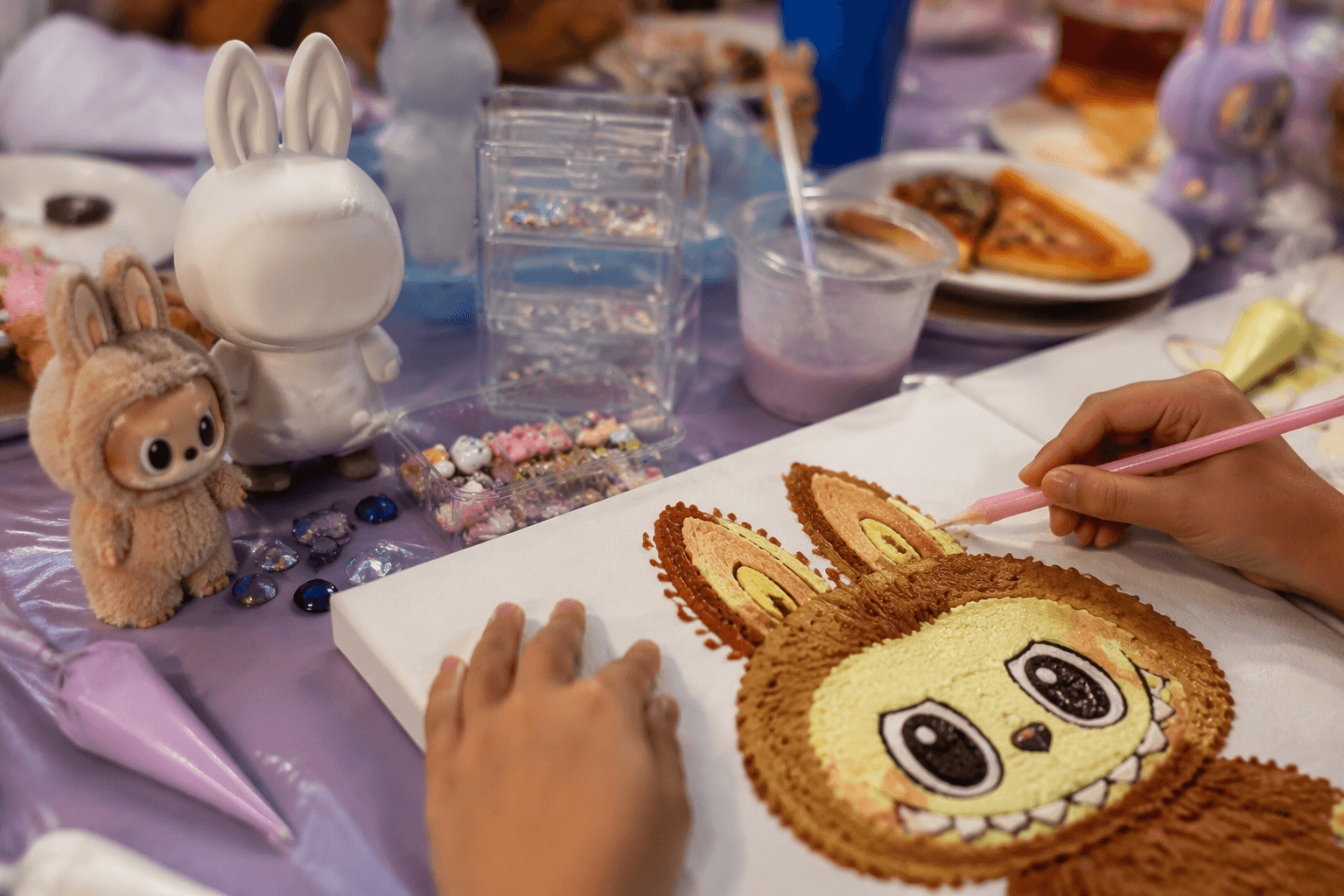
At Tabitha Sewer Studio’s Labubu Kids Craft Night, kids make 3D canvas art, Labubu charm bracelets, and candy holders instead of chasing resale listings. The event turns a hard-to-get character into an easy, hands-on family hangout.
A craft-night format that is easy to copy
The appeal here is the format as much as the fandom. Labubu works here less as a product to buy than as a creative theme that can anchor a social night for kids and parents, which is exactly why it feels portable for local shops, school groups, and fan communities. It is not a quick drop-in workshop with one take-home item; it is a full evening, with pizza included and multiple projects to keep the room moving.
A family that would never camp out for a toy release can still show up for a craft night, work on something playful, and leave with finished pieces that feel personal. The Labubu craze does not have to live only in collector feeds when it can become a one-night ritual with food, table space, and a shared theme.
The three projects do the heavy lifting
The three builds are 3D canvas art, Labubu charm bracelets, and candy holders. That trio is smart because it hits three different ways people already engage with fandom. The canvas project gives you a display piece, the bracelet turns the character into something wearable, and the candy holder adds a small practical object that still feels collectible.
The 3D canvas idea is especially useful if you are trying to make the night feel more like making than coloring. Layered mixed-media art gives kids enough texture to stay interested, and it gives parents something that can go on a wall instead of ending up in a backpack. Charm bracelets work for the same reason blind boxes do: tiny parts, personal combinations, and a lot of room for variation without needing a big skill level.
Candy holders are the sleeper hit in the lineup because they bridge craft and utility. They can work as party favors, desk pieces, or a simple display item, which makes them a good fit for a Labubu event that wants to feel festive instead of purely transactional. If you are running a local version, this is the part worth copying exactly: one project to display, one to wear, one to use.
Why Labubu fits the family-craft lane
Labubu was created by Hong Kong-born artist Kasing Lung and first appeared in his 2015 book series, before Pop Mart turned the character into a franchise. Labubu has a strong, instantly readable silhouette, which makes it easy to translate into paper, beads, paint, and small accessories without losing the character.
By June 2025, Labubu toy drops were drawing long lines outside stores, selling out online within minutes, and fetching resale prices that were often double or triple retail. That kind of scarcity usually pushes a character deeper into the collector economy, but it also creates a shared visual shorthand. Once people recognize the face, they can build parties, crafts, and decorations around it without needing an official event.
The market story behind the family night
The broader Labubu boom helps explain why a kids’ craft night feels timely instead of random. In August 2025, Pop Mart said first-half net profit soared nearly 400%, and the company said revenue could surpass $4 billion for the year. Pop Mart also planned to launch mini Labubus, and sales surged after the mini versions launched in August 2025.
Pop Mart’s Labubu-related sales hit $670 million that year, by WIRED’s estimate, and a $30 Labubu doll had become an international status symbol. That same cultural reach showed up in a June 2025 fashion-show style gathering in New York’s Washington Square Park, where the toy read less like a shelf item and more like public self-expression.
How local groups can turn this into a repeatable ritual
The strongest version of this idea is simple and social, not elaborate. A Labubu night works because it gives families a reason to gather around making rather than hunting. If a shop, studio, or fan group wants to copy the formula, the pieces are already visible in the Tabitha Sewer Studio setup:
- Keep it child-friendly and short enough to hold attention, but long enough to finish multiple projects.
- Include food, like the pizza in the Labubu Kids Craft Night listing, so the event feels like a shared outing instead of a class.
- Offer at least one display project, one wearable project, and one functional project.
- Use the Labubu face as a visual theme for layered art, charms, labels, and party-favor style items.
- Make the event welcoming to parents, not just serious collectors, so the room feels like community, not a line for exclusives.
This article was produced by Prism’s automated news system from verified source data, official records, and press releases, then run through automated quality and moderation checks before publishing. The system is built and supervised by the people who set the standards it runs under. Read our full AI policy.
Did this article answer your question?