Labubu production surges in Ganzhou as factory expands to 12 million toys yearly
Ganzhou’s Labubu-linked factory is scaling to 12 million toys a year, a move that could shift restocks and resale heat. More capacity may not mean easy buys.
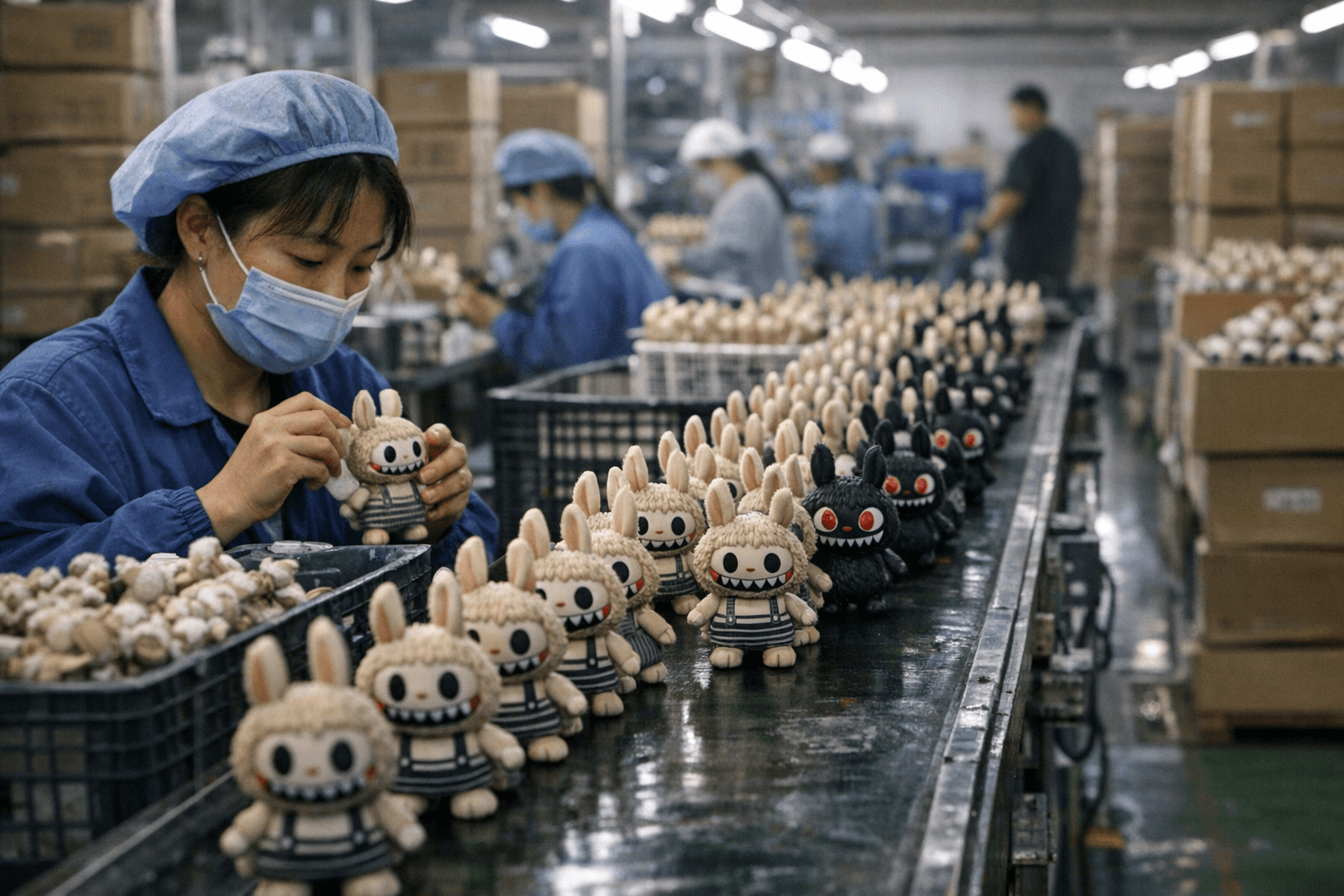
A Labubu-linked factory in Ganzhou is scaling to 12 million toys a year, and that number lands where collectors feel it most: restock odds, drop frequency, and the resale heat that has made some releases vanish in minutes. The expansion is tied to Ganzhou Xinfeng County Shunjia Toys Xinfeng Co., Ltd., the Jiangxi manufacturer linked to Pop Mart’s Labubu production base, where reporters saw a busy floor and workers were asked to sign confidentiality agreements.
The new capacity does not automatically mean Labubu will become easy to buy. Pop Mart has built the character’s rise on tightly managed supply, and Ganzhou is one of the key production bases behind that system in China. The company relies heavily on OEM manufacturing, which means factory scheduling, contract production, and commercial secrecy help shape what reaches shelves and when. For collectors, that is the real question behind the 12-million-unit figure: whether Pop Mart uses the added output to widen access across more markets, or keeps key drops scarce through limited editions, controlled channels, and carefully timed releases.
Pop Mart’s own numbers show how far the Labubu engine has already run. In its 2024 annual report, THE MONSTERS, the IP line that includes Labubu, brought in more than RMB 3 billion in revenue, up 726.6% year on year. Pop Mart’s total 2024 revenue reached RMB 13.037749 billion, up 106.9% from 2023, while non-mainland revenue jumped 375% to about RMB 5 billion. By the end of 2024, the company said it had 2,597 roboshops and more than 530 stores worldwide, a retail footprint built to match the pace of global demand.
Capacity is rising too. HSBC estimated that Pop Mart’s monthly manufacturing output, including Labubu and other series, would reach 50 million pieces by the end of 2025, about 10 times the starting level that year. That kind of scale could soften shortages on some core items, but it may also leave the chase intact if Pop Mart keeps the rarest releases locked behind short runs, region-specific launches, or channel control. Investor nerves have already shown up in the market, even as the company continued buying back stock in early April.
The labor picture adds a sharper edge to the story. China Labor Watch said Shunjia Toys in Xinfeng County employed more than 4,500 workers and interviewed more than 50 employees, including three aged 16 to 17, while alleging excessive overtime, incomplete or blank contracts, heavy use of dispatched labor, and weak safety training and occupational health protections. Related coverage said those workers were producing Labubu toys exclusively. For collectors, the Ganzhou expansion is not just a supply story. It is the clearest sign yet that Labubu’s scarcity is being managed by an industrial system as much as by fandom.
This article was produced by Prism’s automated news system from verified source data, official records, and press releases, then run through automated quality and moderation checks before publishing. The system is built and supervised by the people who set the standards it runs under. Read our full AI policy.
Did this article answer your question?