Pop Mart’s Labubu boom reveals how fandom and ecommerce drive demand
Pop Mart’s Labubu machine starts at discovery, not checkout, and keeps collectors buying with blind-box scarcity, platform speed, and repeat fandom loops.

Why Labubu keeps turning browsers into buyers
Pop Mart’s Labubu boom works because it sells the reveal, not just the toy. In 2025, the company posted revenue of 37.12 billion yuan, up 184.7% year on year, while adjusted net profit reached 13.08 billion yuan, a surge that analysts described as either 284.5% or, in one breakdown, 308.8%. Yet the stock still fell sharply after the results, because investors immediately asked the question that matters in any fandom-led business: what comes after the hit that built the whole machine?
That worry is not abstract. The Monsters franchise, which includes Labubu, generated 14.16 billion yuan in 2025 and accounted for about 38.1% of total revenue. Another reading put The Monsters family at 38% of annual revenue, up from 23% in 2024, which tells you how concentrated the boom has become. Pop Mart now has a first IP line that has cleared 10 billion yuan in annual revenue, and that kind of concentration is exactly why the market started to flinch after the earnings release.
Sean Ng’s read on the company is useful because it treats Pop Mart less like a toy maker and more like a playbook for modern demand. The lesson is blunt: product alone is not enough. Demand is built before checkout through social media and platform discovery, then converted inside ecommerce and owned channels, then kept alive by a fulfillment experience that feels tight rather than sloppy. If the process breaks at any step, the premium feeling disappears fast.
The Labubu loop is bigger than a cute face
Labubu was created by Hong Kong-born artist Kasing Lung and first appeared in his sketchbooks in 2015. Pop Mart licensed the IP in 2019 and turned it into a blind-box collectible, which is the key to the whole engine. The packaging makes every purchase feel like a gamble with a reward, and the chase editions plus limited drops give collectors a reason to keep refreshing, trading, and buying again.
That is why Labubu lands differently from a standard character toy. Its pointy ears, nine jagged teeth, and mischievous grin make it instantly recognizable, but the design only becomes monetizable when the format creates tension. Blind-box packaging turns curiosity into conversion, and the controlled odds turn one sale into a second and third purchase when people start hunting a specific variant or trying to complete a set.
- official announcements that tell you when a drop is real
- limited supply that preserves chase value
- catalog completeness, which pushes people to finish a series
- access points that are easy to find inside the platforms people already use
- resale heat that makes every box feel like it might carry upside
For collectors, the mechanics matter more than the mascot. The things that keep the loop alive are familiar:
Southeast Asia became the proving ground
Pop Mart did not stumble into Southeast Asia by accident. It expanded through stores, pop-ups, and partnerships in Thailand, Malaysia, Singapore, and the Philippines, which gave the brand physical presence and platform reach at the same time. That combination matters because Labubu is not simply bought, it is discovered, then talked about, then hunted.
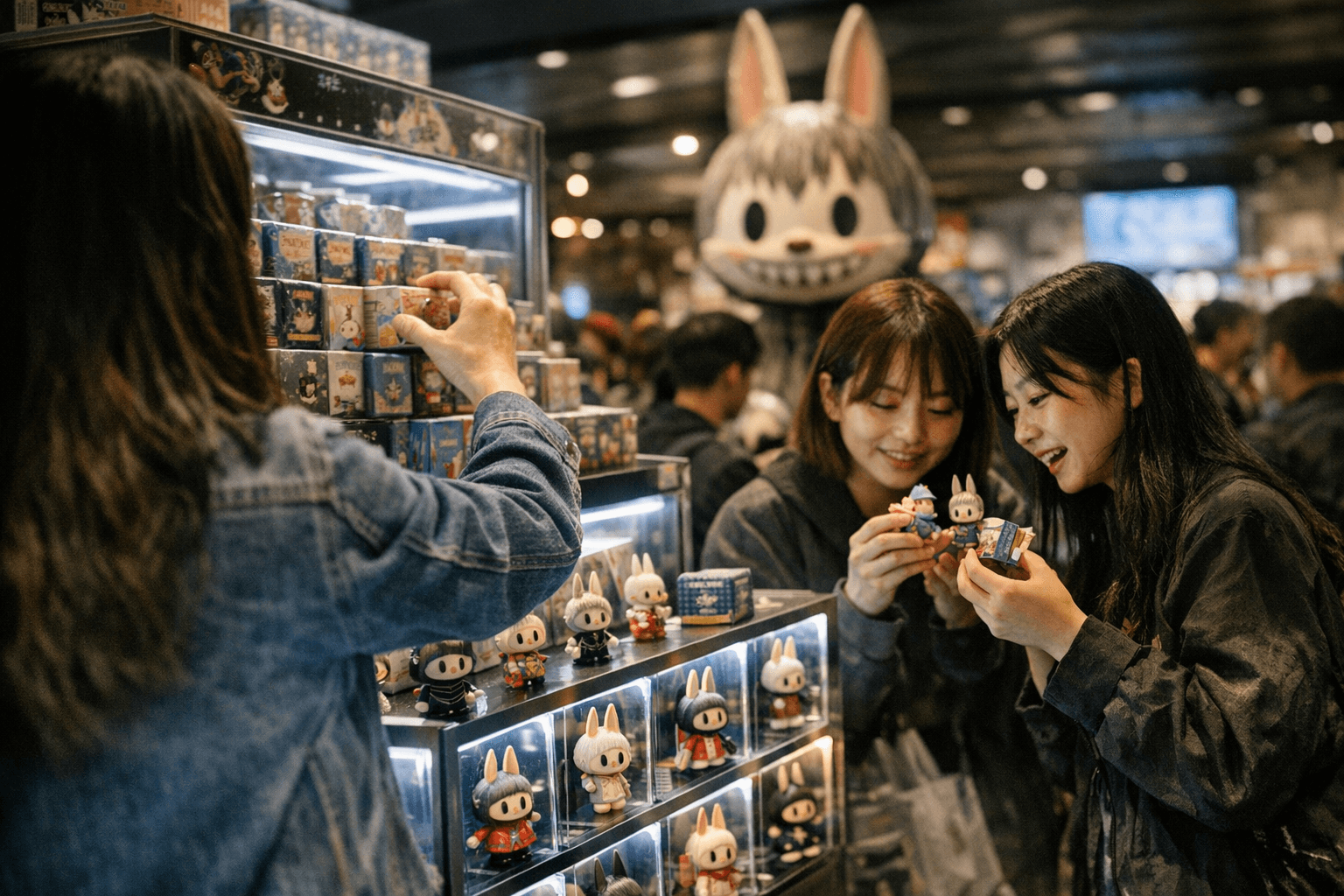
The region also showed how quickly a hype cycle can turn into a resale market. Reuters-linked reporting from Thailand said a 22-year-old reseller had been flipping Pop Mart toys since early 2024, but prices were falling quickly as supply increased. That is the part a lot of casual observers miss: scarcity creates the rush, but supply expansion can cool the secondary market almost overnight.
This is why Pop Mart’s model is such a strong case study for ecommerce operators. The brand does not rely on one giant transaction. It creates recurring discovery, then funnels that attention into platform-native buying, then uses controlled distribution to keep the experience feeling scarce even as volume rises. That is a much harder trick than simply going viral.
What investors and collectors are really watching
The earnings reaction tells you the market is no longer just pricing growth, it is pricing the end of a growth spike. Reuters-linked reporting said Pop Mart’s shares fell about 22% on the announcement day and roughly 30% over several days. Wang Ning framed the moment as if a rookie driver had been thrown into an F1 race, then needed to pit, refuel, and change tires. That is the right metaphor: after a blistering lap, the question becomes whether the car can stay competitive once the easy speed is gone.
- Labubu 4.0, which tells you the company is refreshing the line instead of freezing it in nostalgia
- artist collaborations, which can reset attention and pull in new subcultures
- FIFA World Cup tie-ins, which push Labubu into a bigger global sports conversation
- films and books, which deepen IP monetization beyond the shelf and the blind box
For collectors, the same logic applies to releases. The key signals are not broad brand statements, but concrete moves that change access and scarcity:
Those moves matter because they create new discovery loops. A crossover can bring in first-time buyers; a new edition can pull back existing collectors who already own the old one. That is how a character moves from one-off craze to repeat-purchase economy.
Where the next hot market is likely to appear
Pop Mart is already signaling that it wants to reduce reliance on a single runaway IP, even as Labubu keeps carrying the load. It plans to expand its U.S. store network from 72 locations to more than 100 in 2026, which is the clearest clue that the company wants to transplant the same retail-plus-fandom model into a larger market. If the Southeast Asia playbook is any guide, the next demand hotspot will be wherever physical stores, pop-up energy, and platform partnerships arrive together.
That is the real takeaway from the Labubu boom. The character is valuable, but the system around it is more important: discovery first, controlled scarcity next, and frictionless fulfillment after that. In Southeast Asia, that combination has already turned browsers into buyers, buyers into repeat buyers, and repeat buyers into a resale market. The brands that learn that sequence will find the next Labubu. The ones that miss it will keep chasing the last one.
This article was produced by Prism’s automated news system from verified source data, official records, and press releases, then run through automated quality and moderation checks before publishing. The system is built and supervised by the people who set the standards it runs under. Read our full AI policy.
Did this article answer your question?


