Labubu shows how viral hype turns shopping into a game
Labubu turned a blind box into a race against the feed, where unboxings, scarcity, and celebrity pull can move a toy from curiosity to must-have overnight.

The toy that turns shopping into a chase
Labubu is what happens when a blind-box character stops living on a shelf and starts living inside everyone’s feed. The hype is not just about owning the figure, it is about beating the sellout, catching the drop, and feeling like you are already part of the joke before the box is even opened.
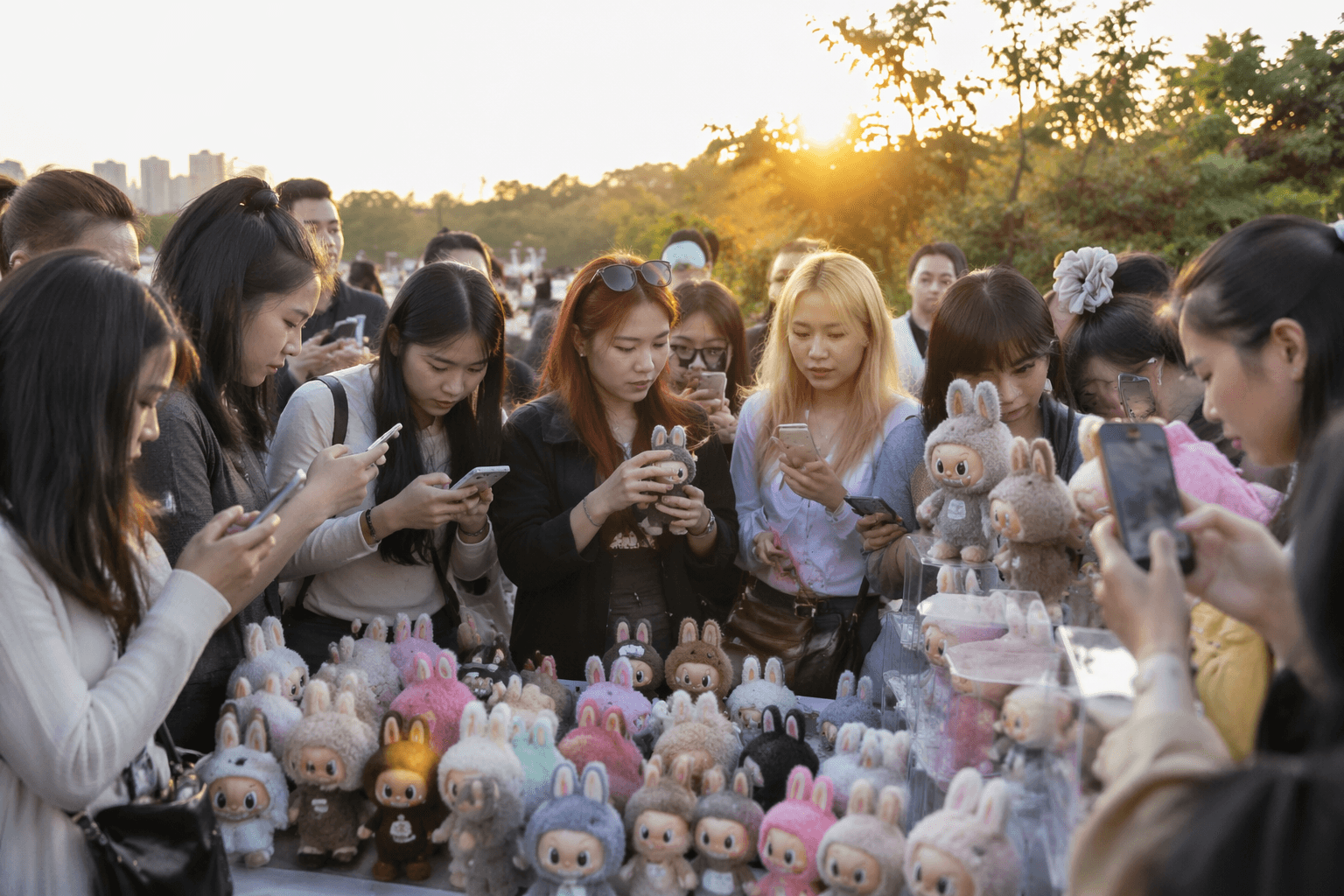
What makes Labubu so useful as a case study is that it sits at the exact intersection of collecting and internet behavior. The same attention logic that has sent Melody toffees and Swatch-style watches into frantic sellouts is especially visible here, because Labubu’s rise is tied to unboxing clips, rare pulls, celebrity sightings, and the sense that if you blink, you miss the moment.
Why Labubu feels like a game
The thrill starts with the format. Labubu and the wider THE MONSTERS line are sold in blind-box form, which means the buyer is not choosing a specific figure but gambling on the reveal. CNBC reported that Labubu plush figures generally sell for about $9 to $30 at Pop Mart, which keeps the entry point low enough to feel casual while preserving the tension that makes people keep coming back.
That tension gets amplified by the way people encounter the toy online. Creators post large unboxings, rare finds, and collection flexes, and suddenly a niche character is not just a product but a social object. Repeated exposure does the heavy lifting here, because each sighting tells the brain that everyone else is already in on it, and that is how a collectible starts feeling scarce even before it actually disappears from shelves.
- Blind-box packaging makes the purchase feel like a reveal, not a transaction.
- Unboxing videos turn private luck into public proof.
- Constant feed exposure creates the pressure to buy now rather than later.
That is why the Labubu chase feels participatory. People are not only buying a figure, they are buying into an inside joke shared by millions online. In that environment, a single meme, reel, or celebrity sighting can do more than a costly marketing campaign, because the internet itself becomes the storefront and the salesperson.
From niche art character to global collector object
Labubu did not begin as a mass market mascot. The character was introduced in 2015 by Hong Kong artist Kasing Lung, and in 2019 he signed a licensing deal with Pop Mart that helped push the figure from niche art toy into a much larger collector ecosystem. Pop Mart describes THE MONSTERS as a magical world inspired by Nordic myths, and its U.S. site describes Labubu as a mischievous yet kind-hearted creature in that universe.
That backstory matters because it explains why the toy carries both art-world credibility and mainstream retail muscle. Pop Mart’s 2024 annual report said the company’s four IPs, THE MONSTERS, MOLLY, SKULLPANDA and CRYBABY, each surpassed RMB1 billion in revenue for the first time. Pop Mart’s overall 2024 revenue reached RMB13.04 billion, up 106.9 percent year on year, while overseas revenue rose 375.2 percent year on year.
The retail footprint behind that growth is just as important as the character design. TIME reported that by the end of 2024 Pop Mart had more than 530 stores worldwide and more than 2,490 roboshops, with over 130 stores and more than 190 roboshops outside mainland China. That matters because a viral toy needs places to land, and Labubu had a global machine ready to turn online attention into physical sell-through.
How hype becomes panic buying
The psychology behind the rush is straightforward, even if the effect is not. Once Labubu starts appearing everywhere on social media, scarcity gets magnified by visibility. Buyers see the same object in different hands, on different feeds, and the brain starts treating it like a resource that might vanish at any moment.
That is where FOMO does its best work. The fear is not just missing a figure, it is missing the shared moment, the drop, the rare pull, the secondary-market opportunity, or the version that everyone else seems to have found first. In practice, that turns shopping into a speed contest, and speed becomes part of the status signal.
The celebrity layer pushes the cycle further. Reuters-linked coverage has tied Labubu’s surge to high-profile fans including Lisa of BLACKPINK, Rihanna and David Beckham, which helped move the figure beyond toy-collector circles and into fashion and accessory culture. Once that happens, the object stops reading as a niche collectible and starts reading as a cultural badge.
What the market numbers say
By 2025, Labubu was no longer just a social media craze, it was a revenue engine. Reuters-linked coverage said Labubu-related products accounted for more than a third of Pop Mart’s first-half revenue that year, and Reuters reported that first-half revenue grew by around 200 percent while profit rose by roughly 350 percent. Those are not the numbers of a passing internet joke, they are the numbers of a business that has been reshaped by hype.
The resale market has been part of that story, but it is also where the warning lights flash. Pop Mart has said that if purchases are driven solely by profit seeking, the resale-heavy model will eventually crash. Analyst Ashley Dudarenok has said the secondary market helped boost popularity, while also suggesting the company appears to be moving toward a more sustainable model. Morningstar analyst Jeff Zhang has said falling resale prices may reflect supply changes as much as demand changes.
For collectors, that is the real lesson in the Labubu boom. The toy’s rise shows how a blind box, a few viral posts, a celebrity flashpoint and a global retail network can turn ordinary shopping into a timed event with status attached to every click. Labubu did not just become popular, it became a template for how the internet teaches people to want something together, all at once, and often before the box has even been opened.
This article was produced by Prism’s automated news system from verified source data, official records, and press releases, then run through automated quality and moderation checks before publishing. The system is built and supervised by the people who set the standards it runs under. Read our full AI policy.
Did this article answer your question?


