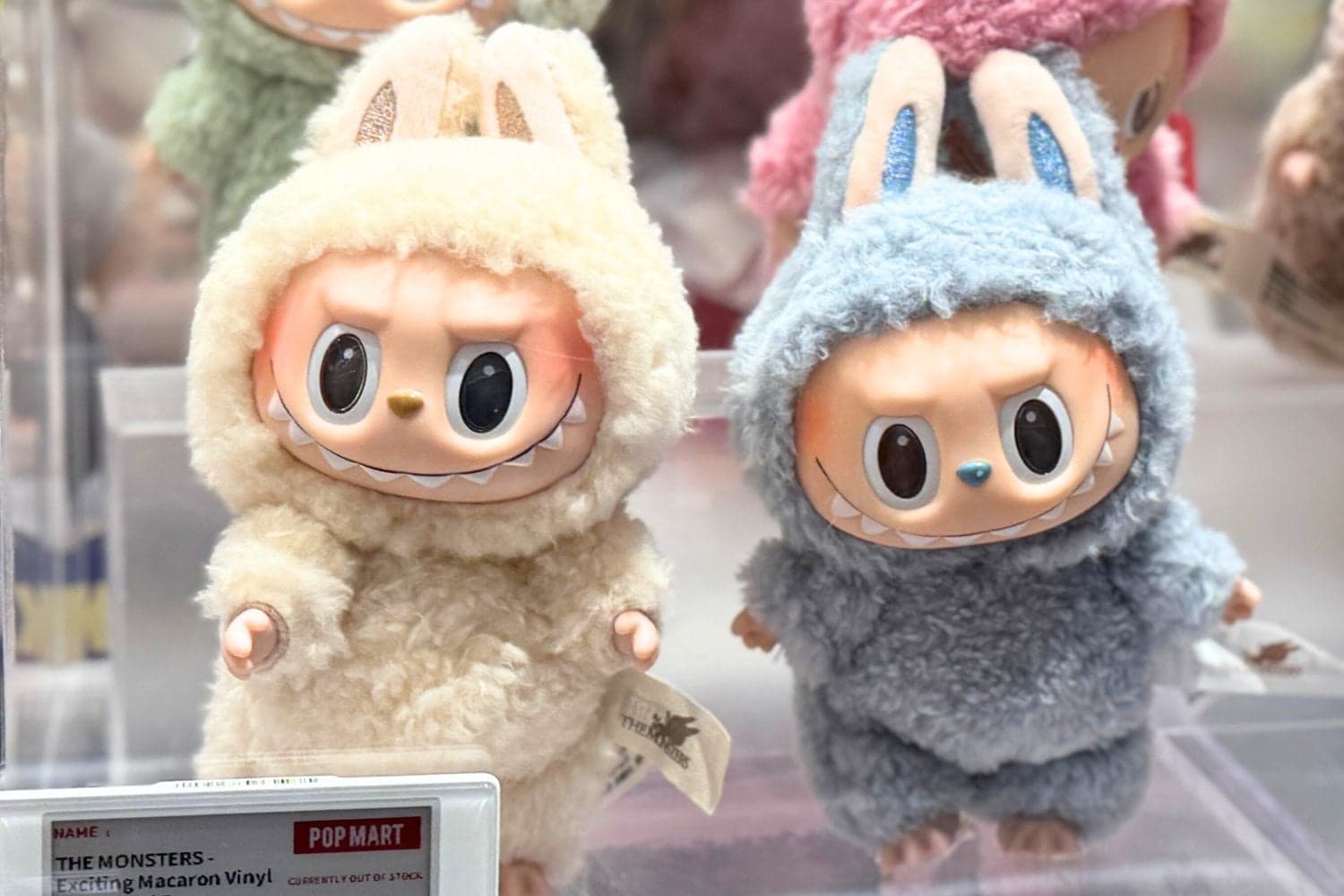
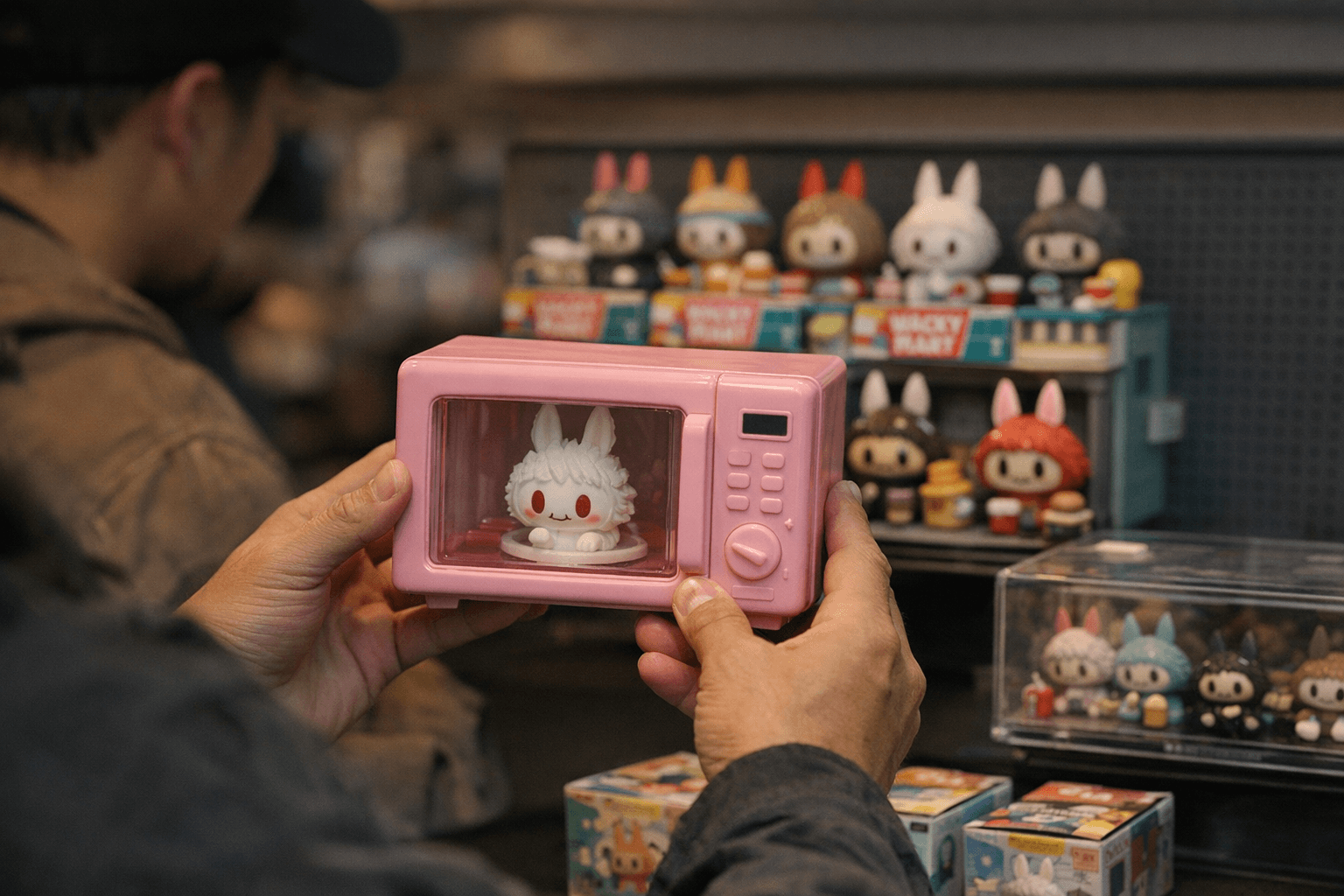
Pop Mart Eyes Next Big IP as Labubu Craze Fuels Investor Questions
Pop Mart's shares dropped 23% despite a 185% revenue surge, as investors demand proof the company can build the next Labubu — and COO Si De has a plan involving Sony, gold necklaces, and a Beijing theme park.
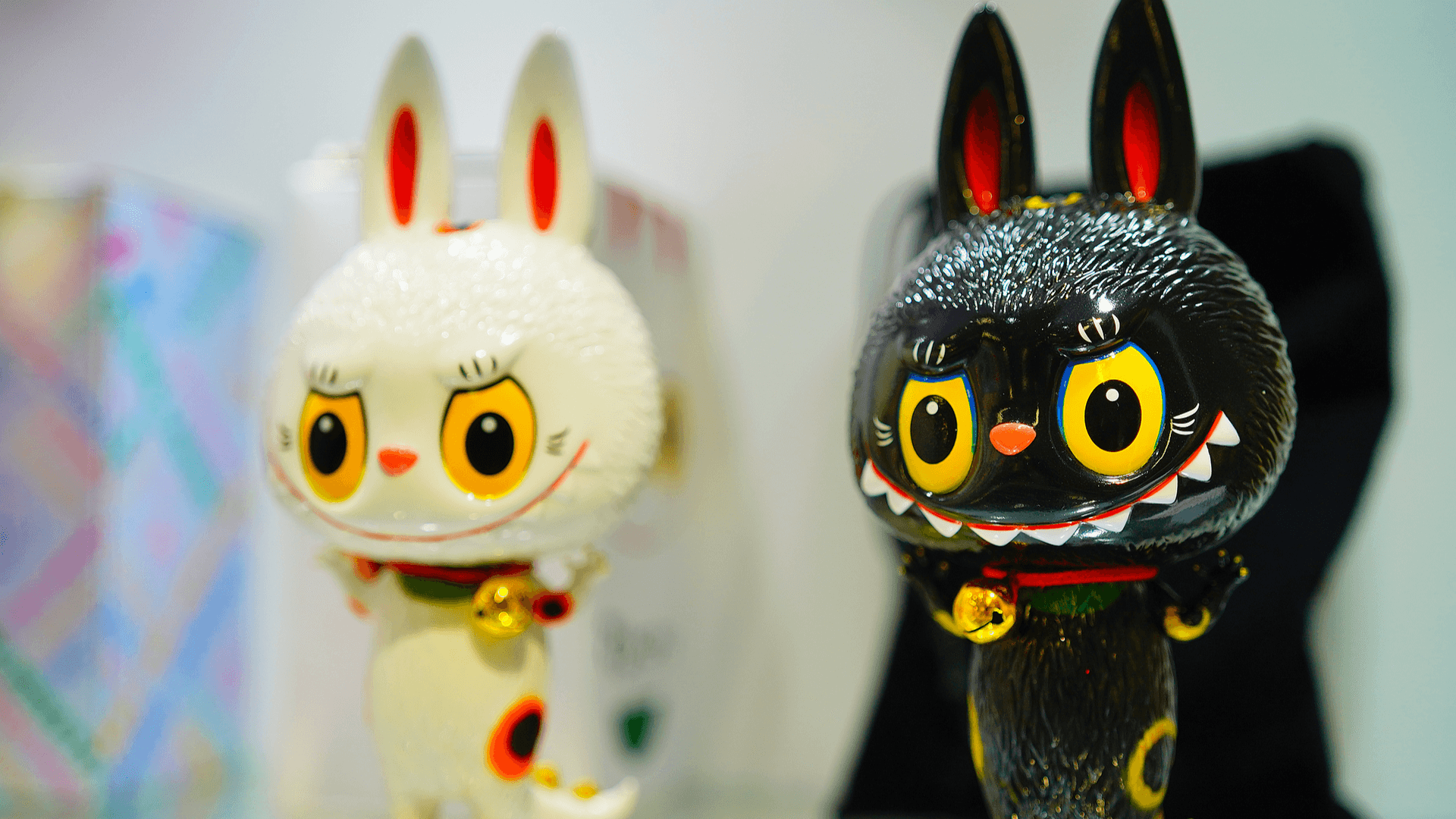
Pop Mart knew Labubu would be a hit, but it didn't expect the shaggy little elf-monster to take over the world. What nobody planned for was the follow-up question, the one that arrived almost immediately after the sales records started falling: what happens when the frenzy runs out of road?
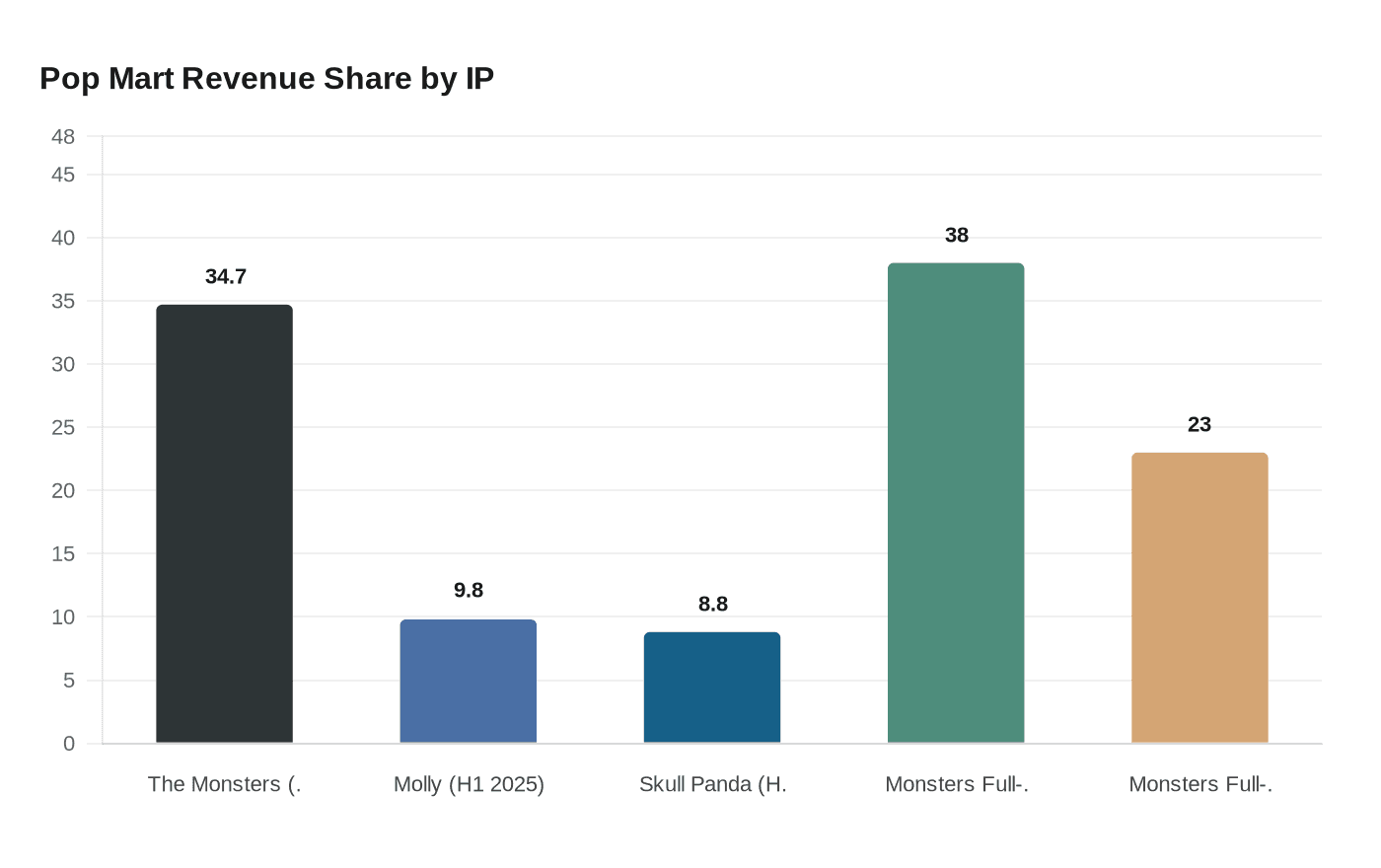
That question just got a lot more urgent. Pop Mart shares plunged a record 23% after the company's full-year results revealed a widening dependency on its Labubu franchise, even as revenue surged 185% to 37.1 billion yuan ($5.4 billion) in 2025. The Monsters — the IP family that houses Labubu — still contributed a larger share of 38% to total annual revenue, compared with 23% in 2024. Investors aren't punishing Pop Mart for what it built. They're punishing it for what comes next.
How the Labubu Machine Actually Worked
Before you can understand where Pop Mart is going, you need to understand what drove the spike in the first place. The story of Labubu, which can look like an overnight success, actually began with years of quiet grinding. Pop Mart first launched Labubu as part of a blind-box collection in 2019 after licensing the character from Hong Kong-Dutch artist Kasing Lung, who created it for a picture-book series several years earlier. In the first half of 2025, products from "The Monsters" series made up 34.7% of Pop Mart's revenue, followed by the Molly series at 9.8% and Skull Panda at 8.8%.
The scarcity dynamic was central to the explosion. Labubu hit peak popularity in the summer of 2025 as sales on the secondary market skyrocketed, but the hype began to quickly fade as sales from resellers lost steam as Pop Mart ramped up toy production to meet consumer demand. According to HSBC, the contribution of ARPU growth from repurchasing members to mainland revenue growth was "close to half," with repeat purchasers contributing approximately 83% of total sales. Tight supply manufactured urgency; Pop Mart later ramped up production to curb scalping, and resale prices have since fallen.
What Investors Are Actually Worried About
As the Labubu frenzy fades, HSBC last month trimmed its revenue growth forecast for Pop Mart this year from around 30% to under 24%, and expects an 11% to 13% cut in 2026-2027 earnings. Despite those cuts, HSBC remained confident in the company's ability to develop and globalize new IPs beyond Labubu. The bank's position is essentially that hypergrowth driven by a single character is normalizing, not collapsing — HSBC described 2026 as a year of "re-baselining."
The broader Wall Street picture is more mixed. Gary Ng, a senior economist at French bank Natixis, called Labubu's popularity "a huge success" but flagged "an emerging concern that there is no second growth driver." Morningstar analyst Jeff Zhang put it plainly: "We think the market's biggest concern still lies in the earnings growth prospect," though he added that the Labubu frenzy is likely "yet to cease."
CEO Wang Ning sought to calm the market during the earnings call, saying that "Pop Mart has more than just Labubu" and likening expectations for the company to a "rookie racing driver suddenly thrown onto an F1 circuit." His COO, Si De, went to CNBC with a more detailed answer.
Si De's Blueprint: Selective, Data-Driven, Long-Game
In a wide-ranging interview with CNBC, Si addressed the central question obsessing investors and collectors alike. His answer isn't a single breakthrough IP. It's a system. Pop Mart is highly selective about the artists it backs and closely tracks sales data to shape products, with no guarantee of the next viral hit — but a disciplined process for finding it.
Si described the connection between customers and Pop Mart's characters by comparing it to visiting an art museum: people drift past paintings until one stops them. What moves each person is different. Pop Mart's job, as he sees it, is to keep putting out designs, stories and experiences, and let the encounters happen.
He expressed the long-range ambition plainly: "Of course, we hope that Labubu can also last 80, 90, or 100 years," noting Mickey Mouse is nearly a century old. "But this road is very long."
Beyond Toys: Fashion, Jewelry, and Brand Collaborations
Pop Mart says it's in a phase of global expansion and diversification, where the product is no longer just the toy. The company has moved into fashion through partnerships with Uniqlo and the Paris-based leather goods company Moynat, placing Labubu adjacent to luxury goods consumers rather than just collector communities.
The jewelry move is where things get genuinely surprising. Pop Mart has moved into jewelry, with some Labubu gold necklaces fetching above $2,000. That's not resale markup — that's retail positioning that puts the shaggy little elf-monster in the same conversation as fine jewelry. It's a deliberate push to anchor Labubu as a lifestyle object rather than a toy with a shelf life.
Markets outside mainland China accounted for about 44% of Pop Mart's revenue in 2025, and the global diversification push is reflected in channel expansion too. As of the end of 2025, Pop Mart operated 630 stores globally, with a net increase of 109 stores during the year, and it opened its first offline stores in Germany, Denmark, Canada, and the Philippines.
The Film: Paul King, Sony Pictures, and The Monsters Universe
The single biggest strategic bet announced in March 2026 is the one that could make collectors of Labubu feel like they got in on the ground floor of something much larger. A live-action and CGI Labubu movie is in early development with Sony Pictures, with "Paddington" filmmaker Paul King on board. Paul King, best known for 2014's "Paddington" and "Wonka" from 2023, will produce, direct and co-write the script with screenwriter Steven Levenson.
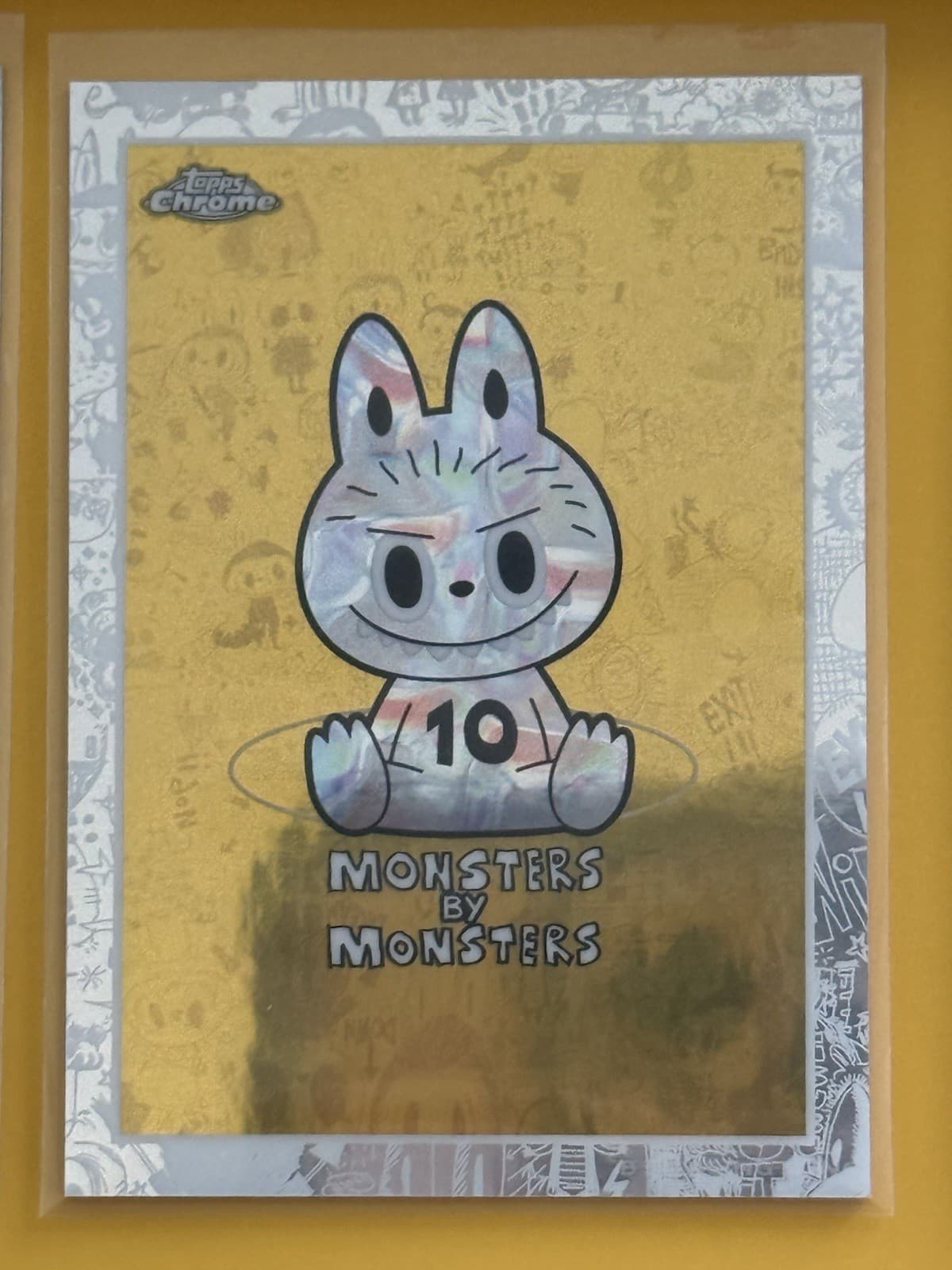
The key developments were announced by Labubu creator Kasing Lung and King at the Paris stop of Pop Mart's "The Monsters" global exhibition tour, celebrating their 10th anniversary. Lung will serve as an executive producer on the film.
The commercial logic here is hard to argue with. Paul King's recent directorial work on Wonka grossed over $635 million globally. Attaching his name to Labubu signals that Pop Mart isn't treating this as a brand extension vanity project. Pop Mart said it will use "storytelling to help people fall in love with these IPs more deeply." That's the whole strategy compressed into one sentence: deepen attachment, expand the audience, sell more.
Morningstar analyst Jeff Zhang said the partnership with Sony Pictures was a milestone in Pop Mart's efforts to diversify its revenue streams. "Given Labubu's global popularity, the movie will likely add to Pop Mart's future licensing income," Zhang said.
Pop Land: The "Huge Dream" in Beijing
If the film is the most headline-grabbing move, the theme park may be the most revealing one about where Pop Mart sees itself in a decade. Pop Land, Pop Mart's theme park in Beijing, is still in its early stages and undergoing reconstruction and expansion. Si described theme parks as a "huge dream" for Pop Mart, and the goal for Pop Land is explicit: "360-degree immersion," with live performances and more storytelling designed to send people home wanting more.
The experience funnel Si described is blunt in its clarity: "Watch videos. Buy products. Fall for them harder." That's not just a theme park vision; it's a vertically integrated emotional loop. You go to Pop Land, you watch a live Labubu performance, you walk out through the gift shop with something you didn't own when you arrived, and the attachment deepens. Disney built an empire on exactly this logic. Pop Mart is betting it can too.
What the Community Should Watch
The Labubu craze has since cooled, and Pop Mart's stock has retreated some 40% from its August peak. But the IP pipeline, the film deal, the jewelry line, the fashion partnerships, and the Pop Land expansion are all bets that Labubu's cultural gravity can be converted into something more durable than a blind-box rush. UBS Group noted that new IP Twinkle showed strong initial performance in early 2026, providing an observation window for continued growth.
For collectors, the real signal is that Pop Mart isn't treating the post-Labubu question as a problem. Si De and the rest of the leadership are treating it as a blueprint. The answer isn't finding the next Labubu. It's building worlds around its characters: films, theme parks, fashion tie-ups. The motive is not vanity projects, but commercial bets designed to keep products like Labubu embedded in people's lives. Whether the road is 80 years long or not, that's the direction they're walking.
Know something we missed? Have a correction or additional information?
Submit a Tip